“The jobs of the future will require a hybrid set of skills from a variety of subject areas that will change several times over during our careers, which will include a mix of hard skills and soft skills.” – Anant Agarwal
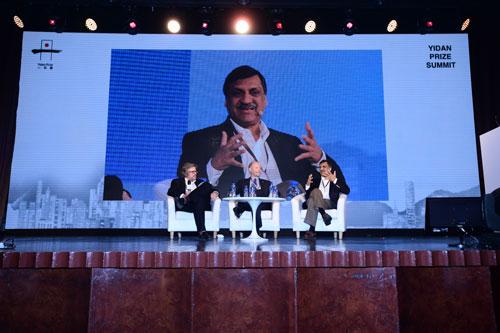
The second Yidan Prize Summit took place in Hong Kong on December 10, 2018. Founded by Dr. Charles Chen Yidan, the prize seeks to give recognition to individuals whose work makes profound contributions to education research and development. This year the Summit focused on HOW? How can we achieve better education outcomes? How do we ensure that education can be made to work for all? Professor Anant Agarwal, Founder and CEO of edX, won the prize for Education Development.
Agarwal leads edX, an online learning destination created by Harvard and MIT scientists with the goal of providing high quality education at scale. The first edX course attracted 155,000 students from 162 countries. Today the platform offers over 2000 online courses from more than 150 education institutions to over 17.6 million people.
The Global Search for Education welcomed Yidan Prize Development 2018 Laureate Anant Agarwal to talk about what’s next for online learning.

“Companies the world over cannot find the talent they need to succeed.” – Anant Agarwal
Anant, what does winning the Yidan Prize mean to you? How will it further your work?
I am extremely honored to receive this incredible recognition on behalf of edX, our worldwide partners and learners, from Dr. Charles Chen Yidan and the Yidan Prize Foundation. The Yidan Foundation’s mission to create a better world through education is at the heart of what edX strives to do. This award will help us fulfill our commitment to reimagine education, including innovative undergraduate credentials, and further our mission to expand access to high-quality education for everyone, everywhere.
The global skills gap is front page news. Companies struggle to find qualified candidates to meet their needs (e.g. cybersecurity talent gap), and technological change continues to disrupt all business models. What are some of the “future skills gaps” you’ve identified and how is your model planning to address them?
A massive shift in nearly all industries toward digitalization and automation has created a skilled labor crisis. Companies the world over cannot find the talent they need to succeed. National leaders are clamouring to formulate strategies to maintain a competitive position. Colleges and universities are under increasing pressure to revolutionize education and workforce training to close the knowledge and skills gap. EdX is committed to addressing these global concerns by making education more flexible, accessible, affordable, and higher in quality.
Some of the most popular subject areas on edX are data science; computer science and engineering; and business and management. These are also the job fields with some of the highest need for workers. We expect these subjects to continue to grow in demand, and therefore we expect to continue to offer a growing variety of content in these subject areas to serve our learners.
“Employers benefit from the increasing availability of online master’s degrees because it increases the pipeline of skilled candidates to fill open jobs in high-demand industries.” – Anant Agarwal
Online master’s degrees are not a new idea. Are the world’s major employers more eager to accept them now as compared to a traditional degree? Please share examples.
Employers benefit from the increasing availability of online master’s degrees because it increases the pipeline of skilled candidates to fill open jobs in high-demand industries. For example, there will be 1.4 million CS-related jobs by 2020 and only 400,000 CS graduates that meet these job requirements. Online master’s degrees, such as the one in computer science from UT Austin on edX, can more quickly graduate qualified candidates.
Additionally, online master’s degree on edX are of the same high quality and rigor as the on-campus version of these programs – and in most cases, the degree is exactly the same as the one conferred to on-campus students. This means that the online students are gaining the exact same knowledge, just on their own time, at their own flexible pace, and often while continuing to work. Learning in this way demonstrates to employers that the student is determined and able to juggle multiple commitments at once – skills that are extremely valuable in the workplace.
Looking into the future….2030 Do you see online degrees replacing traditional degrees? Do you see blended models for all education systems? What are your predictions?
In the future I expect education to go omnichannel. In today’s connected world, consumers expect to have anything they want available at their fingertips, and education is no different. Workers expect to be able to learn on-demand, getting the skills and knowledge they need in that moment, to be able to apply it as soon as possible. Moving fluidly between working and learning, without having to take time off to go to – or back to – school will become non-negotiable. In addition, learners will demand omnichannel experiences that allow them to combine in-person with online learning experiences. Online learning programs will be designed with this fluidity in mind, allowing learners to immediately put their knowledge to work on the job, while working towards a credential or degree.

“In the future I expect education to go omnichannel.” – Anant Agarwal
Access to affordable quality education is a good thing – it allows everyone to learn. It also creates more competition for jobs – in a world where some believe there won’t be enough jobs to go around. What other skills do people need to flourish in an environment like this?
The jobs of the future will require a hybrid set of skills from a variety of subject areas that will change several times over during our careers, which will include a mix of hard skills and soft skills. Soft skills, or power skills, including collaboration; communication; critical thinking; and the ability to make quick decisions from a set of information are essential for all employees and will also be increasingly sought out by hiring managers.
This constant shift in the skills needed to succeed in the workplace means that it will be essential for workers to continue to learn throughout their lifetime, not just during university years. This will lead to growth in modular learning and education, due to its ability to allow students to personalize the skills and knowledge learned to suit their needs and career goals.
Thank you Anant!
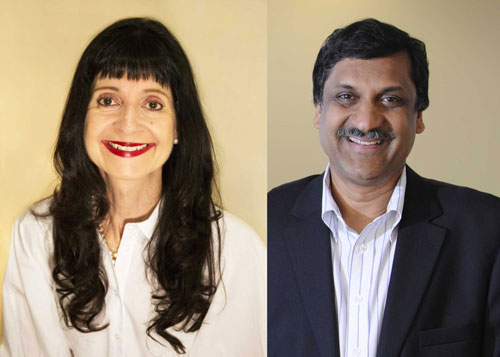
C. M. Rubin and Anant Agarwal