The use of technology as tool to help people learn in ways that are individualized, easy, and enjoyable is by no means a new phenomenon.
In the earliest days of man, paintings on cave walls enabled humans to convey complex ideas about the things they had seen while hunting and gathering in a way that was succinct and user-friendly. From as far back as 2700 B.C., wooden frames with bamboo rods and sliding beads taught students and merchants to carry out computations using a device we now know as the abacus. Utilized for thousands of years, writing slates and blackboards provided instructors a massive canvas–not at all dissimilar to the cave wall– with which to jot down copious information in a centralized location from which students could read, absorb, and ultimately take notes of their own.
Over time, these now-obsolete devices were re-conceptualized in the form of newer tools–many of which are also now out of fashion–designed to further transform the learning process into a tailor-made experience for each student in the classroom. From duplicating machines and overhead projectors to cuisenaire rods and the advent of CD-ROMs and computer-based training, cutting-edge technology and academic advancement have gone hand-in-hand for as long as history books have documented their progress.
Today, we find ourselves face-to-face with a completely new generation of educational technology, which in many cases resembles nothing we’ve seen before in an academic context.
Types of Educational Technology
Tablets and Mobile Devices
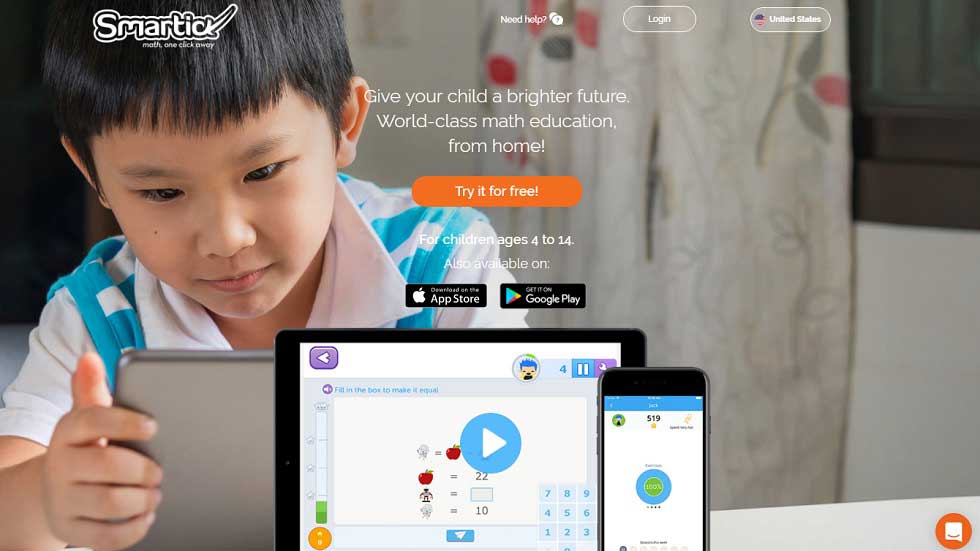
More and more, classrooms are shifting towards a type of learning that is rooted in collaboration, both within and outside of the classroom. The combination of processing ability, storage space, and incessant updating of smartphone and mobile device technology has made these tools a growing and attractive platform for learning. Here, the use of educational apps and learning games in conjunction with familiar processing tools such as Microsoft Word, PowerPoint, PDF files, and high-resolution images, makes mobile learning an ever more attractive prospect for future classrooms. What’s more, clickers and smartphones can be used to promote interaction through which students can respond to polls or participate in different learning games.
Social Networks
Notable research findings revealed that over half of the 96% of students that reported having internet access in their homes use social networks to discuss schoolwork. Social networking consistently promotes collaboration and can be a tool for confidence-building among students. From
class-specific blogs and web pages, to wikis that focus on a generalized school subjects, social networks allow students a space to chat, work together, and support one another in the interest of honing their understanding of topics covered in school.
Virtual Whiteboards
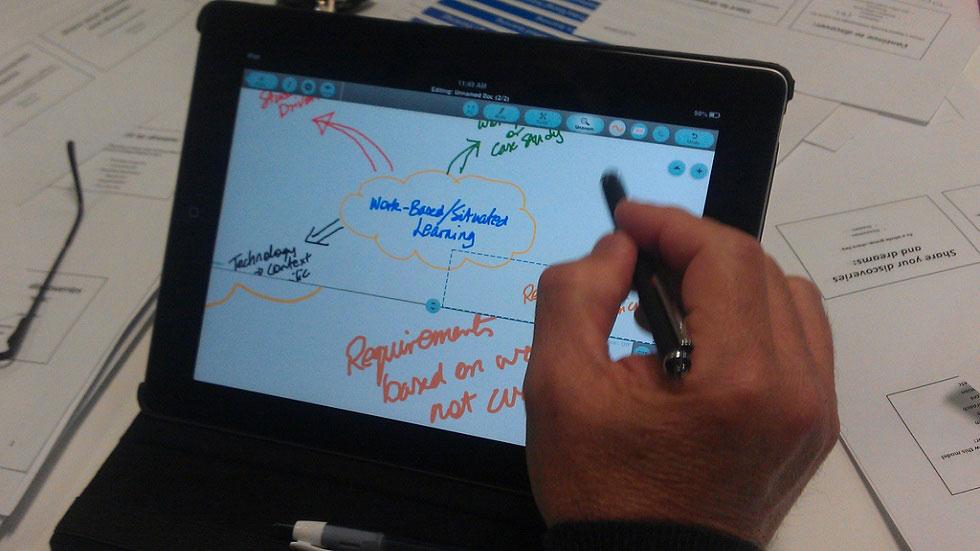
Virtual whiteboards constitute another collaborative tool through which students and teachers can simulate the dry-erase marker and whiteboard experience to which they’ve become accustomed with a modern twist. Interactive boards allow learners to write, draw, and manipulate images on a touch screen as a way of creating a learning experience that is participatory and engaging.
Screencasting
Never before have learners and educators been afforded the opportunity to present their unique ideas in a manner quite as public and interactive as with a screencasting function. This technology enables users to project their screens directly from their browser to a larger device, while also allowing for activities such as audio and video streaming. In this way, learners can pause and rewind content, providing them a way to review class material at their own pace and benefit from more customized learning.
Webcams and Virtual Classrooms
In continuing with the theme of a more individualized learning experience, the incorporation of webcams and remote learning applications such as Google Hangouts or Skype enables massive classroom learning experiences from just about any location. Conceivably, as this technology continues to advance, the “sick day” could become a thing of the past, as students could continue learning from the comfort of their own bed, provided they have the necessary learning materials.
Integration
With the advent of these new technologies in the context of classroom learning, the last frontier is successful integration of these devices as part of the learning experience. There are a variety of ways that instructors can incorporate tablets, smartphones, virtual screens and the like into their daily instructional activities, and much of these will depend on the needs of each class.
As the technology overview noted, some teachers might utilize the PowerPoint application to create a game show format similar to Jeopardy, Wheel of Fortune, or Millionaire to encourage a game-like twist to the traditional learning experience.
Other teachers might find substantial value in the use of Twitter. How better to take a catalogue of information on any particular subject and condense it to a bite-sized 140 character summary? Others still might consider creating a podcast that summarizes the information covered in class, allowing students a means to access class material outside of the classroom and review it at a pace that best suits them.
The options for tech usage in the educational space are vast, and the prospect of combining different devices only expands the parameters within which instructors can work, making boundaries for modes of learning seemingly infinite.
Benefits
The advantages associated with using cutting-edge technology in the education space are truly boundless. The ability to learn remotely with applications that enable students to go at their own pace makes for an individualized experience that truly nurtures each student. What’s more, online groups that serve as support hubs for students to congregate and collaborate provide a community dynamic, which directly combats one of the most common criticisms lodged against the use of technology: its ability to hamper socialization.
Beyond these, however, the use of technology in education is effective because it is rooted in theory and is evidence-based. Teachers employ tools that allow for instant feedback, adaptive content, and frequent testing in order to ensure that everyone is on the same page.
Research focusing on technology’s impacts in the classroom also present a compelling case. Literacy rates in kindergarten students are markedly higher among those that use and share iPads than those that don’t. When UC Irvine Med students used iPads for academic purposes, the reported scoring 23% higher on national exams than previous classes that did not. Further still, studies have revealed a link between the use of mobile devices and apps among disabled students and increases in engagement, learning, and accelerated comprehension.
If history is any indicator, technology won’t ever simply stop evolving. As it continues to reinvent itself, classrooms and the way that we learn will continue to change as well, making it crucial that students are afforded every opportunity to learn in ways that are unique and dynamic. The inundation of new devices and software platforms that we routinely experience can sometimes be overwhelming, but harnessed effectively, such tools can transform classrooms and give every student a fair shake at learning.