
This website stores cookies on your computer. These cookies are used to improve your website experience and provide more personalized services to you, both on this website and through other media.
Accept
EdTechReviewEdTechReview
  • News
  • Trends
  • Insight
  • eLearning
  • Research
  • Dictionary
  • EdTech Voices
  • More
    • Data & Statistics
    • Reviews
    • AWS for Education
    • Events

    Resources

    • Infographics
    • Reports & Case Studies
    • Videos
    • Books
    • Webinar

    Needs

    • 1:1 Learning
    • 21st Century Education
    • 21st Century Leadership
    • 21st Century Learning
    • 21st Century Teaching
    • 3D Printing
    • More Tags

    For

    • Students
    • Teachers/Educators
    • Administrators
    • Entrepreneurs/Startups
    • Govt. Officials/Policymakers
    • Parents
Explore
Search
Contribute
  • Submit A Post
  • EdTech Trainers and Consultants
  • Your Campus EdTech
  • Your EdTech Product
  • Your Feedback
  • Your Love for Us
  • EdTech Product Reviews
ETR Resources
  • About
  • Mission/Vision
  • Team
  • Services
  • Testimonials
  • Authors
  • Sponsor
  • Partner
  • Advertise
  • Our Clients
  • Media Kit
  • Press Release
  • FAQ’S
Reading: What does QWERTY mean to you?
Aa
EdTechReviewEdTechReview
Aa
Search
  • News
  • Trends
  • Insight
  • eLearning
  • Reviews
  • Dictionary
  • EdTech Voices
  • Data & Statistics
  • Research
  • AWS for Education
  • Events
  • EdTech Voices
  • Tags
  • About
  • FAQ’S
  • Our Clients
  • Partner
Follow US
Home > News > What does QWERTY mean to you?
News

What does QWERTY mean to you?

Timothy Monreal
Timothy Monreal Published Nov 26, 2014
Share
4 Min Read
Technology Can Support Authentic Learning
SHARE

What do those letter stand for?

AdvertisementWhy this Ad?

A vision chart?

AdvertisementWhy this Ad?

A revolutionary acronym?

No and no. Take a look at the first row of your computer keyboard. Go ahead, I will wait. Reading on an iPad or iPhone? Pull up your keyboard. It still works.

You should see Q W E R T Y, exactly in that order. Ever wonder why those letters appear like that on the keyboard?

Let me inform you real quick. In the early stages of the typewriter the keys used to jam frequently, especially if commonly typed letters were located next to each other. The solution then was to separate common letters. Easy fix.

I hope this question popped into your mind–then why did we keep it like this?

Great question. It didn’t take long for the jamming issue to be corrected, but we insisted on keeping Q W E R T Y. People complained the social cost of switching would be too high. We already learned to type a certain way, and if we switched people would lose the skills they learned. Although it might make sense to have a keyboard where the most commonly used letter are together, we bucked the ‘rational’ thought because we didn’t want to change what we were used to. As Seymour Papert (1980) wrote, “preserving practices that have no rational basis beyond their historical roots in an earlier period of technological and theoretical development.”

So what does this have to do with education?

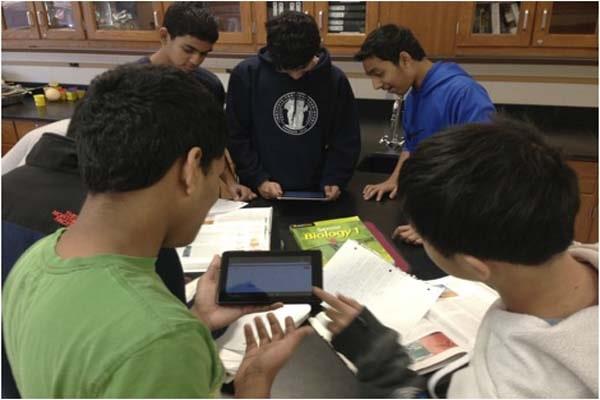
Papert used Q W E R T Y as an analogy to how we use computers in the classroom. Although children can use computers to create, build, program, imagine, and discover, we use them for outdated pedagogy like drill and kill. We want the computer to do something to the child. We want the computer to make the child a better reader, a faster multiplier, a quicker memorizer. We have this backward.

Here’s one more interesting question–when did Papert write the above points?

34 years ago in the year 1980!!!!!!

This is why I recommend his classic book, Mindstorms. It may not be the most flashy book or even the easiest to read. There are some parts that feel outdated and some sections are admittingly a bit tough to get through. But the overall message is extremely important to educators today. Computers can unlock powerful ideas, inspirational learning, and ultimate creativity in children. Children can use computers to be scientists and programmers, inventors and tinkerers. Children can learn how the world works through discovery and exploration. Children can learn skills like persistence, collaboration, and ‘de-bugging’. Computers can make learning participatory and exciting.

Yet education technology and the way we use computers in the classroom smells a lot like Q W E R T Y. The pedagogy is outdated and we make computers fit that historic pedagogy. For what reason? The reason is we feel very comfortable and we really don’t want to change what we are used to. Even if what we are used to makes no sense today. I think it’s time for that to change. 
TAGGED: Technology in Education
Share This Article
Facebook Twitter Whatsapp Whatsapp LinkedIn Reddit Telegram Email Copy Link
Previous Article Same Education System But What You Want to Learn Depends On You Same Education System, But What You Want to Learn Depends On You
Next Article LISTedTECH: Listing of Who uses What Products in HigherEd
AdvertisementWhy this Ad?

Latest EdTech News To Your Inbox

Stay Connected

AdvertisementWhy this Ad?

Latest EdTech News To Your Inbox

Stay Connected

AdvertisementWhy this Ad?

You Might Also Like

Prep Edu - British Councils top 3 partners in East Asia
News

Prep Edu – British Council’s Top 3 Partners in East Asia

Apr 14, 2026
K-12 EdTech Startup Qweebi Raises $500k To Bring Hands-On STEM & Robotics To Millions Of Students
News

K-12 EdTech Startup Qweebi Raises $500k To Bring Hands-On STEM & Robotics To Millions Of Students

Mar 29, 2026
SchoolStatus Launches Literacy Solution to Help Districts Engage Families in Improving Reading Outcomes
News

SchoolStatus Launches Literacy Solution to Help Districts Engage Families in Improving Reading Outcomes

Mar 12, 2026
How One Canadian Startup Is Reinventing Language Learning with AI
News

How One Canadian Startup Is Reinventing Language Learning with AI

Mar 12, 2026
How AI Transcript Evaluation Automates GPA Re-Calculations and Curriculum Matching
News

How AI Transcript Evaluation Automates GPA Re-calculations and Curriculum Matching

Feb 27, 2026
Emversity Raises Series A Funding
News

Emversity Raises $30 Million (₹271 Crore) in Series A funding

Jan 17, 2026
EGF An Open File Format for Educational Games
News

EGF: An Open File Format for Educational Games

Nov 26, 2025
Prep Edu  From a Young Startup to a Leading EdTech Company in Asia
News

Prep Edu – From a Young Startup to a Leading EdTech Company in Asia

Nov 20, 2025
Show More
EdTechReviewEdTechReview

H433, 2nd Floor, Vikaspuri, New Delhi, India, 110018
Phone: 011 41321030

Follow US

Copyright © EdTechReview. All Rights Reserved.

  • Home
  • Advertise
  • Event Associations
  • Press Release
  • About
  • Services
  • Contribute
  • News
  • Trend & Insight
  • Data & Statistics
  • eLearning
  • Reviews
  • Research
  • EdTech Voices
  • Dictionary
  • Tags
  • Resources
  • Events
  • Courses
  • EdTech Product for Review
  • Sponsored/Paid Post Service
  • Our Clients
  • FAQ’S
  • Contact Us
  • Important Links
  • Sitemap
  • Terms of Use
  • Privacy Policy
newsletter
Join 100K+ subscribers!

Subscribe to our weekly newsletter that brings the latest EdTech news, trends, insights, reports, interviews, etc. for educators, school leaders, entrepreneurs, investors, & others.

loader
Zero spam, Unsubscribe at any time.
Go to mobile version
Welcome Back!

Sign in to your account

Lost your password?