
This website stores cookies on your computer. These cookies are used to improve your website experience and provide more personalized services to you, both on this website and through other media.
Accept
EdTechReviewEdTechReview
  • News
  • Trends
  • Insight
  • eLearning
  • Research
  • Dictionary
  • EdTech Voices
  • More
    • Data & Statistics
    • Reviews
    • AWS for Education
    • Events

    Resources

    • Infographics
    • Reports & Case Studies
    • Videos
    • Books
    • Webinar

    Needs

    • 1:1 Learning
    • 21st Century Education
    • 21st Century Leadership
    • 21st Century Learning
    • 21st Century Teaching
    • 3D Printing
    • More Tags

    For

    • Students
    • Teachers/Educators
    • Administrators
    • Entrepreneurs/Startups
    • Govt. Officials/Policymakers
    • Parents
Explore
Search
Contribute
  • Submit A Post
  • EdTech Trainers and Consultants
  • Your Campus EdTech
  • Your EdTech Product
  • Your Feedback
  • Your Love for Us
  • EdTech Product Reviews
ETR Resources
  • About
  • Mission/Vision
  • Team
  • Services
  • Testimonials
  • Authors
  • Sponsor
  • Partner
  • Advertise
  • Our Clients
  • Media Kit
  • Press Release
  • FAQ’S
Reading: Improved Accessiblity with Mobile Technology in the Classroom
Aa
EdTechReviewEdTechReview
Aa
Search
  • News
  • Trends
  • Insight
  • eLearning
  • Reviews
  • Dictionary
  • EdTech Voices
  • Data & Statistics
  • Research
  • AWS for Education
  • Events
  • EdTech Voices
  • Tags
  • About
  • FAQ’S
  • Our Clients
  • Partner
Follow US
Home > Trend & Insight > Insight > Improved Accessiblity with Mobile Technology in the Classroom
Insight

Improved Accessiblity with Mobile Technology in the Classroom

Daniel Howard
Daniel Howard Published Feb 24, 2020
Share
5 Min Read
Embedding Digital Literacy in the Classroom
SHARE

Mobile devices in the classroom have a bad reputation as distractions and time-wasters.

AdvertisementWhy this Ad?

But the fact of the matter is that mobile technology is an inevitable part of the modern classroom. So instead of focusing on the perils of mobile tech, it’s important to integrate it into education in such a way that it benefits teachers, students, and administrative staff.

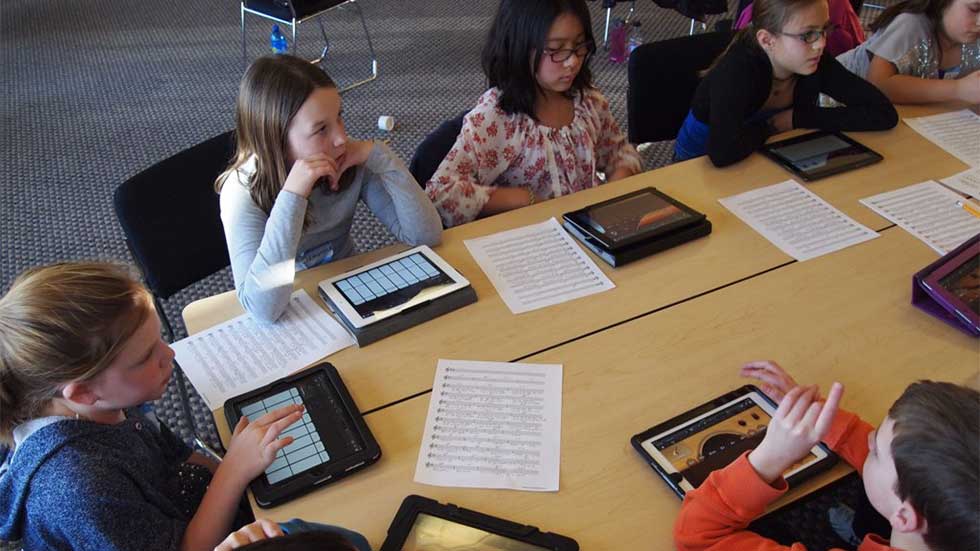
And one place that mobile technology has always excelled is in its ability to improve accessibility. Whether access to new information, different media, or education itself mobile is an important part of technology in the classroom as a whole.

Connectivity

The fundamental purpose of mobile devices is connectivity. Even the earliest version of the cell phone connected people to each other through the ever-present ability to make a phone call. Today smartphones and connected tablets offer every individual their own portal to the Internet and the sum of all human information. Never before has humanity has so much information at their fingertips.

On a more personal level, however, mobile devices connect students, teachers, and support staff to each other. People can through direct calling and text messages to widely available communication tools like WhatsApp or Slack and even self-managed social media communities on Facebook, Reddit, or any of a huge number of platforms. Whether for group projects or to ask questions, mobile devices make it easy for learners and educators to connect to their peers anywhere at any time.

Remote Learning

Remote learning works well as a supplement to regular lessons, as part of blended learning or a flipped classroom, or even as a stand-alone course. It could include lessons that are streamed live either with a webcam or screencasting software. Remote learning could also be a lesson recorded in some way for later review. Alternatively, remote learning could be a native online learning program like an LMS (learning management system) or MOOC (massive open online course).

The value of remote learning would depend very much on how it is to be used, but it’s a great addition to a curriculum both inside and outside the classroom.

  • Students who are miss class or live in remote areas can use remote learning to keep up with their lessons from wherever they are.
  • Teachers can supplement live lessons with remote content either from a live stream or a set of recorded media.
  • Recorded lessons offer students the opportunity to review and reinforce materials at their own pace.
  • Using mobile technology means that students take learning materials with them to other locations around the classroom, the school, or the community as needed.

Accommodates Multiple Learning Styles

And mobile technology in the classroom doesn’t just help students from a distance. For many students with learning challenges, mobile technologies can break down barriers to academic success in traditional learning environments. A mobile device could present information more efficiently to a student with dyslexia or in a format structured for learners on the autism spectrum. Or a phone or a tablet could help a student with reduced mobility better access and interact with course materials.

It could even be as simple as allowing students to switch media to better suit their learning styles. A visual learner having problems engaging with a lecture can access a video – or an illustrated text – while still participating in the lesson. An auditory learner can use text-to-speech to optimize learning. Or a kinesthetic learner can actually move around with the device to improve engagement while staying connected to learning materials.

Final Thoughts

Mobile technology in the classroom is a double-edged sword for sure. But when it is applied correctly, mobile tech in education avoids the pitfalls of distraction and reduced communication while leveraging the engagement and versatility of personal devices.

Most of all, however, mobile devices do for education what they do for everyone: they make learning more accessible. Now everyone with a device can get a better education where they are and on their own terms. In a connected world, all learning is available in the palm of your hand.


Img Src

TAGGED: 21st Century Teaching, Administrators, Blended Learning, Flipped Classroom, Learning Style/Multiple Intelligence, Teachers/Educators, Tips for Administrators, Tips for Teachers/Educators, Tools for Administrators, Tools for Teachers/Educators
Share This Article
Facebook Twitter Whatsapp Whatsapp LinkedIn Reddit Telegram Email Copy Link
Previous Article Certif-IDs Take on the Scenario of Fake Certificates Certif-ID’s Take on the Scenario of Fake Certificates
Next Article EdTech - Education 20 in the New Decade EdTech – Education 2.0 in the New Decade
AdvertisementWhy this Ad?

Latest EdTech News To Your Inbox

Stay Connected

AdvertisementWhy this Ad?

Latest EdTech News To Your Inbox

Stay Connected

AdvertisementWhy this Ad?

You Might Also Like

Top 10 Montessori Teacher Training MTT Courses in India 2026-27 Edition
News

Top 10 Montessori Teacher Training (MTT) Courses in India: 2026-27 Edition

Sep 9, 2026
Schools Went Digital Why Is Student Transportation Still So Fragmented
Insight

Schools Went Digital. Why Is Student Transportation Still So Fragmented?

Sep 8, 2026
Top 10 Early Childhood Care and Education ECCE Courses for Teachers in India 2026-27
News

Top 10 Early Childhood Care and Education (ECCE) Courses for Teachers in India 2026-27

Sep 5, 2026
How to Build Educational Apps That Drive Real Teacher and Student Adoption in 2026
Insight

How to Build Educational Apps That Drive Real Teacher and Student Adoption in 2026

Sep 1, 2026
Why AI Lesson Planning Tools Are Only Solving Half the Problem
Insight

Why AI Lesson Planning Tools Are Only Solving Half the Problem

Aug 31, 2026
How Learning Gaps Can Be Identified Before Assessment AI-Powered Insights
Research

How Learning Gaps Can Be Identified Before Assessment (AI-Powered Insights)

Aug 28, 2026
The Future Belongs to Children Who Can Change Their Minds
Insight

The Future Belongs to Children Who Can Change Their Minds

Aug 26, 2026
Were Teaching Children for Jobs That Wont Exist Heres What We Should Teach Instead
Insight

We’re Teaching Children for Jobs That Won’t Exist, Here’s What We Should Teach Instead

Aug 15, 2026
Show More
EdTechReviewEdTechReview

H433, 2nd Floor, Vikaspuri, New Delhi, India, 110018
Phone: 011 41321030

Follow US

Copyright © EdTechReview. All Rights Reserved.

  • Home
  • Advertise
  • Event Associations
  • Press Release
  • About
  • Services
  • Contribute
  • News
  • Trend & Insight
  • Data & Statistics
  • eLearning
  • Reviews
  • Research
  • EdTech Voices
  • Dictionary
  • Tags
  • Resources
  • Events
  • Courses
  • EdTech Product for Review
  • Sponsored/Paid Post Service
  • Our Clients
  • FAQ’S
  • Contact Us
  • Important Links
  • Sitemap
  • Terms of Use
  • Privacy Policy
newsletter
Join 100K+ subscribers!

Subscribe to our weekly newsletter that brings the latest EdTech news, trends, insights, reports, interviews, etc. for educators, school leaders, entrepreneurs, investors, & others.

loader
Zero spam, Unsubscribe at any time.
Go to mobile version
Welcome Back!

Sign in to your account

Lost your password?