This website stores cookies on your computer. These cookies are used to improve your website experience and provide more personalized services to you, both on this website and through other media.
Accept
EdTechReviewEdTechReview
  • News
  • Trends
  • Insight
  • eLearning
  • Research
  • Dictionary
  • EdTech Voices
  • More
    • Data & Statistics
    • Reviews
    • AWS for Education
    • Events

    Resources

    • Infographics
    • Reports & Case Studies
    • Videos
    • Books
    • Webinar

    Needs

    • 1:1 Learning
    • 21st Century Education
    • 21st Century Leadership
    • 21st Century Learning
    • 21st Century Teaching
    • 3D Printing
    • More Tags

    For

    • Students
    • Teachers/Educators
    • Administrators
    • Entrepreneurs/Startups
    • Govt. Officials/Policymakers
    • Parents
Explore
Search
Contribute
  • Submit A Post
  • EdTech Trainers and Consultants
  • Your Campus EdTech
  • Your EdTech Product
  • Your Feedback
  • Your Love for Us
  • EdTech Product Reviews
ETR Resources
  • About
  • Mission/Vision
  • Team
  • Services
  • Testimonials
  • Authors
  • Sponsor
  • Partner
  • Advertise
  • Our Clients
  • Media Kit
  • Press Release
  • FAQ’S
Reading: Scope of Adoption of Open Educational Resources (OERs) in India
Aa
EdTechReviewEdTechReview
Aa
Search
  • News
  • Trends
  • Insight
  • eLearning
  • Reviews
  • Dictionary
  • EdTech Voices
  • Data & Statistics
  • Research
  • AWS for Education
  • Events
  • EdTech Voices
  • Tags
  • About
  • FAQ’S
  • Our Clients
  • Partner
Follow US
Home > Trend & Insight > Insight > Scope of Adoption of Open Educational Resources (OERs) in India
Insight

Scope of Adoption of Open Educational Resources (OERs) in India

Editorial Team Published Oct 22, 2014
Share
6 Min Read
Scope of Adoption of Open Educational Resources OERs in India
Scope of Adoption of Open Educational Resources (OERs) in India
SHARE

Open Educational Resources (OER) is the revolutionary movement which has surprised and transformed education system around the world.

AdvertisementWhy this Ad?

Though this movement started way back but gained momentum when MIT in 2001 decided to put their learning material online for the rest of the world to use. This Term was coined by UNSCO in 2002 and gave definition for OER:

“Open Educational Resources are teaching, learning or research materials that are in the public domain or released with an intellectual property license that allows for free use, adaptation, and distribution.”

OER proved to be a solution for addressing major challenges of Higher education like, high cost, huge infrastructure, quality of teachers, huge teacher’s deficit  etc. especially in developing countries.

There are numerous reasons to assert for adopting OER in Higher Education in India. Over the last decade or so, globally so much has advanced in this area but somehow India is lacking behind due to lack of proper vision of using OER .Govt. of India has started many initiatives toward its adoption like:

National Science Digital Library(NSDL) ,NPTEL,National Mission on Education through Information and Communication Technology (NME-ICT),VASAT of ICRISAT,ekalavya and many more…..Due to lack of awareness amongst educational institutes all these initiatives have not yet grabbed attention and are still in their zero state.

In country like India which has highest no. of university age student in the world, only 10% is getting formal higher education. There is a huge gap between demand for and supply of higher education. To bridge this gap; OER has great potential not only in providing access to education for all but also to provide them quality education. A student sitting in tier 3 city doesn’t have access to best education. Indian education system suffers a huge deficit of good teachers. Even top institutes like IITs, IIMs , NITs do not have sufficient number of teachers. In such situation, OER can serve asa solution to overcome the challenges of access, quality and cost in providing or participating in higher education. With OER student sitting at any part of country can learn from the best content and from the best teachers of the world.

Adoption of OER by learning institutions is changing the landscape of education everywhere and hence provides a strategic opportunity to dramatically improve both the access and the quality of education worldwide. Classroom is not limited to just four walls but becoming part of global network of people, ideas and creativity using popular social media tools and sites. With the help of ICT, education can reach out to the remote areas where there is no infrastructure and other resources, what is required are only internet connection with a compatible device.

OER when used with ICT empowers a student and faculty to learn in an efficient way. There are many advantages of using OER like:

  • Better Learning Outcomes
  • Excellent opportunity to learn from high quality top notch material
  • Students motivation who can review the course material at their own pace and time
  • Faculty development and recognition
  • The school cannot retain its competitive edge without it.

OER adoption and accompanying learning and teaching processes promote rich set of interactions among teachers, students and the learning community at large. The Teachers play the role of mentors and facilitators, guiding students in class through practical applications of the material. Students take a direct responsibility for their learning. This is a dramatic shift and requires different way of thinking, and behaving: giving up command and control of the class room on the part of the teachers and a positive engagement on the part of the students. The new learned skills will serve students well in their chosen careers and help them compete effectively in the global workplace.

Teaching a class effectively in the new environment, influencing and motivating students, sharing information freely are not skills that all teachers’possess naturally or can be left to learn on their own: they require special teacher training programs. For this, EdTechReview and Progia team have been actively involved in doing workshops on Open Educational Resources (OER) at various educational institutes, where they provide hands-on practice to a faculty to use it in their classroom effectively and effortlessly. We have also created a free course on “OER for learning and Teaching”. To taourse and know more about Progia , Click HERE.
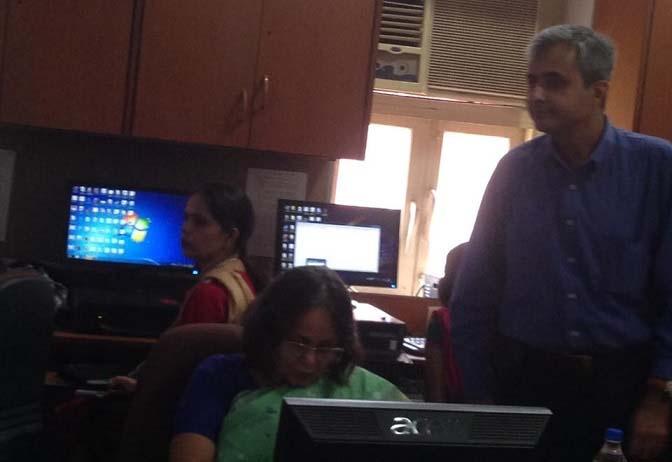
oer workshop india

OER workshop India


TAGGED: Administrators, Higher Education, Indian Education, Open Educational Resources, Teachers/Educators, Training and Professional Development
Share This Article
Facebook Twitter Whatsapp Whatsapp LinkedIn Reddit Telegram Email Copy Link
By Editorial Team
Follow:
EdTechReview (ETR) is a premier media platform and community for educational stakeholders to connect and find useful news, information and resources on educational technology having a niche subscriber base of 120K+ and an annual readership of 3M+ from over 220 countries and territories across the globe.
Previous Article Offline Access to Khan Academy Videos and Exercises Offline Access to Khan Academy Videos and Exercises
Next Article 30 Pinterest Boards for Elementary Teachers 30 Pinterest Boards for Elementary Teachers
AdvertisementWhy this Ad?

Latest EdTech News To Your Inbox

Stay Connected

AdvertisementWhy this Ad?

Latest EdTech News To Your Inbox

Stay Connected

AdvertisementWhy this Ad?

You Might Also Like

Top 10 Montessori Teacher Training MTT Courses in India 2026-27 Edition
News

Top 10 Montessori Teacher Training (MTT) Courses in India: 2026-27 Edition

Sep 9, 2026
Schools Went Digital Why Is Student Transportation Still So Fragmented
Insight

Schools Went Digital. Why Is Student Transportation Still So Fragmented?

Sep 8, 2026
Top 10 Early Childhood Care and Education ECCE Courses for Teachers in India 2026-27
News

Top 10 Early Childhood Care and Education (ECCE) Courses for Teachers in India 2026-27

Sep 5, 2026
How to Build Educational Apps That Drive Real Teacher and Student Adoption in 2026
Insight

How to Build Educational Apps That Drive Real Teacher and Student Adoption in 2026

Sep 1, 2026
Why AI Lesson Planning Tools Are Only Solving Half the Problem
Insight

Why AI Lesson Planning Tools Are Only Solving Half the Problem

Aug 31, 2026
How Learning Gaps Can Be Identified Before Assessment AI-Powered Insights
Research

How Learning Gaps Can Be Identified Before Assessment (AI-Powered Insights)

Aug 28, 2026
The Future Belongs to Children Who Can Change Their Minds
Insight

The Future Belongs to Children Who Can Change Their Minds

Aug 26, 2026
Were Teaching Children for Jobs That Wont Exist Heres What We Should Teach Instead
Insight

We’re Teaching Children for Jobs That Won’t Exist, Here’s What We Should Teach Instead

Aug 15, 2026
Show More
EdTechReviewEdTechReview

H433, 2nd Floor, Vikaspuri, New Delhi, India, 110018
Phone: 011 41321030

Follow US

Copyright © EdTechReview. All Rights Reserved.

  • Home
  • Advertise
  • Event Associations
  • Press Release
  • About
  • Services
  • Contribute
  • News
  • Trend & Insight
  • Data & Statistics
  • eLearning
  • Reviews
  • Research
  • EdTech Voices
  • Dictionary
  • Tags
  • Resources
  • Events
  • Courses
  • EdTech Product for Review
  • Sponsored/Paid Post Service
  • Our Clients
  • FAQ’S
  • Contact Us
  • Important Links
  • Sitemap
  • Terms of Use
  • Privacy Policy
newsletter
Join 100K+ subscribers!

Subscribe to our weekly newsletter that brings the latest EdTech news, trends, insights, reports, interviews, etc. for educators, school leaders, entrepreneurs, investors, & others.

loader
Zero spam, Unsubscribe at any time.
Go to mobile version
Welcome Back!

Sign in to your account

Lost your password?