Technology is a boon or bane? – a question of perpetual debate.
For all the distractions that result out of it, technological developments have become constant companions for humans. From helping us navigate the streets accurately to landing on Mars, technology is aiding human civilization on the path of progress. Dan Brown in his book Origin even got to the conclusion that an amalgamation of technology and human is the next step of evolution.
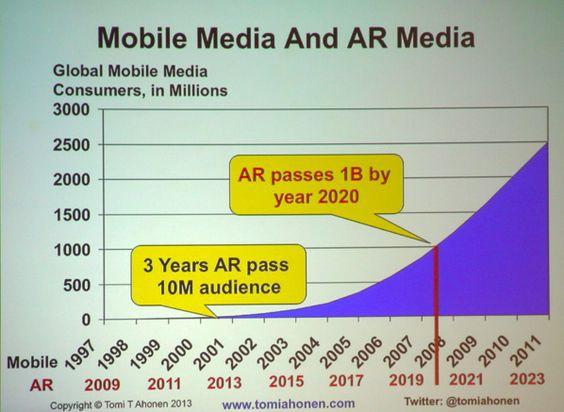
Currently, the world of education technology is a buzz with the discussions on Augmented Reality (AR) and Virtual Reality (VR). According to International Data Corporation’s (IDC) 2019 report on popularization of AR and VR technology, there will be a steep rise in their growth internationally. With the popularization of these EdTech tools, the transformation that AR and VR have brought for students with special needs cannot be overlooked.

What is Augmented Reality (AR)?
AR technology enables an individual a live, direct or indirect, view of a physical, real world environment whose elements are supplemented (augmented) by sensory inputs like sound, video, graphics, etc generated by computer. It is a tool of enhanced and improved interaction and understanding of reality. A good example of this would be, say, a table top that suggests cooking recipes based on the ingredients kept on it. AR is the next big technological advancement according to market analysts.
What is Virtual Reality (VR)?
VR technology offers a computer-simulated reality for an immersive experience of a replicated environment of a real or imagined world with which the user can establish interaction via simulated physical presence. Although VR technology has been in the market for quite some time now, head mounted displays (HMDs) are the recent gear for accessing this technology.
Comparison between AR and VR
- Purpose - While both AR and VR share the purpose of creation of artificial digital worlds in order to allow and maximise user interaction with respective technologies, they differ in the extent of creation they aim. AR seeks to create a partial artificial world in symbiosis with the real world, and VR seeks a complete digital creation of imagined world or reality.
- Experience with the technology - While using VR, one has to wear a head gear which provides a full immersive experience to the user. On the other hand, AR requires only the acquisition of a smart phone by an individual and provides an easy access to switch between the real and virtual world.
- Application - AR and VR technology have similar applications that vary in degree of application only. They have revolutionized the following fields: medicine, science and technology, education, and entertainment industry.
AR and VR in Education Industry - an Aid to Special Education
According to UNESCO, three- fourth of children with special needs at the age 5, and one- fourth children with special needs between the ages 5-19 years do not attend any educational institution.
“The education of children with disabilities is still insufficiently addressed by schooling systems around the world.” - Eric Falt, Director, UNESCO New Delhi.
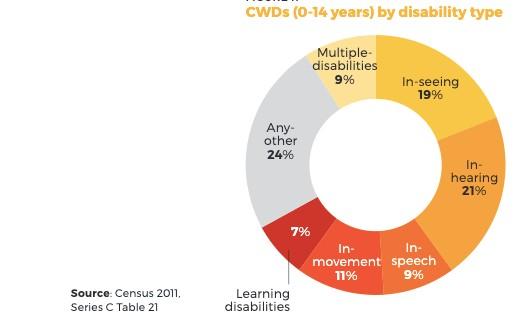
AR and VR can equip all schools with the support that children with special educational needs require. This can be further understood with the following elaborations -
- In relation with physical disabilities - Digitally simulated environments are used to teach children with physical disabilities to operate and navigate powered wheelchairs. With the physical limitations removed as a hurdle, children can grow up to be independent individuals. With right education, they can also enjoy the perks of work environment like people without physical disabilities do.
In addition to this, such a technology can be used to teach non-disabled peers about the barriers that exist within a school for their disabled peers. This will help in cultivation of a culture of empathy among the children.
- In relation with sensory impairment - A child facing sensory impairment is challenged in one or more of the three senses - vision, touch, and hearing. Use of technology does not remove such impairments but it can play a key role in enabling that individual in building functional and cognitive skills. Digitally simulated environments provide powerful and customized learning.
- In relation with Autism - Children with autism face challenges in the pragmatics of social interaction, and cognitive tasks such as contextualization and impulse control. Digitally simulated environments can help support communication skills for such children. Conversely, they can simulate an environment conducive to their cranial wavelength which would help them dissociate from the feeling of social exclusion. Research has proved that individuals with autism are able to transfer and extend the application of skill set learnt in virtual worlds to real world. It encourages multi-level learning, eg: learning how to manage anxiety of entering new spaces while learning navigation skills on virtually simulated environments.

- In relation with learning disabilities - A user-centric digital environment stimulant helps in creating environments that are conducive to effective education of children with learning disabilities.
- In relation with Attention Deficit Hyperactivity Disorder (ADHD) - ADHD negatively impacts the school and community life of a person. Small attention span, impulse control, and hyperactivity are some difficulties demonstrated by individual suffering from ADHD. Th closed view frame of the technological equipment does not let the child’s attention go astray. Further, they can be trained in simulated environments to express their reactions in a correct manner. Cognitive impairments arising from traumatic brain injury and other behavioral disorders can also be constructively dealt with such technology.
Closing Thoughts
Virtual reality assessments can be used by teachers as valid assessment tools of abilities of children with special educational needs. A major reason for children with special educational needs being home-schooled is the lack of empathetic tools for a constructive learning process. The educational disparity within the Indian education system can be removed by readily accepting AR and VR into classrooms. An added advantage of such an introduction is increased interest of non-disabled students as images are better retained by children than verbal teaching. It can also act as an aid to a child’s imaginative and creative abilities. Immersive learning experience is beneficial to all school children. Game-based learning works in increasing motivation and engagement of students.
Learning is not limited to the four walls of a classroom. A lot can be accomplished in a virtual environment that wouldn’t be possible in real life. Hence, right to effective technology is an extension of right to education. It is a fundamental right that no child should be deprived of, especially those with special needs.