
This website stores cookies on your computer. These cookies are used to improve your website experience and provide more personalized services to you, both on this website and through other media.
Accept
EdTechReviewEdTechReview
  • News
  • Trends
  • Insight
  • eLearning
  • Research
  • Dictionary
  • EdTech Voices
  • More
    • Data & Statistics
    • Reviews
    • AWS for Education
    • Events

    Resources

    • Infographics
    • Reports & Case Studies
    • Videos
    • Books
    • Webinar

    Needs

    • 1:1 Learning
    • 21st Century Education
    • 21st Century Leadership
    • 21st Century Learning
    • 21st Century Teaching
    • 3D Printing
    • More Tags

    For

    • Students
    • Teachers/Educators
    • Administrators
    • Entrepreneurs/Startups
    • Govt. Officials/Policymakers
    • Parents
Explore
Search
Contribute
  • Submit A Post
  • EdTech Trainers and Consultants
  • Your Campus EdTech
  • Your EdTech Product
  • Your Feedback
  • Your Love for Us
  • EdTech Product Reviews
ETR Resources
  • About
  • Mission/Vision
  • Team
  • Services
  • Testimonials
  • Authors
  • Sponsor
  • Partner
  • Advertise
  • Our Clients
  • Media Kit
  • Press Release
  • FAQ’S
Reading: What is the Maker Movement?
Aa
EdTechReviewEdTechReview
Aa
Search
  • News
  • Trends
  • Insight
  • eLearning
  • Reviews
  • Dictionary
  • EdTech Voices
  • Data & Statistics
  • Research
  • AWS for Education
  • Events
  • EdTech Voices
  • Tags
  • About
  • FAQ’S
  • Our Clients
  • Partner
Follow US
Home > Dictionary > What is the Maker Movement?
Dictionary

What is the Maker Movement?

Editorial Team Published Nov 16, 2015
Share
3 Min Read
What is the Maker Movement
What is the Maker Movement?
SHARE

The maker movement is a trend in which individuals or groups of individuals create and market products that are recreated and assembled using unused, discarded or broken electronic, plastic or virtually any raw material and/or product from a computer-related device. 

Contents
Also See: The Maker MovementDefining the ‘maker’ movement
AdvertisementWhy this Ad?

Educational and cognitive theorists refer to this approach to learning as Constructivism, after the learning theory put forth by Jean Piaget. Contrary to traditional models of learning through direct instruction, constructivists view the learning process as an evolving effort to refine what we know through assimilation and accommodation of information. When we as learners experience something new that fits a given schema, we join it with our existing notions of the way things are. Conversely, when we experience something that contradicts what we thought we knew to be true, we accommodate our paradigm to include information gained through new discoveries.

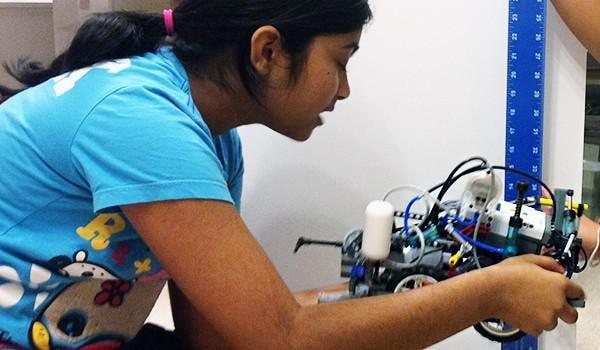
The Maker Movement along with its establishment of makerspaces focuses on setting up learning environments where students have the tools and resources necessary for such constructivist learning to take place. Tools that might be found in any given makerspace include glue guns, arduinos, soldering irons, legos, cardboard, recycled materials, hammers, and more. If it lends itself to designing, building, or experimentation, it can probably be found next to a maker.

The maker movement is primarily the name given to the increasing number of people employing do-it-yourself (DIY) and do-it-with-others ( DIWO) techniques and processes to develop unique technology products. Generally, DIY and DIWO enables individuals to create sophisticated devices and gadgets, such as printers, robotics and electronic devices, using diagrammed, textual and or video demonstration.

The maker movement holds particular promise for science, technology, engineering and math classrooms. Amazing new tools, materials, and skills turn us all into makers. Using technology to make, repair, or customize the things we need brings engineering, design, and computer science to the masses. Hundreds of thousands of adults and children are frequenting Maker Faires, hackerspaces, and DIY (Do-It-Yourself) websites. This maker movement overlaps with the natural inclinations of curious children and the power of learning by doing. It holds the keys to reanimating the best, but oft-forgotten learner-centered teaching practices. The magic of the middle years, where students can shift seamlessly between childhood play and preparation for serious academics are the perfect place for these engaging, transformative new tools and materials.


Also See: 

The Maker Movement

Defining the ‘maker’ movement
 

Img Src

TAGGED: Administrators, EdTech Dictionary, Maker Movement, Parents, Students, Teachers/Educators, Technology in Education, Tips for Administrators, Tips for Parents, Tips for Students, Tips for Teachers/Educators, Trends
Share This Article
Facebook Twitter Whatsapp Whatsapp LinkedIn Reddit Telegram Email Copy Link
By Editorial Team
Follow:
EdTechReview (ETR) is a premier media platform and community for educational stakeholders to connect and find useful news, information and resources on educational technology having a niche subscriber base of 120K+ and an annual readership of 3M+ from over 220 countries and territories across the globe.
Previous Article What Successful Technology Integration Must Mean for Educational Leaders What Successful Technology Integration Must Mean for Educational Leaders
Next Article Free Resources to Support Your Makerspace Free Resources to Support Your Makerspace
AdvertisementWhy this Ad?

Latest EdTech News To Your Inbox

Stay Connected

AdvertisementWhy this Ad?

Latest EdTech News To Your Inbox

Stay Connected

AdvertisementWhy this Ad?

You Might Also Like

How AI and Smart Sensors Are Creating Safer Learning Environments
Trends

How AI and Smart Sensors Are Creating Safer Learning Environments

Jul 16, 2026
Common Challenges Schools Face When Moving to Digital Assessments
Insight

Common Challenges Schools Face When Moving to Digital Assessments

Jul 14, 2026
Whats Actually Costing Students Their Spot at University The Most Common Rejection Reasons in 2026
Insight

What’s Actually Costing Students Their Spot at University. The Most Common Rejection Reasons in 2026

Jul 10, 2026
How Students Can Turn Learning Into a Job-Ready Resume
Insight

How Students Can Turn Learning Into a Job-Ready Resume

Jul 8, 2026
upEducators Top Choice for Becoming a Nursery Teacher in India
News

Why is upEducators the Top Choice for Nursery Teacher Training (NTT) Course in India?

Jul 7, 2026
What Schools Really Pay Without Language Access Systems in Place
Insight

What Schools Really Pay Without Language Access Systems in Place

Jul 4, 2026
Stop Teaching Students More Apps Teach Them How to Handle Files
eLearning

Stop Teaching Students More Apps, Teach Them How to Handle Files

Jul 3, 2026
Indian EdTech Has Been Solving the Problem It Can Bill For Not the One Children Have
Insight

Indian EdTech Has Been Solving the Problem It Can Bill For, Not The One Children Have

Jul 2, 2026
Show More
EdTechReviewEdTechReview

H433, 2nd Floor, Vikaspuri, New Delhi, India, 110018
Phone: 011 41321030

Follow US

Copyright © EdTechReview. All Rights Reserved.

  • Home
  • Advertise
  • Event Associations
  • Press Release
  • About
  • Services
  • Contribute
  • News
  • Trend & Insight
  • Data & Statistics
  • eLearning
  • Reviews
  • Research
  • EdTech Voices
  • Dictionary
  • Tags
  • Resources
  • Events
  • Courses
  • EdTech Product for Review
  • Sponsored/Paid Post Service
  • Our Clients
  • FAQ’S
  • Contact Us
  • Important Links
  • Sitemap
  • Terms of Use
  • Privacy Policy
newsletter
Join 100K+ subscribers!

Subscribe to our weekly newsletter that brings the latest EdTech news, trends, insights, reports, interviews, etc. for educators, school leaders, entrepreneurs, investors, & others.

loader
Zero spam, Unsubscribe at any time.
Go to mobile version
Welcome Back!

Sign in to your account

Lost your password?