
This website stores cookies on your computer. These cookies are used to improve your website experience and provide more personalized services to you, both on this website and through other media.
Accept
EdTechReviewEdTechReview
  • News
  • Trends
  • Insight
  • eLearning
  • Research
  • Dictionary
  • EdTech Voices
  • More
    • Data & Statistics
    • Reviews
    • AWS for Education
    • Events

    Resources

    • Infographics
    • Reports & Case Studies
    • Videos
    • Books
    • Webinar

    Needs

    • 1:1 Learning
    • 21st Century Education
    • 21st Century Leadership
    • 21st Century Learning
    • 21st Century Teaching
    • 3D Printing
    • More Tags

    For

    • Students
    • Teachers/Educators
    • Administrators
    • Entrepreneurs/Startups
    • Govt. Officials/Policymakers
    • Parents
Explore
Search
Contribute
  • Submit A Post
  • EdTech Trainers and Consultants
  • Your Campus EdTech
  • Your EdTech Product
  • Your Feedback
  • Your Love for Us
  • EdTech Product Reviews
ETR Resources
  • About
  • Mission/Vision
  • Team
  • Services
  • Testimonials
  • Authors
  • Sponsor
  • Partner
  • Advertise
  • Our Clients
  • Media Kit
  • Press Release
  • FAQ’S
Reading: AI-Powered Writing Assistants: Do They Really Help Students Learn English?
Aa
EdTechReviewEdTechReview
Aa
Search
  • News
  • Trends
  • Insight
  • eLearning
  • Reviews
  • Dictionary
  • EdTech Voices
  • Data & Statistics
  • Research
  • AWS for Education
  • Events
  • EdTech Voices
  • Tags
  • About
  • FAQ’S
  • Our Clients
  • Partner
Follow US
Home > Trend & Insight > Insight > AI-Powered Writing Assistants: Do They Really Help Students Learn English?
Insight

AI-Powered Writing Assistants: Do They Really Help Students Learn English?

Kamonwan Achjanis
Kamonwan Achjanis Published Oct 6, 2025
Share
6 Min Read
AI-Powered Writing Assistants Do They Really Help Students Learn English
SHARE

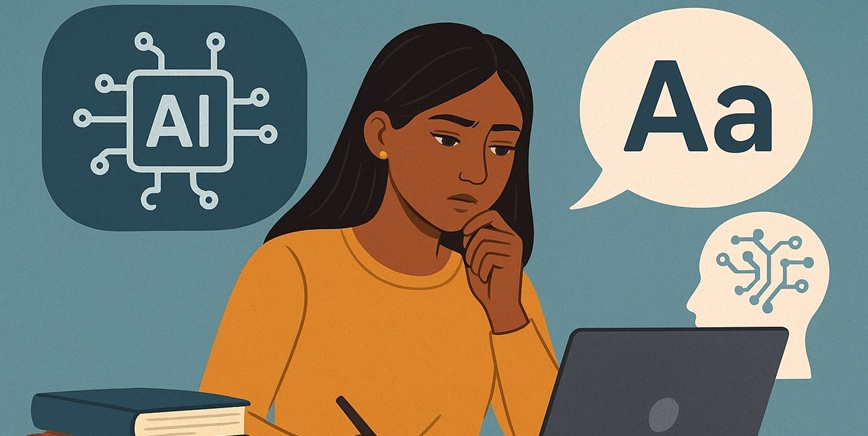
Modern AI-powered writing assistants like Grammarly, Quillbot, and ChatGPT promise to fix your grammar instantly and make your English writing better. But do these tools actually help students learn English, or are they just digital crutches?

Contents
What AI Writing Assistants Do WellThe Pitfalls Nobody Talks About EnoughHow to Use AI Wisely in English LearningFinal Thoughts
AdvertisementWhy this Ad?

Let’s take a sober look at both sides of the story.

What AI Writing Assistants Do Well

1. Catching Obvious Mistakes

Missing articles, wrong verb tenses, or spelling errors—AI is great at spotting these. A student who writes “She go to market yesterday” will get an instant suggestion: “She went to the market yesterday.” That’s feedback in real time, faster than a teacher can mark homework.

2. Boosting Confidence

Students often feel embarrassed about their writing. With AI, they can test ideas privately before sharing with others. It’s like whispering your English to a friendly robot before speaking to the class.

3. Expanding Vocabulary

Some tools suggest alternative words or phrases. If you keep writing “good,” the assistant may nudge you towards “excellent,” “outstanding,” or “effective.” For learners stuck in the land of “nice” and “very,” this can be refreshing.

4. Saving Teachers’ Time

Let’s be honest: correcting piles of essays is exhausting. With AI handling the basic grammar issues, teachers can focus on deeper aspects—like argument structure, creativity, and critical thinking.

The Pitfalls Nobody Talks About Enough

1. Passive Learning

If a tool fixes every mistake for you, are you really learning? Students often just click “accept” without understanding why the correction is made. Imagine trying to learn to cook by watching someone else stir the soup, but never holding the spoon yourself.

2. Over-Polishing

AI tends to make student writing sound… well, a bit robotic. Everyone starts producing the same “perfect” sentences, stripped of personality. The joy of language is in its quirks and creativity, and AI doesn’t always respect that.

3. False Confidence

AI sometimes gives wrong suggestions—very confidently. I’ve seen tools insist on changing perfectly correct sentences into nonsense. A student who blindly trusts the machine may end up less accurate than before.

4. Dependence

Here’s the danger: once you rely on AI for every sentence, writing without it feels impossible. Just like calculators made some students forget their multiplication tables, AI might make you forget how to write a simple paragraph on your own.

How to Use AI Wisely in English Learning

So, should we embrace AI or run away from it? At the language tutoring company BestKru English, where I teach, we choose neither. We use it — but wisely. Here are some simple guidelines on AI we give to our teachers and students:

1. Use It as a Mirror, Not a Crutch

Treat AI feedback like looking in a mirror: it shows you what’s wrong, but you still have to fix your hair yourself. When AI corrects your grammar, don’t just accept it—write down why the change was made. This builds awareness.

2. Set Boundaries

Don’t let AI rewrite your entire essay. Use it for grammar checks, not for generating full paragraphs. If you let it do all the heavy lifting, your muscles (a.k.a. your writing skills) won’t grow.

3. Compare Versions

After AI makes suggestions, compare them with your original. Ask yourself: Which one do I like more? Which one sounds more like me? This keeps your voice alive.

4. Teachers Should Guide, Not Ban

Some teachers panic and ban AI altogether. I think that’s like banning calculators in a math class—unrealistic. Instead, teach students how to use AI critically. For example:

  • First, write an essay without AI.
  • Then, run it through AI and analyse the differences.
  • Finally, reflect: What did I learn?

This process turns AI into a learning partner, not a lazy shortcut.

5. Focus on Output Beyond Writing

Remember: writing is not the final goal. Communication is. Students should still read books, join discussions, and speak in real contexts. No AI can replace that.

Final Thoughts

So, do AI-powered writing assistants really help students learn English?

  • Yes, if they are used as guides, mirrors, and practice partners.
  • No, if they are used as shortcuts, ghostwriters, or unquestioned authorities.

The choice is in our hands. Let’s not fear the machine, and let’s not worship it either. Instead, let’s teach students—and ourselves—how to stay human while using the smartest tools we’ve ever built.

And remember: your English doesn’t need to be perfect to be powerful. Even Shakespeare broke grammar rules. I doubt any AI would have let him get away with “To be or not to be” without suggesting a smoother sentence. But luckily, he didn’t listen.


TAGGED: AI Teaching Tools, AI-based Learning, English as a Second Language, English Learning App, Foreign Language, Language Learning, Online English Learning
Share This Article
Facebook Twitter Whatsapp Whatsapp LinkedIn Reddit Telegram Email Copy Link
By Kamonwan Achjanis
Follow:
Kamonwan Achjanis is the co-founder of BestKru, one of the largest EdTech companies in Thailand. She is working with hundreds of private teachers and tutors, advising them on how to improve the quality of teaching. Being involved in the development of several education software projects, she has deep expertise in EdTech and teaching online.
Previous Article How AI-Powered Course Authoring Helps Universities Cut Costs and Unlock New Revenue How AI-Powered Course Authoring Helps Universities Cut Costs and Unlock New Revenue
Next Article Brooklyn Friends Schools Approach to AI and the Future of Learning Brooklyn Friends School’s Approach to AI and the Future of Learning
AdvertisementWhy this Ad?

Latest EdTech News To Your Inbox

Stay Connected

AdvertisementWhy this Ad?

Latest EdTech News To Your Inbox

Stay Connected

AdvertisementWhy this Ad?

You Might Also Like

Common Challenges Schools Face When Moving to Digital Assessments
Insight

Common Challenges Schools Face When Moving to Digital Assessments

Jul 14, 2026
Whats Actually Costing Students Their Spot at University The Most Common Rejection Reasons in 2026
Insight

What’s Actually Costing Students Their Spot at University. The Most Common Rejection Reasons in 2026

Jul 10, 2026
How Students Can Turn Learning Into a Job-Ready Resume
Insight

How Students Can Turn Learning Into a Job-Ready Resume

Jul 8, 2026
What Schools Really Pay Without Language Access Systems in Place
Insight

What Schools Really Pay Without Language Access Systems in Place

Jul 4, 2026
Indian EdTech Has Been Solving the Problem It Can Bill For Not the One Children Have
Insight

Indian EdTech Has Been Solving the Problem It Can Bill For, Not The One Children Have

Jul 2, 2026
The Most Important Variable in Education Isnt AI
Insight

The Most Important Variable in Education Isn’t AI – What Building Live Instruction at Scale Actually Taught Me

Jun 26, 2026
Why AI-Powered Personalized Learning Is Becoming the New Standard in EdTech
Insight

Why AI-Powered Personalized Learning Is Becoming the New Standard in EdTech

Jun 25, 2026
EdTech in 2026 - Are We Actually Learning or Just Watching
Insight

EdTech in 2026 – Are We Actually Learning or Just Watching?

Jun 24, 2026
Show More
EdTechReviewEdTechReview

H433, 2nd Floor, Vikaspuri, New Delhi, India, 110018
Phone: 011 41321030

Follow US

Copyright © EdTechReview. All Rights Reserved.

  • Home
  • Advertise
  • Event Associations
  • Press Release
  • About
  • Services
  • Contribute
  • News
  • Trend & Insight
  • Data & Statistics
  • eLearning
  • Reviews
  • Research
  • EdTech Voices
  • Dictionary
  • Tags
  • Resources
  • Events
  • Courses
  • EdTech Product for Review
  • Sponsored/Paid Post Service
  • Our Clients
  • FAQ’S
  • Contact Us
  • Important Links
  • Sitemap
  • Terms of Use
  • Privacy Policy
newsletter
Join 100K+ subscribers!

Subscribe to our weekly newsletter that brings the latest EdTech news, trends, insights, reports, interviews, etc. for educators, school leaders, entrepreneurs, investors, & others.

loader
Zero spam, Unsubscribe at any time.
Go to mobile version
Welcome Back!

Sign in to your account

Lost your password?