
This website stores cookies on your computer. These cookies are used to improve your website experience and provide more personalized services to you, both on this website and through other media.
Accept
EdTechReviewEdTechReview
  • News
  • Trends
  • Insight
  • eLearning
  • Research
  • Dictionary
  • EdTech Voices
  • More
    • Data & Statistics
    • Reviews
    • AWS for Education
    • Events

    Resources

    • Infographics
    • Reports & Case Studies
    • Videos
    • Books
    • Webinar

    Needs

    • 1:1 Learning
    • 21st Century Education
    • 21st Century Leadership
    • 21st Century Learning
    • 21st Century Teaching
    • 3D Printing
    • More Tags

    For

    • Students
    • Teachers/Educators
    • Administrators
    • Entrepreneurs/Startups
    • Govt. Officials/Policymakers
    • Parents
Explore
Search
Contribute
  • Submit A Post
  • EdTech Trainers and Consultants
  • Your Campus EdTech
  • Your EdTech Product
  • Your Feedback
  • Your Love for Us
  • EdTech Product Reviews
ETR Resources
  • About
  • Mission/Vision
  • Team
  • Services
  • Testimonials
  • Authors
  • Sponsor
  • Partner
  • Advertise
  • Our Clients
  • Media Kit
  • Press Release
  • FAQ’S
Reading: Why AI-Powered Personalized Learning Is Becoming the New Standard in EdTech
Aa
EdTechReviewEdTechReview
Aa
Search
  • News
  • Trends
  • Insight
  • eLearning
  • Reviews
  • Dictionary
  • EdTech Voices
  • Data & Statistics
  • Research
  • AWS for Education
  • Events
  • EdTech Voices
  • Tags
  • About
  • FAQ’S
  • Our Clients
  • Partner
Follow US
Home > Trend & Insight > Insight > Why AI-Powered Personalized Learning Is Becoming the New Standard in EdTech
Insight

Why AI-Powered Personalized Learning Is Becoming the New Standard in EdTech

Olaf Skoglund
Olaf Skoglund Published Jun 25, 2026
Share
5 Min Read
Why AI-Powered Personalized Learning Is Becoming the New Standard in EdTech
SHARE

Artificial intelligence (AI) is rapidly transforming education, making learning more personalized and accessible. At the same time, digital education depends on stable connectivity, especially as students increasingly study, travel and work remotely. Solutions like eSIM Plus make it easier to stay connected across countries without switching physical SIM cards or paying high roaming fees. Together, advances in connectivity and AI help shape a more flexible, student-centered learning experience.

Contents
Why AI Is a Necessity in EducationHow AI Works in Educational PlatformsMistakes in AI ImplementationConclusion
AdvertisementWhy this Ad?

EdTech companies are driving this shift by integrating AI into educational platforms. But how exactly do these technologies work, and what challenges come with their implementation?

Why AI Is a Necessity in Education

Modern education faces a number of challenges: overworked teachers, outdated methods, and a lack of individualized approach. AI solves these problems by improving the quality of learning and simplifying administration.

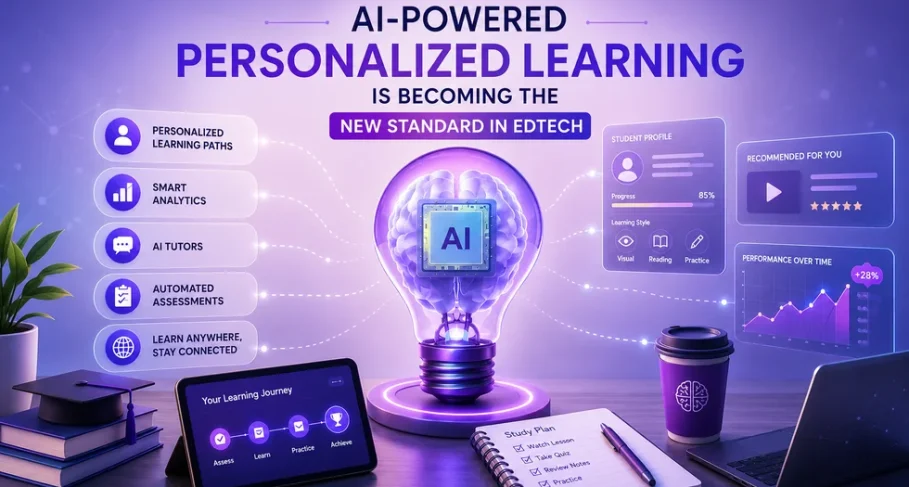
  • 24/7 access for students: AI provides 24/7 access to learning: chatbots and virtual assistants are always available, answering questions and helping with study materials.
  • Personalized learning: AI analyzes data about each student, including academic performance, learning pace, and learning preferences.
  • Automating routine tasks: AI frees teachers from routine work by automating grading, progress tracking, and administrative tasks.
  • Virtual teachers and chatbots: chatbots assist students at any time of day by answering questions, explaining difficult topics, and providing additional materials.
  • Performance analytics and forecasting: AI analyzes student performance and predicts outcomes.
  • Creating interactive content: AI helps create interactive courses tailored to students’ needs, making learning more engaging.

How AI Works in Educational Platforms

AI in EdTech is based on several key technologies: machine learning, neural networks, and big data analysis. Let’s look at how this works in practice.

Data collection and processing

AI-based educational platforms start with data — and the more data they have, the better. The system collects data about each user:

  • Academic performance and course completion rates.
  • Time spent on the platform.
  • The number and types of errors in tests and assignments.
  • Preferences in learning methods (video, text, interactive activities).

Machine learning and model development

Machine learning is the foundation of AI in EdTech. Algorithms process the collected data and identify patterns that a person may not notice.

Neural networks and deep learning

Neural networks are used for complex tasks such as speech recognition or text analysis.

Big data analysis and predictive analytics

AI-powered educational platforms use big data for analysis and forecasting. This helps identify trends and predict student success or learning difficulties.

Continuous adaptation and self-learning

The greatest strength of AI is the ability to learn based on feedback. The more users interact with the platform, the better the algorithms understand their needs and preferences.

Mistakes in AI Implementation

Despite the advantages, in practice, the process of AI integration is often accompanied by mistakes that can negate all efforts and investments.

  • Insufficient data quality and volume — AI depends on data to function and improve. If the data is incomplete, inaccurate, or poorly structured, the AI will not be able to learn and make decisions correctly.
  • Ignoring user needs — AI solutions fail to address the real problems of students and teachers. When technology is introduced for the sake of trend rather than real benefit, learning becomes more complicated and inconvenient.
  • High development and implementation costs — creating and maintaining AI-based educational platforms requires significant financial and time investment. Not every EdTech company or educational institution is ready to invest in such complex technological solutions.
  • Privacy and data security issues — educational platforms store large amounts of personal data: academic performance, behavioral data, and interaction history. Data leakage or misuse can lead to serious consequences.
  • Lack of a clear implementation strategy — sometimes EdTech companies implement AI without a clear goal or strategy.

Conclusion

AI is already changing the educational industry, making learning more personalized, accessible, and high-quality. For EdTech companies, this is an opportunity to create innovative products that truly solve users’ problems. If you work in EdTech, it’s time to act — the future is already here.

TAGGED: Adaptive Learning, AI Education, Artificial Intelligence, Personalized Learning, Students, Technology in Education
Share This Article
Facebook Twitter Whatsapp Whatsapp LinkedIn Reddit Telegram Email Copy Link
Previous Article Top 7 AI Leadership & Business Administration Programs for Executives in 2026 Top 7 AI Leadership & Business Administration Programs for Executives in 2026
AdvertisementWhy this Ad?

Latest EdTech News To Your Inbox

Stay Connected

AdvertisementWhy this Ad?

Latest EdTech News To Your Inbox

Stay Connected

AdvertisementWhy this Ad?

You Might Also Like

Top 7 AI Leadership & Business Administration Programs for Executives in 2026
eLearning

Top 7 AI Leadership & Business Administration Programs for Executives in 2026

Jun 25, 2026
EdTech in 2026 - Are We Actually Learning or Just Watching
Insight

EdTech in 2026 – Are We Actually Learning or Just Watching?

Jun 24, 2026
Shortening the software learning cycle in a world of rapid releases
Insight

Shortening The Software Learning Cycle in a World of Rapid Releases

Jun 23, 2026
How EdTech Platforms Are Empowering Students with Flexible Learning Opportunities
Insight

How EdTech Platforms Are Empowering Students with Flexible Learning Opportunities

Jun 22, 2026
Why Most Online Courses Dont Have a Content Problem They Have a Completion Problem
eLearning

Why Most Online Courses Don’t Have a Content Problem, They Have a Completion Problem.

Jun 18, 2026
VR Teacher Training Preparing Educators for Future-Ready Classrooms
Trends

VR Teacher Training: Preparing Educators for Future-Ready Classrooms

Jun 16, 2026
Why Enrollment Strategy Is Becoming a Campus-Wide Conversation
Insight

Why Enrollment Strategy Is Becoming a Campus-Wide Conversation

Jun 12, 2026
Dr Varun Vohra 1 career counsellor in india Guiding School Students
Insight

The Role of a Career Counsellor: Why Career Guidance and Career Counselling Matter More Than Ever in Indian Schools

Jun 2, 2026
Show More
EdTechReviewEdTechReview

H433, 2nd Floor, Vikaspuri, New Delhi, India, 110018
Phone: 011 41321030

Follow US

Copyright © EdTechReview. All Rights Reserved.

  • Home
  • Advertise
  • Event Associations
  • Press Release
  • About
  • Services
  • Contribute
  • News
  • Trend & Insight
  • Data & Statistics
  • eLearning
  • Reviews
  • Research
  • EdTech Voices
  • Dictionary
  • Tags
  • Resources
  • Events
  • Courses
  • EdTech Product for Review
  • Sponsored/Paid Post Service
  • Our Clients
  • FAQ’S
  • Contact Us
  • Important Links
  • Sitemap
  • Terms of Use
  • Privacy Policy
newsletter
Join 100K+ subscribers!

Subscribe to our weekly newsletter that brings the latest EdTech news, trends, insights, reports, interviews, etc. for educators, school leaders, entrepreneurs, investors, & others.

loader
Zero spam, Unsubscribe at any time.
Go to mobile version
Welcome Back!

Sign in to your account

Lost your password?