

This website stores cookies on your computer. These cookies are used to improve your website experience and provide more personalized services to you, both on this website and through other media.
Accept
EdTechReviewEdTechReview
  • News
  • Trends
  • Insight
  • eLearning
  • Research
  • Dictionary
  • EdTech Voices
  • More
    • Data & Statistics
    • Reviews
    • AWS for Education
    • Events

    Resources

    • Infographics
    • Reports & Case Studies
    • Videos
    • Books
    • Webinar

    Needs

    • 1:1 Learning
    • 21st Century Education
    • 21st Century Leadership
    • 21st Century Learning
    • 21st Century Teaching
    • 3D Printing
    • More Tags

    For

    • Students
    • Teachers/Educators
    • Administrators
    • Entrepreneurs/Startups
    • Govt. Officials/Policymakers
    • Parents
Explore
Search
Contribute
  • Submit A Post
  • EdTech Trainers and Consultants
  • Your Campus EdTech
  • Your EdTech Product
  • Your Feedback
  • Your Love for Us
  • EdTech Product Reviews
ETR Resources
  • About
  • Mission/Vision
  • Team
  • Services
  • Testimonials
  • Authors
  • Sponsor
  • Partner
  • Advertise
  • Our Clients
  • Media Kit
  • Press Release
  • FAQ’S
Reading: How Intelligent Spaces Impact in Learning and Development of Students
Aa
EdTechReviewEdTechReview
Aa
Search
  • News
  • Trends
  • Insight
  • eLearning
  • Reviews
  • Dictionary
  • EdTech Voices
  • Data & Statistics
  • Research
  • AWS for Education
  • Events
  • EdTech Voices
  • Tags
  • About
  • FAQ’S
  • Our Clients
  • Partner
Follow US
Home > Trend & Insight > Trends > How Intelligent Spaces Impact in Learning and Development of Students
Trends

How Intelligent Spaces Impact in Learning and Development of Students

Pooja Harlalka
Pooja Harlalka Published Apr 4, 2023
Share
5 Min Read
How Intelligent Spaces Impact in Learning and Development of Students
SHARE

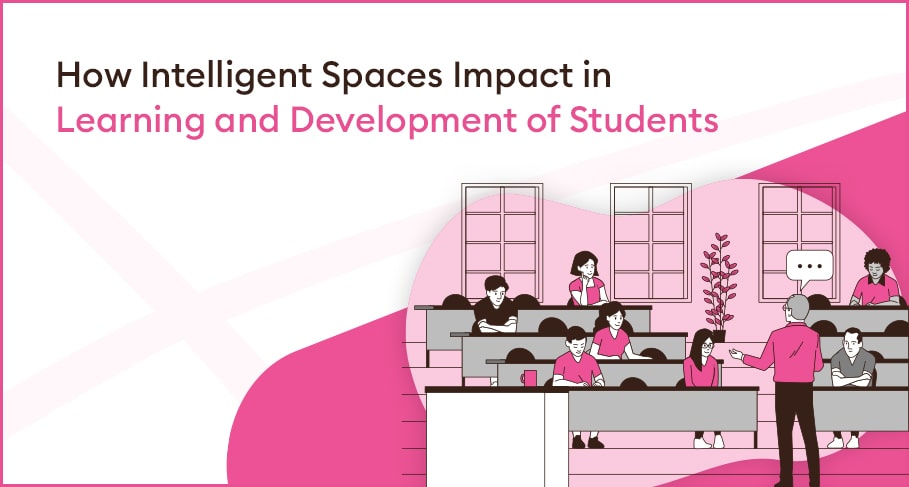
Intelligent spaces are learning environments where technology enhances and makes learning more effective and meaningful for students in several ways.

AdvertisementWhy this Ad?

Flexible seating is the physical classroom setup that allows for and encourages students to be a part of choosing how and where they sit. Students can have various seating options, including mobile desks/chairs, bean bags, standing desks, floor cushions, etc., instead of being limited to a typical desk and chair. The goal is to create a more comfortable and safe learning environment that can aid in raising student engagement, attention and learning. This is highly unlike our traditional classroom, which has had a primary physical setup for hundreds of years, including stationary and factory-style rows of desks and chairs.

The quality and accessibility of education continue to evolve in almost revolutionary ways more recently than ever. Therefore, the concept of innovative classes, intelligent spaces and flexible seating has gained attention among educators across the world. This article explores how smart spaces can affect the learning and development of students, with a particular focus on flexible seating in the classroom.

Flexible seating, by its nature, can be used to facilitate more social interaction among students in the classroom. Healthy social interaction is a vital part of development for all human beings and is a core component of learning and development. Emotion is a psychological reaction experienced by humans that has the potential to impact and regulate cognitive functions such as attention, perception, memory, thinking, and language, which manifests during social interactions among students and teachers.

Flexible seating can be an integral factor in promoting student collaboration and communication. Students are more inclined to collaborate and exchange ideas when they can roam around and choose their seating arrangement. It also gives teachers more choice and flexibility when giving group projects so they can carefully select groups while considering group dynamics in alignment with the assignment’s goals without worrying about a severe loss in learning time. This can aid in improved learning experiences and achievement. It can also encourage a more social and collaborative learning atmosphere in the classroom, enhancing student relationships and fostering a feeling of community.

This idea can be developed further by intelligent spaces, which integrate technology, electronics and adjustable chairs. For instance, interactive whiteboards are used in some intelligent spaces, enabling students to work together on projects and exchange ideas in real-time. Other intelligent spaces provide immersive learning environments that can help courses come to life using virtual reality technologies. Intelligent spaces and flexible seating can be an excellent way of helping our students develop 21st-century skills, creating a beautiful play between the structured, safe enclosure of an educational institution and the expansive “real” world outside the classroom. There’s always been this separation between school and real life after school. However, “real” life doesn’t begin after school. We can make that more explicit by inviting the “real” world inside our classrooms and taking our classrooms into the real world.

Education has always utilised various forms of data, including academic and behavioural data, to plan, implement, and deliver teaching. With the emergence of innovative technology, there are new opportunities to expand the use of data analysis in education. This data can be processed through learning analytics to monitor learning progress and provide feedback to students, teachers, and the system.

Moreover, intelligent classrooms can help kids through individualised learning that can adapt to students’ learning needs. In addition to giving students a chance to choose how they want to learn, it inspires and motivates them to participate in the classroom. Besides incorporating design, technology and utility, they can provide a stimulating learning environment that today’s children need.

While using flexible seating and intelligent spaces regularly has many benefits, remember that not all options are effective for everyone. Several variables affect this technique’s effectiveness, including the students’ age, subject matter, number of students in each class, classroom size, and support and training provided to teachers. Comfort and utility must also be balanced.


 

TAGGED: Artificial Intelligence, Classroom Design, Digital Classroom, Personalized Learning
Share This Article
Facebook Twitter Whatsapp Whatsapp LinkedIn Reddit Telegram Email Copy Link
Pooja Harlalka
By Pooja Harlalka
Head of Counselling: Socio-Emotional Learning, The Acres Foundation
Previous Article Social Media Books You Must Read Social Media Books You Must Read
Next Article Skill-Lync Partners with CORDOBA to Upskill Professionals in Automotive Embedded Software Development Skill-Lync Partners with CORDOBA to Upskill Professionals in Automotive Embedded Software Development
AdvertisementWhy this Ad?

Latest EdTech News To Your Inbox

Stay Connected

AdvertisementWhy this Ad?

Latest EdTech News To Your Inbox

Stay Connected

AdvertisementWhy this Ad?

You Might Also Like

Mindgroom interface to find a career counsellor near me by location
Trends

Career Counselling Near Me – An Interface Recently Launched by Mindgroom for Face-to-Face Career Guidance

Jun 10, 2026
How AI Tools Are Changing the Way We Work Learn and Create
Trends

How AI Tools Are Changing the Way We Work, Learn, and Create

Jun 9, 2026
Prep Edu - British Councils top 3 partners in East Asia
News

Prep Edu – British Council’s Top 3 Partners in East Asia

Apr 14, 2026
AI Voice Agents for EdTech Making Learning More Interactive and Accessible
Trends

AI Voice Agents for EdTech: Making Learning More Interactive and Accessible

Mar 31, 2026
From Manual Salaries to Smart Systems The Evolution of Payroll in Schools and Universities
Trends

From Manual Salaries to Smart Systems: The Evolution of Payroll in Schools and Universities

Mar 19, 2026
AI in EdTech Disrupting Traditional Teaching Models in India and Abroad
Trends

AI in EdTech: Disrupting Traditional Teaching Models in India and Abroad

Feb 28, 2026
Top 4 Online Schools Redefining Education for the Digital Generation
Trends

Top 4 Online Schools Redefining Education for the Digital Generation

Feb 26, 2026
How AI Is Transforming Short-Form Video for EdTech Marketing & Learning Creators
Trends

How AI Is Transforming Short-Form Video for EdTech Marketing & Learning Creators

Jan 30, 2026
Show More
EdTechReviewEdTechReview

H433, 2nd Floor, Vikaspuri, New Delhi, India, 110018
Phone: 011 41321030

Follow US

Copyright © EdTechReview. All Rights Reserved.

  • Home
  • Advertise
  • Event Associations
  • Press Release
  • About
  • Services
  • Contribute
  • News
  • Trend & Insight
  • Data & Statistics
  • eLearning
  • Reviews
  • Research
  • EdTech Voices
  • Dictionary
  • Tags
  • Resources
  • Events
  • Courses
  • EdTech Product for Review
  • Sponsored/Paid Post Service
  • Our Clients
  • FAQ’S
  • Contact Us
  • Important Links
  • Sitemap
  • Terms of Use
  • Privacy Policy
newsletter
Join 100K+ subscribers!

Subscribe to our weekly newsletter that brings the latest EdTech news, trends, insights, reports, interviews, etc. for educators, school leaders, entrepreneurs, investors, & others.

loader
Zero spam, Unsubscribe at any time.
Go to mobile version
Welcome Back!

Sign in to your account

Lost your password?