
This website stores cookies on your computer. These cookies are used to improve your website experience and provide more personalized services to you, both on this website and through other media.
Accept
EdTechReviewEdTechReview
  • News
  • Trends
  • Insight
  • eLearning
  • Research
  • Dictionary
  • EdTech Voices
  • More
    • Data & Statistics
    • Reviews
    • AWS for Education
    • Events

    Resources

    • Infographics
    • Reports & Case Studies
    • Videos
    • Books
    • Webinar

    Needs

    • 1:1 Learning
    • 21st Century Education
    • 21st Century Leadership
    • 21st Century Learning
    • 21st Century Teaching
    • 3D Printing
    • More Tags

    For

    • Students
    • Teachers/Educators
    • Administrators
    • Entrepreneurs/Startups
    • Govt. Officials/Policymakers
    • Parents
Explore
Search
Contribute
  • Submit A Post
  • EdTech Trainers and Consultants
  • Your Campus EdTech
  • Your EdTech Product
  • Your Feedback
  • Your Love for Us
  • EdTech Product Reviews
ETR Resources
  • About
  • Mission/Vision
  • Team
  • Services
  • Testimonials
  • Authors
  • Sponsor
  • Partner
  • Advertise
  • Our Clients
  • Media Kit
  • Press Release
  • FAQ’S
Reading: How Do You Teach the 4Cs to Students (Part – 2) – Critical Thinking and Problem Solving!
Aa
EdTechReviewEdTechReview
Aa
Search
  • News
  • Trends
  • Insight
  • eLearning
  • Reviews
  • Dictionary
  • EdTech Voices
  • Data & Statistics
  • Research
  • AWS for Education
  • Events
  • EdTech Voices
  • Tags
  • About
  • FAQ’S
  • Our Clients
  • Partner
Follow US
Home > Trend & Insight > Insight > How Do You Teach the 4Cs to Students (Part – 2) – Critical Thinking and Problem Solving!
Insight

How Do You Teach the 4Cs to Students (Part – 2) – Critical Thinking and Problem Solving!

Saomya Saxena
Saomya Saxena Published Jan 20, 2014
Share
4 Min Read
How Do You Teach the 4Cs to Students Part - 2 - Critical Thinking and Problem Solving
How Do You Teach the 4Cs to Students (Part - 2) - Critical Thinking and Problem Solving!
SHARE

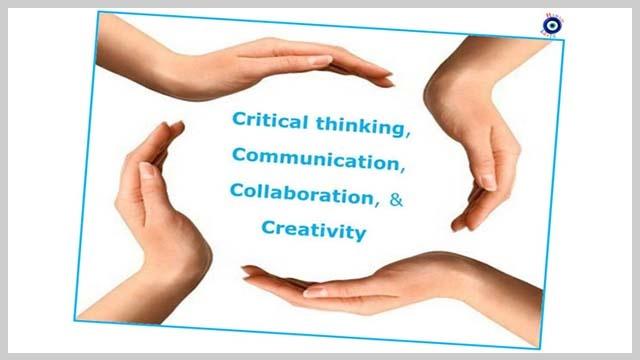
This is the second of the series of four articles about teaching the 4Cs to students. In part 1, we focused on “Creativity and Innovation” and this article focuses on skills, Critical Thinking and Problem-Solving. The quality of our life and that of what we build or make out of it largely depends on the quality of our thoughts and hence there is a need to systematically cultivate excellence in thoughts. Critical Thinking is an intellectual process and an art of skillfully synthesizing, analyzing and evaluating information with a view to improving it. It is self-directed, self-disciplined and progressive thinking. A sound critical thinker formulates and raises vital questions and problems, uses abstract ideas to gather, interpret and assess relevant information effectively and forms reasonable and just conclusions and solutions.

AdvertisementWhy this Ad?

Critical thinking can be conceptualized based on the substantive approach put forward by Dr. Paul and others at the Foundation for Critical Thinking. This approach is relevant to every subject, profession, discipline and to reasoning through the problems of everyday life. It points out the five essential dimensions of critical thinking:

  • The analysis of thought
  • The assessment of thought
  • The dispositions of thought
  • The skills and abilities of thought
  • The barriers to critical thought

Problem-solving is one of the most essential life-skills that should be taught to students so that they know how to solve problems and make healthy decisions for themselves. Students face a variety of problems every day ranging from academic difficulties, peer issues or difficulty in completing a task. When students learn problem-solving skills they gain confidence in their ability to make good decisions for themselves.

Students need to develop and effectively apply Critical Thinking and Problem-Solving skills to their academic studies, to their everyday problems and to the crucial choices they will be required to make as a result of information explosion and advancement in technology. To develop both of these skills students should overcome the emotional and cognitive barriers to learning. Instructors should use pedagogical and methodological strategies to promote student reflection on the problem-solving process and provide them with ways to enhance their critical thinking.

We’ve already published an article that covers more information about the theme of this article and elicits about ways of teaching Critical Thinking and Problem-Solving to students. Learn about it by clicking the following link.

Few Great Ways to Teach Skills like Critical thinking and Problem Solving

What according to you is the significance of teaching the 21st century skills like Critical Thinking and Problem-Solving to students? Share your views in the Comment Box below.

Img src


We deliver the best tools, tips, insights and practices for effective use of technology in education weekly to your inbox.

SIGN UP FOR OUR WEEKLY NEWSLETTER

AdvertisementWhy this Ad?
TAGGED: 21st Century Education, 21st Century Leadership, 21st Century Teaching, Critical Thinking, Problem Solving
Share This Article
Facebook Twitter Whatsapp Whatsapp LinkedIn Reddit Telegram Email Copy Link
Previous Article Some Suggestions for Education Reform - Herb Kohl Some Suggestions for Education Reform – Herb Kohl
Next Article DUBLabs Mobilizing Education Communities DUBLabs Mobilizing Education Communities
AdvertisementWhy this Ad?

Latest EdTech News To Your Inbox

Stay Connected

AdvertisementWhy this Ad?

Latest EdTech News To Your Inbox

Stay Connected

AdvertisementWhy this Ad?

You Might Also Like

Schools Went Digital Why Is Student Transportation Still So Fragmented
Insight

Schools Went Digital. Why Is Student Transportation Still So Fragmented?

Sep 8, 2026
How to Build Educational Apps That Drive Real Teacher and Student Adoption in 2026
Insight

How to Build Educational Apps That Drive Real Teacher and Student Adoption in 2026

Sep 1, 2026
Why AI Lesson Planning Tools Are Only Solving Half the Problem
Insight

Why AI Lesson Planning Tools Are Only Solving Half the Problem

Aug 31, 2026
The Future Belongs to Children Who Can Change Their Minds
Insight

The Future Belongs to Children Who Can Change Their Minds

Aug 26, 2026
Were Teaching Children for Jobs That Wont Exist Heres What We Should Teach Instead
Insight

We’re Teaching Children for Jobs That Won’t Exist, Here’s What We Should Teach Instead

Aug 15, 2026
Beyond the Examination Crisis Structural Reforms Must Take Precedence in Indias Education Ecosystem
Insight

Beyond the Examination Crisis: Structural Reforms Must Take Precedence in India’s Education Ecosystem

Aug 9, 2026
Education Crisis 2026 Protests Signal a Looming Economic Disaster for Indias Youth
Insight

Education Crisis 2026: Protests Signal a Looming Economic Disaster for India’s Youth

Aug 8, 2026
The Hidden Cost of Always Giving Learners the Answer
Insight

The Hidden Cost of Always Giving Learners the Answer

Aug 7, 2026
Show More
EdTechReviewEdTechReview

H433, 2nd Floor, Vikaspuri, New Delhi, India, 110018
Phone: 011 41321030

Follow US

Copyright © EdTechReview. All Rights Reserved.

  • Home
  • Advertise
  • Event Associations
  • Press Release
  • About
  • Services
  • Contribute
  • News
  • Trend & Insight
  • Data & Statistics
  • eLearning
  • Reviews
  • Research
  • EdTech Voices
  • Dictionary
  • Tags
  • Resources
  • Events
  • Courses
  • EdTech Product for Review
  • Sponsored/Paid Post Service
  • Our Clients
  • FAQ’S
  • Contact Us
  • Important Links
  • Sitemap
  • Terms of Use
  • Privacy Policy
newsletter
Join 100K+ subscribers!

Subscribe to our weekly newsletter that brings the latest EdTech news, trends, insights, reports, interviews, etc. for educators, school leaders, entrepreneurs, investors, & others.

loader
Zero spam, Unsubscribe at any time.
Go to mobile version
Welcome Back!

Sign in to your account

Lost your password?