


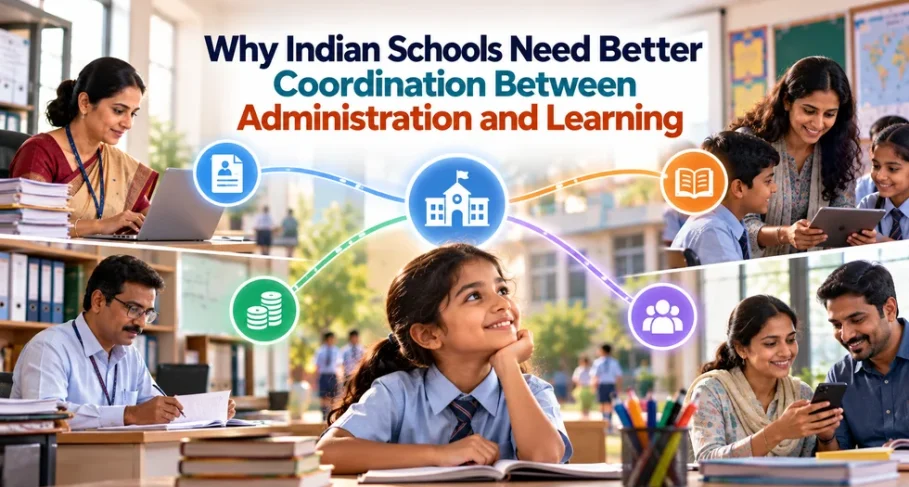
Walk into almost any school in India and you will find teachers, office staff and management teams working hard to keep things running smoothly. But if you look a little closer, you may notice something interesting. Everyone is working towards the same goal, yet much of the information they use is kept separately.
The administration team manages admissions, fees, transport and attendance. Teachers handle homework, examinations, marks and classroom activities. Parents receive updates through WhatsApp groups, phone calls and different applications.
Individually, these processes may work well. The problem starts when they need to work together.
For a school principal, getting a complete picture of what is happening across the school can sometimes mean collecting information from several people and systems. This takes time and makes everyday decisions more difficult than they need to be.
When School Information Is Scattered
One common problem is that the same information gets entered multiple times.
When a new student joins a school, their details may first be recorded in the admission register. The office then enters the same information into the fee system, while teachers add it to their class records. Later, someone may have to enter it again while preparing report cards.
This may seem like a small administrative task, but it creates unnecessary work. A spelling mistake, an incorrect phone number or a change in the student's section can easily go unnoticed.
There are also situations where disconnected information affects the way a school supports its students.
For example, a teacher may notice that a student's academic performance has dropped but may not know that the child has been absent frequently.
Similarly, the accounts department may send a fee reminder without knowing that the family is already discussing a payment issue with the school.
Even during parent-teacher meetings, principals sometimes have to collect attendance details, examination results and fee information from different departments before they can understand a student's overall situation.
These are everyday situations, but they show why having information in separate places can become a real challenge.
Why Connected Information Is Becoming More Important
There are a few developments in Indian education that make this issue worth addressing now.
A Broader Approach to Student Assessment
NEP 2020 encourages schools to move beyond traditional marks-based assessment. Students should be evaluated through a broader approach that considers their participation, activities, projects and overall development.
To make this possible, schools need access to more than just examination results. Attendance, classroom participation and other academic records also matter. Keeping all this information connected can make it easier for teachers and school management to understand a student's progress.
The Importance of Student Records
Initiatives such as APAAR ID are also bringing greater attention to maintaining consistent student records.
As students move between classes and schools, accurate information becomes increasingly important. Schools that maintain organised records will be better prepared to manage these changes.
Greater Responsibility for Student Data
Schools collect a considerable amount of personal information about students and their families. With the Digital Personal Data Protection Act, 2023, data protection has become an important responsibility for organisations handling personal information, particularly children's data.
When information is spread across personal phones, spreadsheets and multiple applications, controlling access becomes difficult.
Schools need to know where student information is stored, who can access it and how it is being used.
What Should a Connected School System Look Like?
A connected system does not necessarily mean that a school needs to replace every application it currently uses.
The more important thing is to ensure that essential information is available to the right people without having to enter it repeatedly.
For example:
- Student information: Admission details, parent contacts, class, section and transport information should be maintained in one reliable student profile.
- Attendance: Teachers should be able to record attendance, while the office can use the same information for administrative purposes and parent communication.
- Academic records: Homework, examination marks, assessments and teacher remarks should be linked to the student's existing records.
- Parent communication: Parents should receive consistent information from the school rather than having to follow multiple groups and applications.
- Access permissions: Not everyone needs access to every record. Teachers, accountants and administrators should only see the information required for their responsibilities.
Whether a school chooses one platform or connects multiple applications is a decision for its management. What matters is that important information is accurate, accessible and not repeatedly entered.
Five Questions Every School Principal Should Ask
Before investing in new technology, school management should first understand how information currently moves within the school.
Here are five useful questions to discuss with the team:
- How many times is a student's information entered after admission?
- Can a teacher quickly check a student's attendance history along with academic performance?
- How many different applications or WhatsApp groups are used to communicate with parents?
- Do we know exactly where our students' personal information is stored and who can access it?
- What happens to important school records when the employee maintaining a particular spreadsheet leaves?
The answers can help identify problems that may otherwise remain unnoticed.
When evaluating software, schools should also check whether they can export their data whenever required, understand where their information is stored, and get clear answers about data access and security.
Teacher training is equally important. A system that is used only by the office staff will not solve the problems faced by teachers in the classroom.
It is also sensible to start with a small pilot, perhaps one grade or one term, before introducing a new system across the entire school.
Start With Small Changes
Digital transformation does not have to happen all at once. Schools can begin by improving just one or two important processes.
For instance, maintaining a common student profile and a shared attendance record can make a noticeable difference. Once teachers and administrative staff see the benefits, introducing other connected processes becomes easier.
Technology should make the work of schools simpler, not create another set of responsibilities for teachers and staff.
At the end of the day, the purpose of school administration is to support education. Teachers should have more time to focus on students, parents should receive timely and accurate information, and school leaders should be able to make decisions based on a complete picture.
Connecting administration and learning is not simply about introducing new software. It is about making sure that the different people working in a school can work together more effectively.
