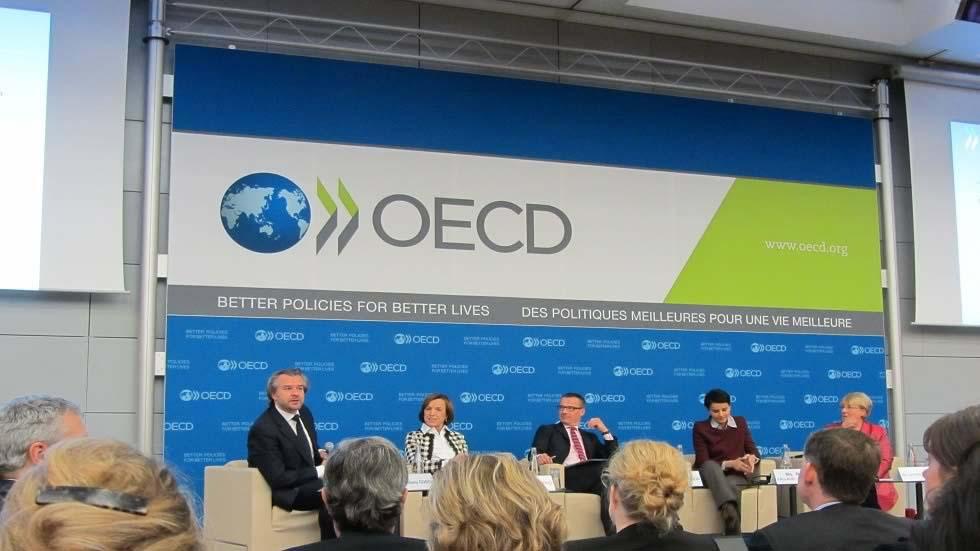
The OECD/CERI (Organization for Economic Co-operation and Development/Centre for Educational Research and Innovation) held an international conference on “Learning in the 21st Century: Research, Innovation and Policy” in the past, which is worth a mention here.
It was a forum for the discussion of the major CERI analyses on Learning Sciences and Brain Research, Alternative Models of Learning, and New Millennium Learners. It also discussed about the related OECD analyses on learning and learning environments – PISA and the PEB (Programme on Educational Building).
The conference included active exchange of all participants in a series of plenary and workshop sessions addressing questions on the focus of learning, the importance of it and whether or not the knowledge base of learning is strong enough to help policy-makers shape the direction of educational change. Representatives from the educational fora, gathering policy-makers, officials, programme leaders, practitioners, researchers and specialists in learning sciences and related fields were sent by OECD member countries to be part of the conference. This 3 part article series will focus on the major discussions, the inferences and various educational analyses that were discussed in the conference.
The conference highlighted that according to PISA, school systems are not totally successful in preparing students for the abilities and skills required for lifelong learning. New knowledge and skills necessary for successful adaptation to a changing world are continuously acquired throughout life, rather than measuring achievement in terms of specific curricula (PISA 2003). With its focus on reading, mathematical and scientific literacy, PISA emphasizes the mastery of processes, the understanding of concepts, and the ability to function in different situations in each domain, rather than the possession of specific knowledge.
The conference also discussed about a number of projects in the OECD and in CERI that provide insights on learning and provide directions for educational change that is focusing on learning. Here are the projects and their main findings that were the main focus of the conference:
For a detailed study, refer the report on OECD/CERI International Conference “Learning in the 21st Century: Research, Innovation and Policy”.
- The Neuro-scientific Study of Learning: The CERI project on ‘Learning Sciences and Brain Research’ was aimed at encouraging collaboration between learning sciences and brain research, and researchers and policy makers. The neuro-scientific contribution is important as it opens up understanding of causation and not just correlation which helps identify effective interventions and solutions. The understanding of literacy in the brain is one important area where brain research can inform reading instruction. Learning sciences also reflect the inverse relationship between age and the effectiveness of language learning, the younger the age of exposure, the more successful the second or third language learning. This is at odds with the education policies of numerous countries where foreign language instruction does not begin until adolescence. It has to be seen, whether the evidence of learning sciences can bring a change in these conventional practices. The study of the brain also highlights the importance of emotions and their direct effect on learning and memory. It has proved how negative emotions block learning and also identified that some level of stress is essential for optimal adaptation to environmental challenges and can lead to better cognition and learning, but beyond this level analytical capacity is inhibited. The application of neuroscience to learning can benefit it in many way may add powerful diagnostic tools to the process of formative assessment and personalized learning.
- Personalized Learning: Personalization of learning has become a subject of growing prominence in policy discussions in some countries. It identifies that one-size-fits-all approach to learning is ill-adapted to individual learning needs. High standards can be achieved if learning can be personalized to suit the needs and motivations of every learner. Personalization is the adoption of a more holistic, person-centered approach to learning. The degree of interest in this concept is reflected in the 2006 OECD/CERI publication, ‘Personalizing Education’. Some of the findings of research which personalized learning addresses are; collaborative efforts and expertise are required for modern learning, students should develop their personal learning needs and individual expertise in the areas in which they lag behind or want to increase their expertise, curiosity and creativity are essential to learning, learning is developed through explicit learning strategies, skills, technological capacities for individual and social learning activities, and through collaborative learning communities, learning needs to be sensitive to contextual conditions, different values and cultural aspects, technology is an intelligent tool for supporting individual learning, as well as collaborative learning among different individuals, and offers multiple ways to expand potential in every student.
- Assessment for Learning- Formative Assessment: Refers to the assessment of student progress that is an ongoing part of everyday teaching, rather than a special event. This is done by individualization of teaching and learning strategies and through the continual identification of and responses to students who are experiencing difficulties. Formative assessment is designed to provide teachers and students with critical information about learning needs, help students to assess their progress towards learning goals, and guide teachers to vary their teaching according to needs and goals. It provides ways of responding to the aims of enhancing learning and augmenting teacher professionalism. Formative assessment can greatly enhance the role of learning in innovation.
The next article of the series will discuss about another OECD/CERI project, PISA findings on approaches to learning and more.