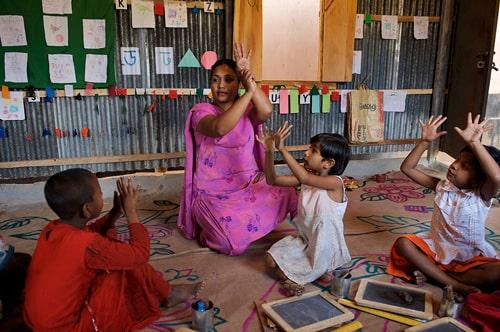
For the third year running, BRAC (the world’s largest NGO founded in 1985) has been ranked the world’s Number One NGO (NGO Advisor). Headquartered in Dhaka, Bangladesh, BRAC operates in 11 different countries, employs more than 100,000 people and is focused on educating the world’s poorest people. Roughly 1.1 million students in 8 different countries get an education at a BRAC School.
As BRAC’s Founder and Chairperson Sir Fazle Hasan Abed likes to say, “In addressing any widespread problem, innovation alone is not enough without reaching significant scale. While small may be beautiful, large is essential.”
One of our favorite examples of BRAC innovation is that if your community is underwater due to seasonal flooding, a BRAC Boat School will come to educate your children for free. It gets better. All the teachers on board the BRAC Boat are likely to be women and in countries where gender equality in education leaves much to be desired, you will find that more than half of all the students are girls. For the record, BRAC now supports more girls beyond the age of five than any other NGO.
The Global Search for Education welcomes Donella Rapier, the president and CEO of BRAC, to learn more about the organization’s efficient and impactful methods.
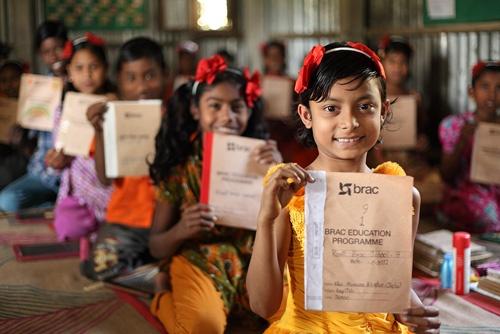
“BRAC’s innovative one-room schoolhouse approach pairs one class of students with the same teacher for the duration of primary school.“ — Donella Rapier
How is BRAC unique and innovative? What do you believe sets you apart from other NGOs?
BRAC sets itself apart through consistently pioneering innovative new ideas in education, conducting research to test them rigorously, and scaling them globally to promote a holistic, well-rounded education experience that runs from cradle through career. To aid in this process, BRAC launched the Social Innovation Lab in 2011, a BRAC entity whose mandate is to test new ideas to solve some of the world’s most complex social problems, design prototypes, and learn and share what works and what doesn’t.
What are the most critical life skills students need to flourish in today’s world and why?
Technical skills alone are not sufficient for students to flourish in today’s world and in the future – a strong foundation of crucial life skills is necessary for students to continuously learn and adapt throughout the course of their lives.
Among these are skills related to social-emotional intelligence such as interpersonal communication, teamwork, and coordinating with others. In addition, today’s world demands skills in creativity, critical thinking, and complex problem solving. Students with these skills develop the ability to continuously learn and adapt throughout the course of their lives – making them more capable of thriving even as economies evolve and change as industrialization advances, new technologies and automations are developed, and cyclical recessions occur.
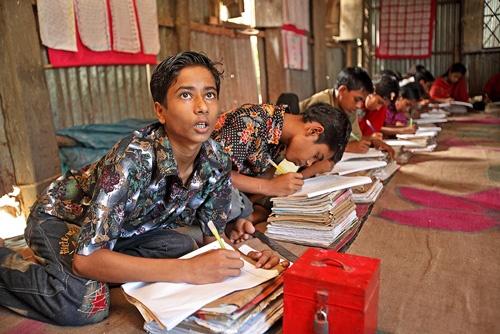
“The curriculum is contextually relevant and reflects the lived experience of the children.” — Donella Rapier
How student-centered is your model? What is the role of the teacher?
BRAC’s innovative one-room schoolhouse approach pairs one class of students with the same teacher for the duration of primary school. It has placed the student-teacher relationship at the centerpiece of its primary education program, making human connection the heart of the classroom experience. Teachers are trained to pay less attention to standardized tests; to favor child-friendly, participatory approaches instead of rote memorization; and to emphasize soft skills and playful activities. They are drawn directly from the local communities they serve, ensuring stronger relationships with children and their parents.
The curriculum is contextually relevant and reflects the lived experience of the children. Classes are held at different times of day to accommodate the needs of the families in the community, and they typically meet for no longer than three hours. While the language of instruction is Bengali, in schools that work with students from ethnic communities, the local language is used during the early grades and is gradually transitioned to Bengali using a bridging method.
What are the most important lessons others can learn from the BRAC approach?
One of the key aspects of the BRAC approach from which others can learn is its emphasis on targeting and empowering girls, students with disabilities, children from rural areas, and other marginalized groups that have been left behind by the education system. These disadvantaged groups are all represented in the design and decision-making process, ensuring a community-based approach.
All BRAC schools deeply engage parents and the community to promote girls’ education, and classes exceed gender parity: girls now comprise more than 60 percent of all BRAC primary students. Furthermore, children living with a disability typically make up about 10 percent of the classroom, and they receive access to additional health support like hearing aids, wheelchairs and ramps, reading glasses, and more.
Implementing programs at scale is a hallmark of the BRAC approach to education, and more broadly, a hallmark of the BRAC approach to everything.
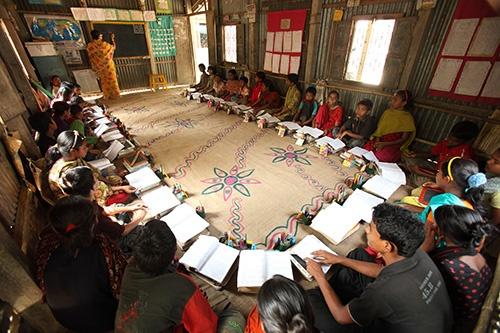
“One of the key aspects of the BRAC approach from which others can learn is its emphasis on targeting and empowering girls, students with disabilities, children from rural areas, and other marginalized groups that have been left behind by the education system.” — Donella Rapier
What do you see as BRAC’s greatest accomplishments to date?
Each year, BRAC educates approximately 1.1 million of the world’s poorest children from eight countries with a cost effective model that only costs approximately $60 per child each year, ranging slightly in each country.
But BRAC’s accomplishments are not limited to the scale and efficiency of its model – BRAC education has also become synonymous with quality, and the organization has established itself as a global leader in the education community. Its students are set up for success later in life: in fact, a 2005 longitudinal evaluation found that adults who graduated from BRAC primary schools in Bangladesh as children have the same livelihood outcomes as peers who attended government schools, illustrating their ability to break intergenerational cycles of poverty.
Another of BRAC’s key accomplishments is the significant progress in gender equality its work has precipitated. From its earliest days, BRAC has made girls from the most marginalized communities its primary constituency. Educated girls are more likely to have decent work and living conditions, delay marriage and families, and have healthier and more educated children, igniting a cycle which brings about positive changes to their family and community for generations.

C. M. Rubin and Donella Rapier