
This website stores cookies on your computer. These cookies are used to improve your website experience and provide more personalized services to you, both on this website and through other media.
Accept
EdTechReviewEdTechReview
  • News
  • Trends
  • Insight
  • eLearning
  • Research
  • Dictionary
  • EdTech Voices
  • More
    • Data & Statistics
    • Reviews
    • AWS for Education
    • Events

    Resources

    • Infographics
    • Reports & Case Studies
    • Videos
    • Books
    • Webinar

    Needs

    • 1:1 Learning
    • 21st Century Education
    • 21st Century Leadership
    • 21st Century Learning
    • 21st Century Teaching
    • 3D Printing
    • More Tags

    For

    • Students
    • Teachers/Educators
    • Administrators
    • Entrepreneurs/Startups
    • Govt. Officials/Policymakers
    • Parents
Explore
Search
Contribute
  • Submit A Post
  • EdTech Trainers and Consultants
  • Your Campus EdTech
  • Your EdTech Product
  • Your Feedback
  • Your Love for Us
  • EdTech Product Reviews
ETR Resources
  • About
  • Mission/Vision
  • Team
  • Services
  • Testimonials
  • Authors
  • Sponsor
  • Partner
  • Advertise
  • Our Clients
  • Media Kit
  • Press Release
  • FAQ’S
Reading: No-Box Thinking: Looking Beyond Conventional and Unconventional Solutions
Aa
EdTechReviewEdTechReview
Aa
Search
  • News
  • Trends
  • Insight
  • eLearning
  • Reviews
  • Dictionary
  • EdTech Voices
  • Data & Statistics
  • Research
  • AWS for Education
  • Events
  • EdTech Voices
  • Tags
  • About
  • FAQ’S
  • Our Clients
  • Partner
Follow US
Home > EdTech Voices > Interviews > No-Box Thinking: Looking Beyond Conventional and Unconventional Solutions
Interviews

No-Box Thinking: Looking Beyond Conventional and Unconventional Solutions

Dr Rod Berger
Dr Rod Berger Published Oct 26, 2018
Share
5 Min Read
No-Box Thinking Looking Beyond Conventional and Unconventional Solutions
No-Box Thinking: Looking Beyond Conventional and Unconventional Solutions
SHARE

This is part 1 in a two-part series with Nancy Conrad.

AdvertisementWhy this Ad?

Knowing that anything was possible in the early days of space exploration allowed thinking to be free from the conventional. Young people were inspired to think of how we might go to the stars. High schoolers became college students, who became the engineers in mission control when we landed on the moon. They were encouraged to not just think outside the box, but to discard “the box” altogether.

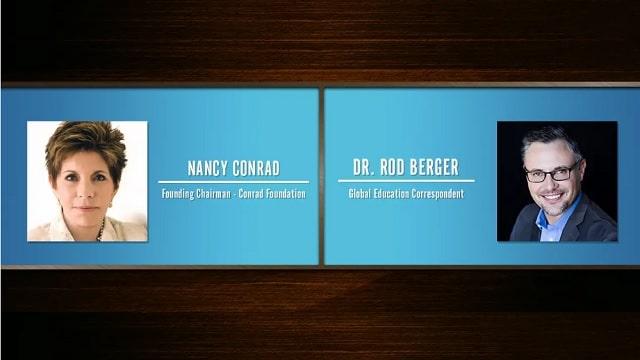
As we look to return to space, Nancy Conrad and her Conrad Foundation have brought back the original space-age spirit of innovation. I sat down with Nancy recently to discuss her foundation’s efforts to encourage unconventional thinking and solutions to difficult problems. “There’s in-the-box thinking and out-of-the-box thinking ─ then there is no-box thinking,” says Nancy. “And that’s where the Conrad Foundation comes in.” She is scheduled to participate as an analyst on two different panels during FETC 2019 in Orlando from January 27th to the 30th, discussing ways to invite students to create technologies for use in the classrooms.

There was no box when JFK challenged us to reach the moon before the decade was out in the 1960s. We didn’t know how to do anything; we had only launched one manned flight at that time, and Alan Shepard in Mercury’s Freedom 7 hadn’t even reached orbit. We had seven astronauts who hadn’t flown in space. We had basic rockets, and we were still quite a distance from the moon. Entire systems and complicated procedures that weren’t yet conceived of in 1962 had to be created and invented from the ground up and live-tested on the job.

That lack of the fear of “rocking the boat” of convention will be critical to innovation in the future. “I think it’s going back into that mindset of realizing there is no box and you can create solutions to global and local challenges,” Nancy says.  She says that the sweet spot for the work the Conrad Foundation does is simply opening the aperture of a student’s own mind to what is possible by tearing down conventional barriers and obstacles. “We’re prisoners of our own minds if we don’t open that gateway to learning,” Nancy says. “I think that’s the real opportunity for education.”

“These kids are so smart,” Nancy marvels. “They’re the ones who really understand technology. They were babies when technology bloomed, and they’ve grown up with it.” She and the Conrad Foundation are planning their major annual event, the Conrad Challenge, in which students become entrepreneurial problem-solvers, addressing challenging social, scientific and societal issues through creativity and critical-thinking. Student teams develop innovations and learn how to turn them into commercially-viable businesses that will change the world. When innovators get together, there is no such thing as impossible.

“That’s the mindset that we had when we went to the moon,” Nancy says. “It’s definitely the mindset that I think we need to look at now.”

About Nancy Conrad

Nancy Conrad created the Conrad Foundation in 2008 to energize and engage students in science and technology through unique entrepreneurial opportunities. The organization’s flagship program, the Conrad Challenge, is a global competition challenging students to combine education, innovation and entrepreneurship to create products that address real-world challenges and global sustainability.

By enabling young minds to connect education, innovation and entrepreneurship, the Foundation helps provide a bold platform for enriching the innovative workforce of the future. As a leader in transformative education, she has testified before the U.S. House of Representatives Committee on Science, Space and Technology detailing how the Conrad Foundation exemplifies the use of partnership and mentorship to improve STEM education.

She has been named one of the top 100 leaders in STEM Education. Ms. Conrad serves on the Board of Directors of the Presidential Scholars.

Follow Nancy Conrad on Twitter.

The Conrad Challenge is an annual, multi-phase innovation and entrepreneurial competition that encourages young adults to leave their mark on the world. Each year, teams of 2-5 students, ages 13-18, from around the globe create products and/or services that address some of the most pressing global challenges. The registration process for the 2018-19 Challenge is open from August 24 – October 19, 2018. Register your team today at www.conradchallenge.org!
TAGGED: 21st Century Teaching, Creativity, Innovation, Students, Teachers/Educators, Tips for Students, Tips for Teachers/Educators
Share This Article
Facebook Twitter Whatsapp Whatsapp LinkedIn Reddit Telegram Email Copy Link
Previous Article More Women in Tech We Need to Start from Primary School Non-Profits Working Towards Improving Literacy of Girls
Next Article EdTech Startup Verzeo Founder Shares His Plans Post Series A Funding EdTech Startup Verzeo Founder Shares His Journey and Plans Post Series A Funding
AdvertisementWhy this Ad?

Latest EdTech News To Your Inbox

Stay Connected

AdvertisementWhy this Ad?

Latest EdTech News To Your Inbox

Stay Connected

AdvertisementWhy this Ad?

You Might Also Like

Common Challenges Schools Face When Moving to Digital Assessments
Insight

Common Challenges Schools Face When Moving to Digital Assessments

Jul 14, 2026
Whats Actually Costing Students Their Spot at University The Most Common Rejection Reasons in 2026
Insight

What’s Actually Costing Students Their Spot at University. The Most Common Rejection Reasons in 2026

Jul 10, 2026
How Students Can Turn Learning Into a Job-Ready Resume
Insight

How Students Can Turn Learning Into a Job-Ready Resume

Jul 8, 2026
upEducators Top Choice for Becoming a Nursery Teacher in India
News

Why is upEducators the Top Choice for Nursery Teacher Training (NTT) Course in India?

Jul 7, 2026
Stop Teaching Students More Apps Teach Them How to Handle Files
eLearning

Stop Teaching Students More Apps, Teach Them How to Handle Files

Jul 3, 2026
Indian EdTech Has Been Solving the Problem It Can Bill For Not the One Children Have
Insight

Indian EdTech Has Been Solving the Problem It Can Bill For, Not The One Children Have

Jul 2, 2026
The Most Important Variable in Education Isnt AI
Insight

The Most Important Variable in Education Isn’t AI – What Building Live Instruction at Scale Actually Taught Me

Jun 26, 2026
Why AI-Powered Personalized Learning Is Becoming the New Standard in EdTech
Insight

Why AI-Powered Personalized Learning Is Becoming the New Standard in EdTech

Jun 25, 2026
Show More
EdTechReviewEdTechReview

H433, 2nd Floor, Vikaspuri, New Delhi, India, 110018
Phone: 011 41321030

Follow US

Copyright © EdTechReview. All Rights Reserved.

  • Home
  • Advertise
  • Event Associations
  • Press Release
  • About
  • Services
  • Contribute
  • News
  • Trend & Insight
  • Data & Statistics
  • eLearning
  • Reviews
  • Research
  • EdTech Voices
  • Dictionary
  • Tags
  • Resources
  • Events
  • Courses
  • EdTech Product for Review
  • Sponsored/Paid Post Service
  • Our Clients
  • FAQ’S
  • Contact Us
  • Important Links
  • Sitemap
  • Terms of Use
  • Privacy Policy
newsletter
Join 100K+ subscribers!

Subscribe to our weekly newsletter that brings the latest EdTech news, trends, insights, reports, interviews, etc. for educators, school leaders, entrepreneurs, investors, & others.

loader
Zero spam, Unsubscribe at any time.
Go to mobile version
Welcome Back!

Sign in to your account

Lost your password?