“We want kids to love learning, and ultimately become lifelong learners.” – Nisha Ligon
Providing education for every child, even in areas where exposure is limited, is essential for the success of future generations. Several of these limited areas exist in Africa. There are organizations leveraging modern mass media technology and the power of entertainment to reach children with fun, kid-centered, localized edutainment that engages, teaches literacy to children of all ages, and better prepares them for school.
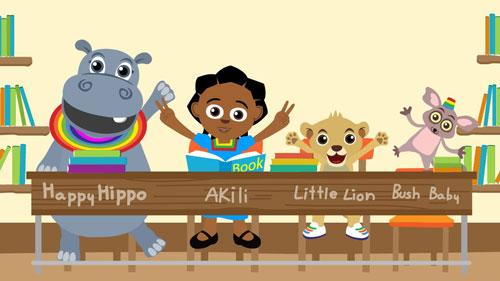
Nisha Ligon is a screenwriter, filmmaker, and the co-founder and CEO of Ubongo, one of the leading producers of kids’ edutainment in Africa. The organization reaches millions of families across Africa via TV, radio, and mobile phones with its edutainment content that helps kids learn. Ubongo was founded in 2013 by a group of animators, educators, actors, and filmmakers who were interested in closing the learning gap in Tanzania and providing kids meaningful learning experiences at low-cost and massive scale through the technologies households were already using. Today, two TV shows, Akili and Me and Kids, reach over 11.2 million households across 9 countries in Africa. Akili and Me is designed for kids from Ages 3 to 6-years old. The content is focused on pre-literacy, numeracy, and social-emotional learning. Ubongo Kids targets kids from ages 8 to 14-years old. This show focuses on teaching STEM and 21st-century life skills such as digital literacy, financial literacy, and critical thinking. The Global Search for Education invited Nisha Ligon to find out more.
“We’re really focused on impact, and we’re constantly doing focus groups and surveys to measure that and make sure we’re reaching and engaging kids and parents.” – Nisha Ligon
Nisha, you provide an edutainment model that provides effective, localized learning to African families. How would you describe the main takeaways for the kids from your programming?
We want kids to love learning and ultimately become lifelong learners. We want children to know that they are creative, to develop a growth mindset; rather than fixed thinking, they should be critical thinkers, as well as humane and empathetic people. There’s a lot of science, engineering, and mathematical topics we cover in Ubongo Kids. However, the things I mentioned before are what’s really important and will help children become the problem solvers Africa needs.
When it comes to the Akili and Me age group, there are a number of developmental milestones that we try to help facilitate through our show. So we focus on pre-literacy, pre-numeracy, motor skills, social-emotional learning, and some critical behavioral habits like hygiene and nutrition.
How would you describe the shows’ greatest achievements so far?
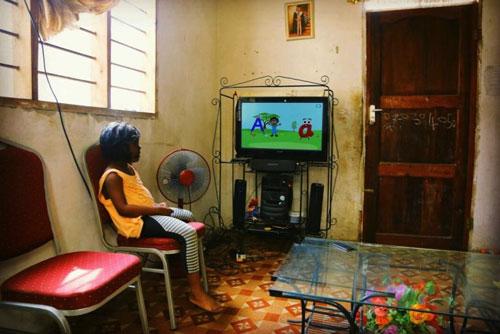
There are many things we can celebrate like winning the Next Billion EdTech or some of the funding we’ve gotten. However, what matters most to us is impact. We’re really focused on impact, and we’re constantly doing focus groups and surveys to measure that and make sure we’re reaching and engaging kids and parents. We conducted an impact evaluation in 2016 in partnership with the University of Maryland School of Public Health, and the results were published in 2017. The study showed that children who watched Akili and Me in Tanzania experienced 12% higher school readiness than kids who had watched other cartoons.
Moreover, we recently worked with Acumen’s Lean Data initiative to survey parents in East Africa about the impact of our shows on their kids. From the preliminary results, 63% of parents in Tanzania say that our programs have positively impacted their lives, and 99% say they’ve positively impacted their children’s lives.
We also did another study, which found that 3/4 of urban kids and 1/2 of rural kids can name our characters. That’s really exciting, since it shows that even kids who don’t have a lot of access to TV are finding out about the characters and brand in other ways!
“I would say that language adaptation is both our greatest challenge and greatest opportunity.” – Nisha Ligon
I know language adaptation has been a challenge for your programming. Tell us a little more about how you deal with that.
I would say that language adaptation is both our greatest challenge and greatest opportunity.
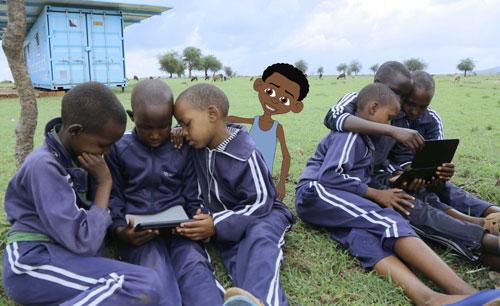
We have 440 million kids in Africa, and UNICEF estimates that 2 billion more will be born over the next 3 decades! This is a continent of kids, and there is huge room for growth! But they speak over 1000 different languages.
We’ll never cover them all, but we do have an opportunity to bring quality, fun, edutainment in languages and places where kid’s TV programs have never existed before. That’s critical for achieving learning outcomes, and it also takes engagement to a whole different level when you put something in the local language. It’s magical to see how kids light up and connect when they see cartoons in their own language for the first time ever!
But every language has different nuances, and a lot of them aren’t systematized. We were recently struggling to adapt one of our color songs to a language where yellow and orange aren’t differentiated and are the same word!
We’re still developing our processes and growing our capacity to adapt content while maintaining educational quality — to ensure that songs still have catchy rhythm and rhyme — and really making the content sound and feel local.
Our other big challenge is in deciding what not to do. There are so many different things we can do, but we have to prioritize and make sure we really invest in the most important, high impact opportunities, and do those things really well, so we can bring transformative content to all of those 440 million kids in Africa!
“This is a continent of kids, and there is huge room for growth! But they speak over 1000 different languages.” – Nisha Ligon
Looking ahead – Can you share some of the new content coming soon from Ubongo?
We are currently working on Season 5 of Ubongo Kids, Season 3 of Akili and Me, and also piloting a new pan-African show. We are also developing more content for caregivers and will be launching a caregiver kit where parents and guardians can access videos, worksheets, and learning resources to use at home with their children to support their development and cognitive stimulation.
Thank you Nisha.
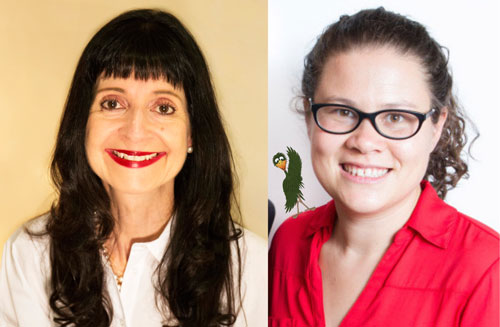
C.M.Rubin and Nisha Ligon