This website stores cookies on your computer. These cookies are used to improve your website experience and provide more personalized services to you, both on this website and through other media.
Accept
EdTechReviewEdTechReview
  • News
  • Trends
  • Insight
  • eLearning
  • Research
  • Dictionary
  • EdTech Voices
  • More
    • Data & Statistics
    • Reviews
    • AWS for Education
    • Events

    Resources

    • Infographics
    • Reports & Case Studies
    • Videos
    • Books
    • Webinar

    Needs

    • 1:1 Learning
    • 21st Century Education
    • 21st Century Leadership
    • 21st Century Learning
    • 21st Century Teaching
    • 3D Printing
    • More Tags

    For

    • Students
    • Teachers/Educators
    • Administrators
    • Entrepreneurs/Startups
    • Govt. Officials/Policymakers
    • Parents
Explore
Search
Contribute
  • Submit A Post
  • EdTech Trainers and Consultants
  • Your Campus EdTech
  • Your EdTech Product
  • Your Feedback
  • Your Love for Us
  • EdTech Product Reviews
ETR Resources
  • About
  • Mission/Vision
  • Team
  • Services
  • Testimonials
  • Authors
  • Sponsor
  • Partner
  • Advertise
  • Our Clients
  • Media Kit
  • Press Release
  • FAQ’S
Reading: Making Differentiation Possible With Ed-Tech
Aa
EdTechReviewEdTechReview
Aa
Search
  • News
  • Trends
  • Insight
  • eLearning
  • Reviews
  • Dictionary
  • EdTech Voices
  • Data & Statistics
  • Research
  • AWS for Education
  • Events
  • EdTech Voices
  • Tags
  • About
  • FAQ’S
  • Our Clients
  • Partner
Follow US
Home > Trend & Insight > Insight > Making Differentiation Possible With Ed-Tech
Insight

Making Differentiation Possible With Ed-Tech

Christy Bazemore
Christy Bazemore Published Feb 23, 2017
Share
6 Min Read
How to Make Virtual Tours for Your Classroom Simple
SHARE

Differentiation is a new buzzword in modern education, and an essential concept for teachers to master. 

AdvertisementWhy this Ad?

Definitionally, differentiation is a teaching strategy that gears to meet all individual learning needs.  It meets the child where they’re at, and caters to the method they learn with best, from visual learning to auditory learning. It provides scaffolding to the struggling learner, and higher level instruction to kids who are ready to master skills.  Only recently, though, has differentiation been so easily accessible for teachers, and that is through the evolvement of ed-tech.  Modern educational technology allows for more resources and tools to reach each student, leading to better learning outcomes in the classroom. In one study, scholars found that differentiated instruction consistently yielded positive results across a broad range of targeted groups, compared to the general student population (McQuarrie, McRae, & Stack-Cutler, 2008).

Specifically, there are some common types of learning styles in a classroom.  Based on the concept of Howard Gardner’s work on multiple intelligence, 5 learning styles can be identified as prevalent in most students:

–        Verbal Linguistic Learners

–        Logical Mathematical Learners

–        Kinesthetic Learners

–        Visual Spacial Learners

–        Musical Rhythmic Learners

To determine which students absorb which kind of learning, the multiple Intelligence test can be given as a pre-assessment.  Teachers can also conduct individual student interviews and observations.

Ed-tech handily caters to all of these learning styles. For verbal linguistic learners, Voki is a software that allows kids to input text into a custom avatar they’ve built, and then the avatar will speak the provided text, reinforcing this students desired learning pattern of hearing the educational content. 

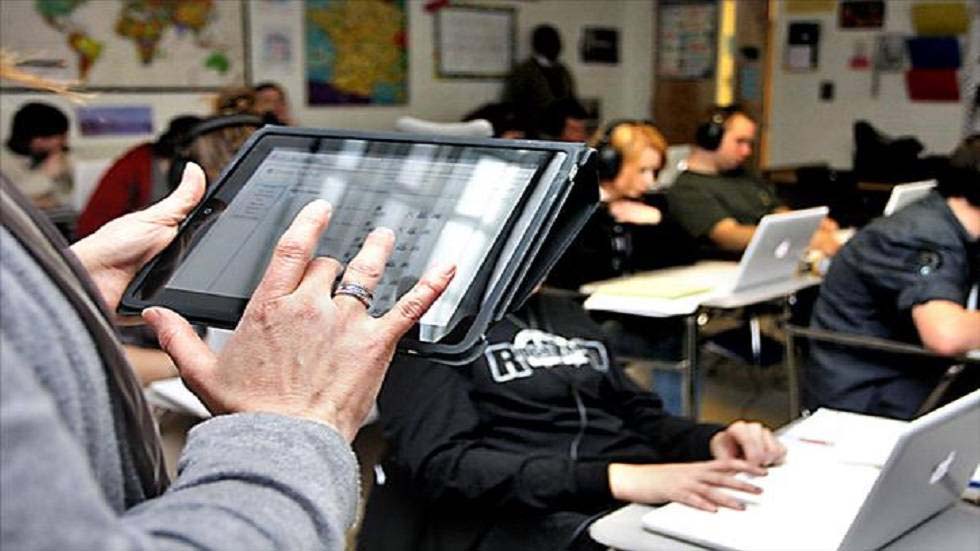
Logical mathematical learners can create spreadsheets and charts using Google Spreadsheet, or use highly focused programs on an iPad to solve long division problems.  Ed-tech allows you to see elaborate equations all on one screen, or view spelling words in a logical list format.

Kinesthetic learners absorb learning through touch and tactile movement.  For this, the act of typing out text into a computer, or pressing an answer up on a Smartboard meets this student’s needs.  Ed-tech has an abundance of physically interactive software, and newer tablets even have the ability to understand the amount of force a finger draws a picture with, and can darker and lighten a line appropriately.

Visual spacial learners like to create mental images, and PowerPoint presentations work ideally. Students can take what they’re thinking in their heads, and translate that to a word or picture based presentation to share with other students. Software like Prezi gives students the opportunity to create even more elaborate and visually appealing lessons, reinforcing the desire to absorb information through sight.

Musical rhythmic learners are especially benefited from ed-tech, because through teacher collaboration, an abundance of lesson-relevant songs are available.  Previously limited to the songs that their teacher personally knew, now a simple google search can unveil catchy songs about any topic, from long division to art history.

More broadly, though, ed-tech hits a variety of different learning styles even when one platform is used.  Jeopardy, for instance, is a classroom favorite. It can be customized to a teacher’s specific lesson, then displayed on a Promethean Board.  Visual learners can watch the game unfold and view the categories and questions. Kinesthetic learners can physically type in the answers. Logical mathematical learners can see the information displayed in a neat, Jeopardy-style grid.  Verbal learners can hear the questions played and re-played over a speaker system. Musical learners are engaged with the familiar Jeopardy theme music.

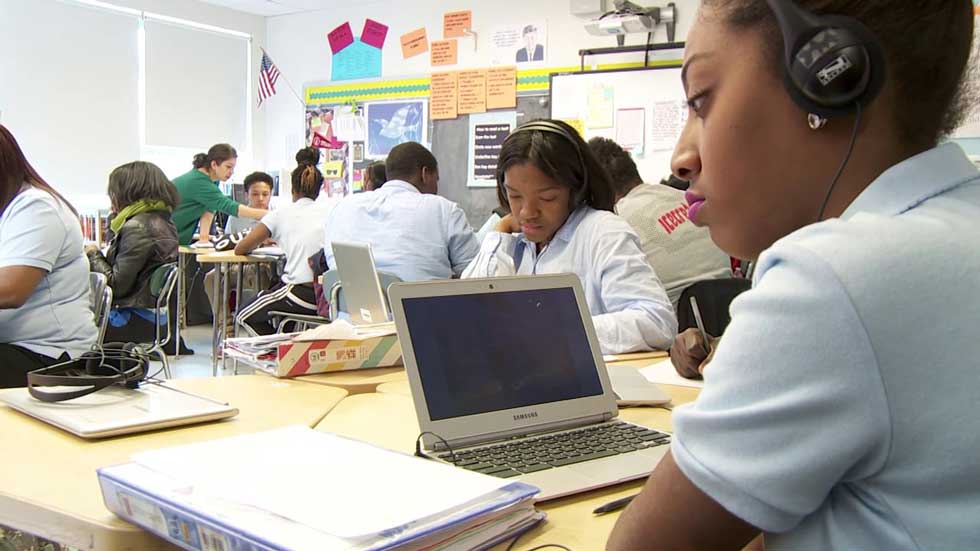
Kids relate to technology because they’ve grown up with it, and find it more exciting because it allows more creativity and gives immediate response answers. It’s hands on and isn’t a standard desk with a pencil and worksheet. iPad station, smartboard station, and computer station can all be set up simultaneously to address educational needs.  

Technology gives teachers so many resources to help plan and come up with innovative ideas for lesson presentation – it’s a win win for the student and teacher.  A simple google search will open the world to help teach students on each topic. 

Differentiation is essentially required in schools, and adapting to learning styles is essential because not doing so means students to fall behind.  Catering to several learning styles encompasses 21st century learning, and ensures that each student has a fair chance to achieve their personal educational goals. 
TAGGED: 21st Century Education, 21st Century Learning, 21st Century Teaching, Administrators, Audio Based Learning, Differentiated Learning, Learning Style/Multiple Intelligence, Teachers/Educators, Technology in Classroom, Technology in Education, Tips for Administrators, Tips for Teachers/Educators, Tools for Administrators, Tools for Teachers/Educators
Share This Article
Facebook Twitter Whatsapp Whatsapp LinkedIn Reddit Telegram Email Copy Link
Previous Article Reasons Why School Students Should Know ROBOX Reasons Why School Students Should Know ROBOX
Next Article 5 Great iPad Apps for Classroom Management What is Differentiated Instruction? + Videos
AdvertisementWhy this Ad?

Latest EdTech News To Your Inbox

Stay Connected

AdvertisementWhy this Ad?

Latest EdTech News To Your Inbox

Stay Connected

AdvertisementWhy this Ad?

You Might Also Like

How AI and Smart Sensors Are Creating Safer Learning Environments
Trends

How AI and Smart Sensors Are Creating Safer Learning Environments

Jul 16, 2026
Common Challenges Schools Face When Moving to Digital Assessments
Insight

Common Challenges Schools Face When Moving to Digital Assessments

Jul 14, 2026
Whats Actually Costing Students Their Spot at University The Most Common Rejection Reasons in 2026
Insight

What’s Actually Costing Students Their Spot at University. The Most Common Rejection Reasons in 2026

Jul 10, 2026
How Students Can Turn Learning Into a Job-Ready Resume
Insight

How Students Can Turn Learning Into a Job-Ready Resume

Jul 8, 2026
upEducators Top Choice for Becoming a Nursery Teacher in India
News

Why is upEducators the Top Choice for Nursery Teacher Training (NTT) Course in India?

Jul 7, 2026
What Schools Really Pay Without Language Access Systems in Place
Insight

What Schools Really Pay Without Language Access Systems in Place

Jul 4, 2026
Stop Teaching Students More Apps Teach Them How to Handle Files
eLearning

Stop Teaching Students More Apps, Teach Them How to Handle Files

Jul 3, 2026
Indian EdTech Has Been Solving the Problem It Can Bill For Not the One Children Have
Insight

Indian EdTech Has Been Solving the Problem It Can Bill For, Not The One Children Have

Jul 2, 2026
Show More
EdTechReviewEdTechReview

H433, 2nd Floor, Vikaspuri, New Delhi, India, 110018
Phone: 011 41321030

Follow US

Copyright © EdTechReview. All Rights Reserved.

  • Home
  • Advertise
  • Event Associations
  • Press Release
  • About
  • Services
  • Contribute
  • News
  • Trend & Insight
  • Data & Statistics
  • eLearning
  • Reviews
  • Research
  • EdTech Voices
  • Dictionary
  • Tags
  • Resources
  • Events
  • Courses
  • EdTech Product for Review
  • Sponsored/Paid Post Service
  • Our Clients
  • FAQ’S
  • Contact Us
  • Important Links
  • Sitemap
  • Terms of Use
  • Privacy Policy
newsletter
Join 100K+ subscribers!

Subscribe to our weekly newsletter that brings the latest EdTech news, trends, insights, reports, interviews, etc. for educators, school leaders, entrepreneurs, investors, & others.

loader
Zero spam, Unsubscribe at any time.
Go to mobile version
Welcome Back!

Sign in to your account

Lost your password?