
This website stores cookies on your computer. These cookies are used to improve your website experience and provide more personalized services to you, both on this website and through other media.
Accept
EdTechReviewEdTechReview
  • News
  • Trends
  • Insight
  • eLearning
  • Research
  • Dictionary
  • EdTech Voices
  • More
    • Data & Statistics
    • Reviews
    • AWS for Education
    • Events

    Resources

    • Infographics
    • Reports & Case Studies
    • Videos
    • Books
    • Webinar

    Needs

    • 1:1 Learning
    • 21st Century Education
    • 21st Century Leadership
    • 21st Century Learning
    • 21st Century Teaching
    • 3D Printing
    • More Tags

    For

    • Students
    • Teachers/Educators
    • Administrators
    • Entrepreneurs/Startups
    • Govt. Officials/Policymakers
    • Parents
Explore
Search
Contribute
  • Submit A Post
  • EdTech Trainers and Consultants
  • Your Campus EdTech
  • Your EdTech Product
  • Your Feedback
  • Your Love for Us
  • EdTech Product Reviews
ETR Resources
  • About
  • Mission/Vision
  • Team
  • Services
  • Testimonials
  • Authors
  • Sponsor
  • Partner
  • Advertise
  • Our Clients
  • Media Kit
  • Press Release
  • FAQ’S
Reading: Image to Video AI: Turning a Single Photo Into Shareable Content
Aa
EdTechReviewEdTechReview
Aa
Search
  • News
  • Trends
  • Insight
  • eLearning
  • Reviews
  • Dictionary
  • EdTech Voices
  • Data & Statistics
  • Research
  • AWS for Education
  • Events
  • EdTech Voices
  • Tags
  • About
  • FAQ’S
  • Our Clients
  • Partner
Follow US
Home > Trend & Insight > Insight > Image to Video AI: Turning a Single Photo Into Shareable Content
Insight

Image to Video AI: Turning a Single Photo Into Shareable Content

Sunny Umer
Sunny Umer Published Aug 6, 2026
Share
5 Min Read
Image to Video AI Turning a Single Photo Into Shareable Content
SHARE

Static photos don’t carry a feed the way they used to. Scroll through any platform today and the posts that actually stop the thumb are the ones that move — even a few seconds of subtle motion outperforms a still image more often than not. That shift has pushed a growing number of creators and everyday users toward a specific type of tool: image to video AI.

AdvertisementWhy this Ad?

What Image to Video AI Actually Does

The concept is straightforward. You start with a photo — a portrait, a product shot, an event picture — and the tool adds motion to it, turning a still image into a short animated clip. No filming required, no editing timeline, no prior video experience needed.

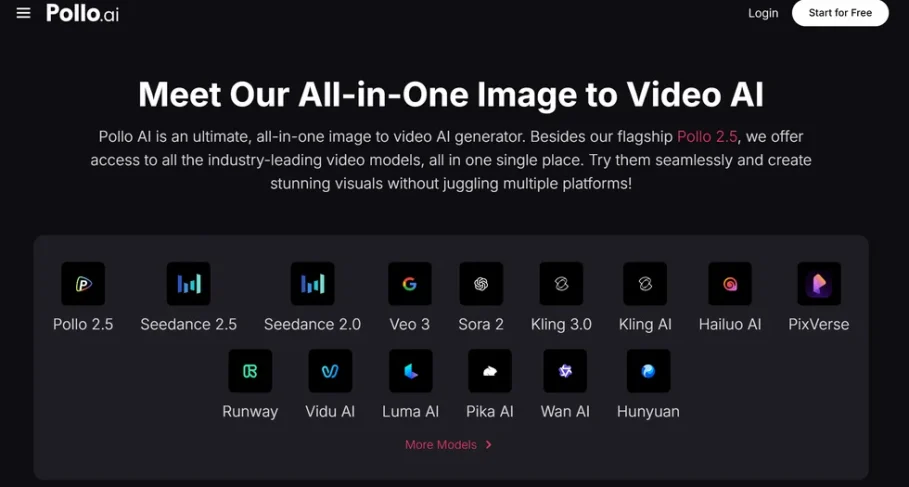
Pollo AI’s image to video AI works exactly this way. Upload a photo, and the tool generates a short clip with movement added — a subtle pan, a shift in lighting, motion within the scene itself. What used to require actual video footage or animation skills now takes a couple of minutes with a photo you already have sitting on your phone.

Why This Has Caught on So Fast

A few practical reasons explain why image to video tools have moved from novelty to habit for a lot of creators:

You skip filming entirely. No camera setup, no reshoots, no worrying about lighting during the actual shoot — you’re working from a photo you already like.

It fits short-form platforms perfectly. Reels, Shorts, and TikTok all reward motion over static posts, and a short animated clip fills that requirement without a full video production.

It’s fast. What might take hours to film and edit traditionally takes minutes when you’re animating an existing photo instead.

It doesn’t require any editing background. If you have a decent photo, you have everything you need to start.

Everyday Ways People Are Using It

Content creators use image to video tools to squeeze more life out of their existing photo library, turning old favorites into fresh, algorithm-friendly posts instead of letting them sit unused. Small business owners use it to make product photos feel more dynamic on social pages without booking a video shoot for every new item. Everyday users turn event photos — a night out, a trip, a celebration — into short clips that feel more alive than a static post buried in a camera roll.

The common thread is simple: everyone already has photos. Turning them into video content removes the biggest barrier that used to separate people who post video regularly from people who don’t — access to actual footage.

Getting a Cleaner Result

The quality of your starting photo matters a lot here. A blurry, poorly lit, or cluttered image tends to produce a rougher animated result. This is where a quick photo editor comes in handy before you animate anything. Fotor AI is built for fast, simple photo touch-ups — cropping, lighting fixes, background cleanup — and Pollo AI connects directly into it, so you can clean up a photo and animate it in the same place instead of switching between separate apps.

Using Fotor AI first is a small step that makes a real difference. A sharper, better-lit starting photo consistently produces a more polished animated clip than a rough one, and having both tools together means that extra step barely adds any time to the process.

A Simple Way to Start

If you’ve never tried this kind of tool, start with one photo you actually like — something with decent lighting and a clear subject. Generate a short clip, compare it to how a static version of the same photo performs, and see the difference for yourself.

For most people, the appeal isn’t cinematic production value. It’s turning photos that would otherwise sit unused into content that actually holds attention in a feed built around motion. With Pollo AI, a five-second clip from a photo already on your phone often does more for engagement than another still image ever will.


TAGGED: Animation, Artificial Intelligence, Digital Content, Digital Tools in Education, Multimedia, Social Media in Education
Share This Article
Facebook Twitter Whatsapp Whatsapp LinkedIn Reddit Telegram Email Copy Link
Previous Article Training Video Software Is Quietly Replacing the Course Production Studio Training Video Software Is Quietly Replacing the Course Production Studio
Next Article Bringing Interactive Smart Boards to Small-Town and Rural Classrooms in India Bringing Interactive Smart Boards to Small-Town and Rural Classrooms in India: A Practical Guide for Better Digital Learning
AdvertisementWhy this Ad?

Latest EdTech News To Your Inbox

Stay Connected

AdvertisementWhy this Ad?

Latest EdTech News To Your Inbox

Stay Connected

AdvertisementWhy this Ad?

You Might Also Like

Bringing Interactive Smart Boards to Small-Town and Rural Classrooms in India
Insight

Bringing Interactive Smart Boards to Small-Town and Rural Classrooms in India: A Practical Guide for Better Digital Learning

Aug 6, 2026
Training Video Software Is Quietly Replacing the Course Production Studio
Reviews

Training Video Software Is Quietly Replacing the Course Production Studio

Aug 4, 2026
How Expat Parents Can Choose the Right International School Before Moving Abroad
Insight

How Expat Parents Can Choose the Right International School Before Moving Abroad

Aug 4, 2026
Cost to Become a Software Engineer Complete 2026 Guide
Insight

Cost to Become a Software Engineer: Complete 2026 Guide

Aug 1, 2026
Why Faster AI-Assisted Development Isnt Getting EdTech Products to Market Faster
Insight

Why Faster AI-Assisted Development Isn’t Getting EdTech Products to Market Faster

Jul 31, 2026
The Proxy Attendance Problem No One Talks About Until Its Too Late
Insight

The Proxy Attendance Problem No One Talks About Until It’s Too Late

Jul 22, 2026
How AI and Smart Sensors Are Creating Safer Learning Environments
Trends

How AI and Smart Sensors Are Creating Safer Learning Environments

Jul 16, 2026
Common Challenges Schools Face When Moving to Digital Assessments
Insight

Common Challenges Schools Face When Moving to Digital Assessments

Jul 14, 2026
Show More
EdTechReviewEdTechReview

H433, 2nd Floor, Vikaspuri, New Delhi, India, 110018
Phone: 011 41321030

Follow US

Copyright © EdTechReview. All Rights Reserved.

  • Home
  • Advertise
  • Event Associations
  • Press Release
  • About
  • Services
  • Contribute
  • News
  • Trend & Insight
  • Data & Statistics
  • eLearning
  • Reviews
  • Research
  • EdTech Voices
  • Dictionary
  • Tags
  • Resources
  • Events
  • Courses
  • EdTech Product for Review
  • Sponsored/Paid Post Service
  • Our Clients
  • FAQ’S
  • Contact Us
  • Important Links
  • Sitemap
  • Terms of Use
  • Privacy Policy
newsletter
Join 100K+ subscribers!

Subscribe to our weekly newsletter that brings the latest EdTech news, trends, insights, reports, interviews, etc. for educators, school leaders, entrepreneurs, investors, & others.

loader
Zero spam, Unsubscribe at any time.
Go to mobile version
Welcome Back!

Sign in to your account

Lost your password?