
This website stores cookies on your computer. These cookies are used to improve your website experience and provide more personalized services to you, both on this website and through other media.
Accept
EdTechReviewEdTechReview
  • News
  • Trends
  • Insight
  • eLearning
  • Research
  • Dictionary
  • EdTech Voices
  • More
    • Data & Statistics
    • Reviews
    • AWS for Education
    • Events

    Resources

    • Infographics
    • Reports & Case Studies
    • Videos
    • Books
    • Webinar

    Needs

    • 1:1 Learning
    • 21st Century Education
    • 21st Century Leadership
    • 21st Century Learning
    • 21st Century Teaching
    • 3D Printing
    • More Tags

    For

    • Students
    • Teachers/Educators
    • Administrators
    • Entrepreneurs/Startups
    • Govt. Officials/Policymakers
    • Parents
Explore
Search
Contribute
  • Submit A Post
  • EdTech Trainers and Consultants
  • Your Campus EdTech
  • Your EdTech Product
  • Your Feedback
  • Your Love for Us
  • EdTech Product Reviews
ETR Resources
  • About
  • Mission/Vision
  • Team
  • Services
  • Testimonials
  • Authors
  • Sponsor
  • Partner
  • Advertise
  • Our Clients
  • Media Kit
  • Press Release
  • FAQ’S
Reading: Real World: A Classroom
Aa
EdTechReviewEdTechReview
Aa
Search
  • News
  • Trends
  • Insight
  • eLearning
  • Reviews
  • Dictionary
  • EdTech Voices
  • Data & Statistics
  • Research
  • AWS for Education
  • Events
  • EdTech Voices
  • Tags
  • About
  • FAQ’S
  • Our Clients
  • Partner
Follow US
Home > Trend & Insight > Insight > Real World: A Classroom
Insight

Real World: A Classroom

Sudha
Sudha Published Nov 22, 2017
Share
5 Min Read
Real World A Classroom
Real World: A Classroom
SHARE

Learning theories have put forward different types of interactions possible for learning to happen. 

AdvertisementWhy this Ad?
  •         Behaviourism
  •         Cognitivism
  •         Constructivism
  •         Social Constructivism
  •         Scaffolding
  •         Growth mind-set
  •         Visible learning

The process of learning, by itself is a habit forming process.  Habit forming can be developed in any form depending on our environment, aptitude and attitude towards the happenings around us.  It can be as simple as a routine or as complex as a design functionality. Each theory presented on learning has struck with some aspects which define the process in certain environments. 

‘Learning happens anywhere and everywhere’

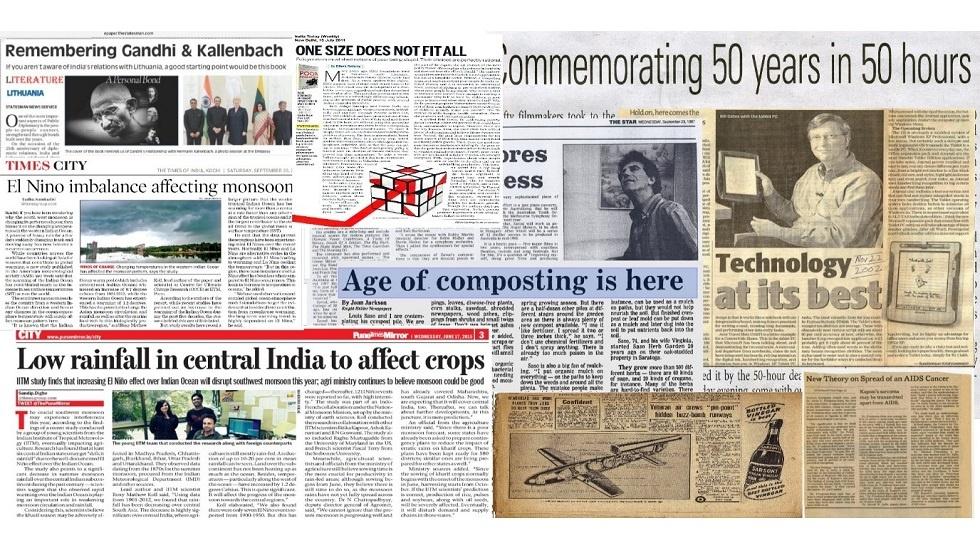
The older version of saying is related to information tool that was available then. Newspapers are a mirror of what is happening around us.  Today, we get the same information within minutes of its happening.  They cover news from natural disasters to man-made disasters, technical to technological innovations, Loss and profit margins etc.  Such information when attended on a daily basis provide an experience of the world around us.

Experience is different from expertise.  Experience is a more valid learning than expertise.  Expert may carry knowledge but experienced ‘know how to apply and troubleshoot’.  Learning needs to happen with experience to understand the elements and threshold of the learnt.  Experience develops through working, communicating and collaborating.

Textual learning towards enhancing knowledge has not provided real life support.  It is now well understood that skill required in the real world is different from that of what is acquired from books.  To achieve this widening gap and in order that learning happens effectively, learning should include the world around us.  Information and informatics work hand in hand to allow analysis of facts and figures.

A classroom is a model of interaction, under controlled conditions, happening in the real world.  To allow provoked thought process, analysis and detailed examination, lessons need to embed the tale of current world happenings.  To understand the need for revolution, students need to understand the frustration and injustice.  When we talk of such incidents, emotions attached to them are not exhibited in originality.  However, when students are allowed to read and ponder related incidents and stories; not only emotional contact, but also they develop a frame work which can further help develop peaceful negotiations towards a better solution for many burning problems. 

How to add these into lessons?

  1. Relate:  Individual lessons are not stand alone.  They are always connected – like alphabet builds words, words build sentences, and sentences build paragraph, lessons are related and connected.  As teachers, to identify these relations means it is to build a real world connected classroom
  2. Build: Once the relationship is developed the model is to be built into exploring arena.  The built model should comprise of objective, inquiry, research, brainstorming and outcome.  The teacher should design the build for easy execution of the students.
  3. Outline: Real world learning does not come with boundaries, so it is important that the teacher set limitation for its approach, research and workout.  Without the dividing line, the work may become cumbersome and confusing.
  4. Framework: The design needs to be discussed, with a trial run by the support members to understand the guiding areas, monitoring areas, observing areas and assessing areas.  This clarity helps in developing a clear setting for the teacher role.
  5. Opportunity: The entire design should carry spots which provide scope for independent thinking and working.  Provision for modifications in the process within the set outlines should be allowed to develop freedom of thought process both among the mentor and the mentee.

Side effect of learning should be competency and skill development.  Achieving the 21st Century skill is only possible when learning is focused on real world rather than an event described in texts, which may be difficult to imagine today.  Learning is for making an individual better.  Better individuals are product of both expertise and experience.  Let us not forgo one for the sake of another.  Real world classrooms provide better surviving skills because it is known that ‘Today or tomorrow – Survival is only for the fittest’.

TAGGED: 21st Century Education, 21st Century Learning, 21st Century Teaching, Teachers/Educators, Tips for Teachers/Educators
Share This Article
Facebook Twitter Whatsapp Whatsapp LinkedIn Reddit Telegram Email Copy Link
Previous Article Report Reveals Connected Living Expectations Of Uks 2020 Students Report Reveals ‘Connected Living’ Expectations Of UK’s 2020 Students
Next Article OEB GLOBAL Experts to Debate the Effect of Social Media on Student Brains OEB GLOBAL: Experts to Debate the Effect of Social Media on Student Brains
AdvertisementWhy this Ad?

Latest EdTech News To Your Inbox

Stay Connected

AdvertisementWhy this Ad?

Latest EdTech News To Your Inbox

Stay Connected

AdvertisementWhy this Ad?

You Might Also Like

Common Challenges Schools Face When Moving to Digital Assessments
Insight

Common Challenges Schools Face When Moving to Digital Assessments

Jul 14, 2026
Whats Actually Costing Students Their Spot at University The Most Common Rejection Reasons in 2026
Insight

What’s Actually Costing Students Their Spot at University. The Most Common Rejection Reasons in 2026

Jul 10, 2026
How Students Can Turn Learning Into a Job-Ready Resume
Insight

How Students Can Turn Learning Into a Job-Ready Resume

Jul 8, 2026
upEducators Top Choice for Becoming a Nursery Teacher in India
News

Why is upEducators the Top Choice for Nursery Teacher Training (NTT) Course in India?

Jul 7, 2026
What Schools Really Pay Without Language Access Systems in Place
Insight

What Schools Really Pay Without Language Access Systems in Place

Jul 4, 2026
Stop Teaching Students More Apps Teach Them How to Handle Files
eLearning

Stop Teaching Students More Apps, Teach Them How to Handle Files

Jul 3, 2026
Indian EdTech Has Been Solving the Problem It Can Bill For Not the One Children Have
Insight

Indian EdTech Has Been Solving the Problem It Can Bill For, Not The One Children Have

Jul 2, 2026
The Most Important Variable in Education Isnt AI
Insight

The Most Important Variable in Education Isn’t AI – What Building Live Instruction at Scale Actually Taught Me

Jun 26, 2026
Show More
EdTechReviewEdTechReview

H433, 2nd Floor, Vikaspuri, New Delhi, India, 110018
Phone: 011 41321030

Follow US

Copyright © EdTechReview. All Rights Reserved.

  • Home
  • Advertise
  • Event Associations
  • Press Release
  • About
  • Services
  • Contribute
  • News
  • Trend & Insight
  • Data & Statistics
  • eLearning
  • Reviews
  • Research
  • EdTech Voices
  • Dictionary
  • Tags
  • Resources
  • Events
  • Courses
  • EdTech Product for Review
  • Sponsored/Paid Post Service
  • Our Clients
  • FAQ’S
  • Contact Us
  • Important Links
  • Sitemap
  • Terms of Use
  • Privacy Policy
newsletter
Join 100K+ subscribers!

Subscribe to our weekly newsletter that brings the latest EdTech news, trends, insights, reports, interviews, etc. for educators, school leaders, entrepreneurs, investors, & others.

loader
Zero spam, Unsubscribe at any time.
Go to mobile version
Welcome Back!

Sign in to your account

Lost your password?