This website stores cookies on your computer. These cookies are used to improve your website experience and provide more personalized services to you, both on this website and through other media.
Accept
EdTechReviewEdTechReview
  • News
  • Trends
  • Insight
  • eLearning
  • Research
  • Dictionary
  • EdTech Voices
  • More
    • Data & Statistics
    • Reviews
    • AWS for Education
    • Events

    Resources

    • Infographics
    • Reports & Case Studies
    • Videos
    • Books
    • Webinar

    Needs

    • 1:1 Learning
    • 21st Century Education
    • 21st Century Leadership
    • 21st Century Learning
    • 21st Century Teaching
    • 3D Printing
    • More Tags

    For

    • Students
    • Teachers/Educators
    • Administrators
    • Entrepreneurs/Startups
    • Govt. Officials/Policymakers
    • Parents
Explore
Search
Contribute
  • Submit A Post
  • EdTech Trainers and Consultants
  • Your Campus EdTech
  • Your EdTech Product
  • Your Feedback
  • Your Love for Us
  • EdTech Product Reviews
ETR Resources
  • About
  • Mission/Vision
  • Team
  • Services
  • Testimonials
  • Authors
  • Sponsor
  • Partner
  • Advertise
  • Our Clients
  • Media Kit
  • Press Release
  • FAQ’S
Reading: Who Said That 3D Printing is for Introverts!?
Aa
EdTechReviewEdTechReview
Aa
Search
  • News
  • Trends
  • Insight
  • eLearning
  • Reviews
  • Dictionary
  • EdTech Voices
  • Data & Statistics
  • Research
  • AWS for Education
  • Events
  • EdTech Voices
  • Tags
  • About
  • FAQ’S
  • Our Clients
  • Partner
Follow US
Home > Trend & Insight > Insight > Who Said That 3D Printing is for Introverts!?
Insight

Who Said That 3D Printing is for Introverts!?

Sammy ekaran
Sammy ekaran Published Mar 14, 2018
Share
5 Min Read
SHARE

The terms ‘introvert’ and ‘extrovert’ are often used to describe a student’s personality, and perhaps even to predict what activities they are likely to engage with. For example, based on the perception that 3D design is a quiet and private activity, one could assume that it is for introverts.

Contents
Describing Introverted and Extroverted Students1.   Personality is a Five-Factor Construction2.   Each Factor is Measured on a Spectrum3.   Personality Characteristics are Fluid and Ever-Changing3D Design is for Everyone
AdvertisementWhy this Ad?

However, 50 to 74 percent of the population are extroverts. Does this mean, then, that a large percentage of your students will not enjoy, or benefit from, 3D design and printing activities?

It’s not that ‘cut and dry’.

Describing Introverted and Extroverted Students

The difference between an introvert and an extrovert relates to how they “recharge” themselves in social settings. “Extroverts (or those with extroverted tendencies) gain energy by placing themselves in social situations. They don’t mind being under the spotlight, or the center of attention. However, spending too much alone time drains them mentally. On the other hand, introverts recharge by spending time alone. After a long period of time in crowded social situations, they need a desperate break to regain their energy back.”

As you may expect, extroverted learners are said to love bouncing ideas back and forth, group projects, class discussions, and such-like activities. Introverted students, on the other hand, are said to have a solitary learning style and often prefer work own their own. Introverted learners like to brainstorm and weigh up options before moving forward.

So… Is 3D Design for Students Who are Introverts or Extroverts?

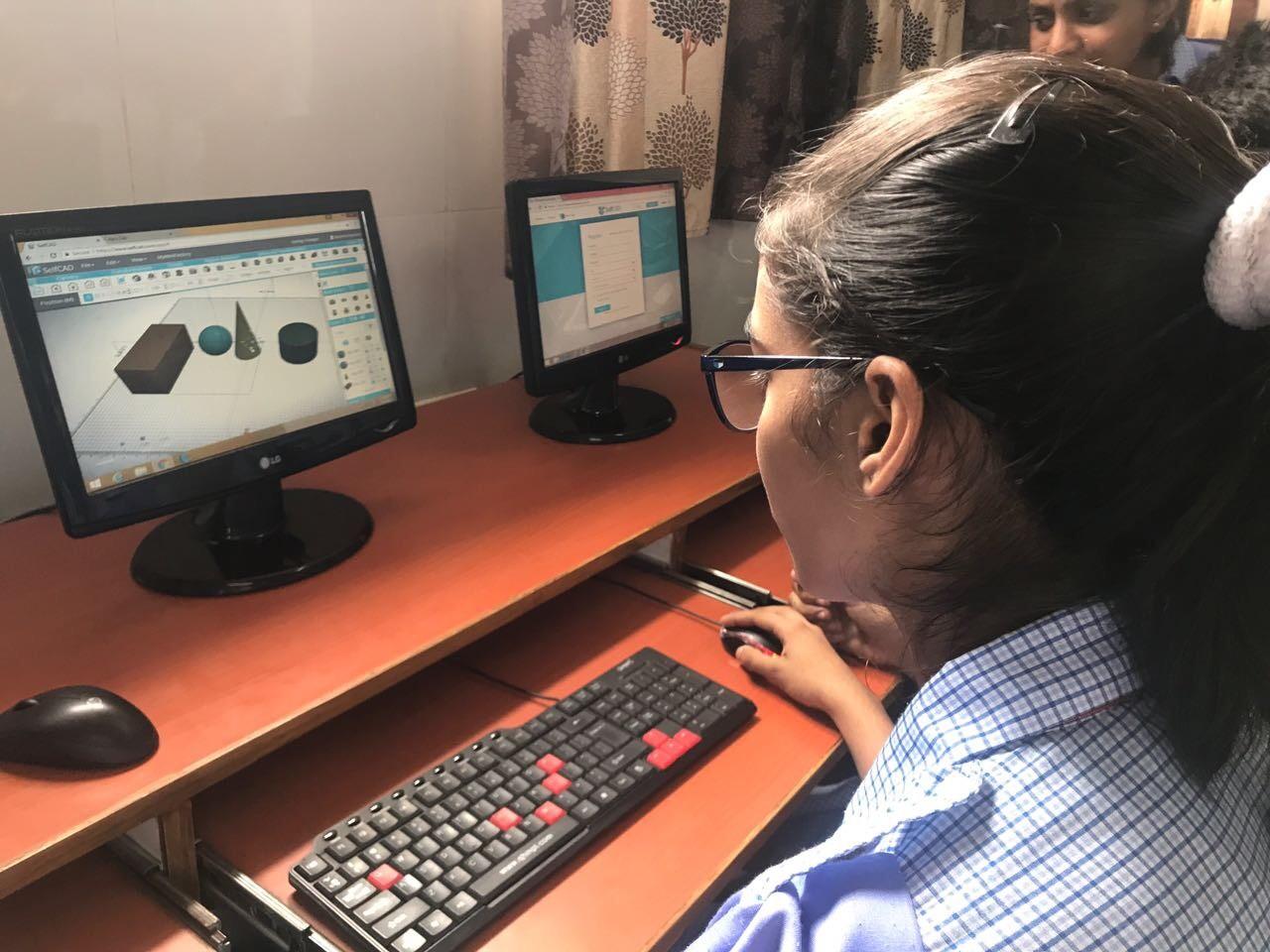
Given the description of an introverted student above, our common sense would tell us that 3D design is for the introvert. Indeed, when you envisage someone engaged in the 3D design process, you tend to think of them working alone on their computer or laptop, engrossed in thought, weighing up options and brainstorming solutions. Sounds fairly introverted, right?

This is where it gets complicated. Extroverts are said to have more blood flow in areas of the brain involved with interpreting sensory data. According to Vanseo Design, visual perception is the process of obtaining awareness and understanding of sensory data. Based on that, it would appear as though extroverts would be more suited to activities that heavily call upon visual perception, such as 3D design.

So, is 3D design for introverts or extroverts? The answer does appear to be rather obscure. However, the truth is, there is no reason to get hung up on it. Why? Because single word stereotypes, such as ‘introvert’ and ‘extrovert’, are not definitive labels of a student’s personality or learning preferences anyway.

Three Reasons Why ‘Introvert’ and ‘Extrovert’ are NOT Definitive Labels

1.   Personality is a Five-Factor Construction

According to an article published by ThoughtCo, entitled, ‘What “Introvert” and “Extrovert” Really Mean’, people’s personalities are actually described based on five personality traits: extroversion, agreeableness, conscientiousness, neuroticism and openness to experience. Clearly, intro-extroversion is only one small piece of the entire personality puzzle.

2.   Each Factor is Measured on a Spectrum

Personality traits such as intro-extroversion are measured on a spectrum, and therefore, cannot be considered as discrete labels or categories. For example, a person might be more extroverted, more introverted, or somewhere in-between. In fact, there is a term for a person who falls in the middle of the intro-extroversion spectrum— ambiverts.

3.   Personality Characteristics are Fluid and Ever-Changing

Studies show that personality will change many times over your entire life-span. According to Business Insider, “late adolescence and early adulthood are times of significant personality development and change; old age too can be a time that our characters evolve.” This suggests that a student’s personality and learning preferences are likely to change often.

3D Design is for Everyone

In truth, it makes little to no difference whether someone is an ‘introvert’ or an ‘extrovert’; 3D design is for anyone who has an interest in bringing their concepts and ideas to life.

To some extent, 3D design transcends above all the rhetoric anyway. It doesn’t matter what you are, or are not, because it begins with the student’s own idea. 3D design merely facilitates the creative process. We designed SelfCAD to make that process as simple and pain-free as possible.

Indeed, 3D design is for everyone, however you define personality.

TAGGED: 3D Printing, Parents
Share This Article
Facebook Twitter Whatsapp Whatsapp LinkedIn Reddit Telegram Email Copy Link
Previous Article 5 Great Videos on How School-Parent Communication is Evolving 5 Great Videos on How School-Parent Communication is Evolving
Next Article 3D Printing Software SelfCAD enters in 100th classroom Nationwide Who Said That 3D Printing is for Introverts!?
AdvertisementWhy this Ad?

Latest EdTech News To Your Inbox

Stay Connected

AdvertisementWhy this Ad?

Latest EdTech News To Your Inbox

Stay Connected

AdvertisementWhy this Ad?

You Might Also Like

Common Challenges Schools Face When Moving to Digital Assessments
Insight

Common Challenges Schools Face When Moving to Digital Assessments

Jul 14, 2026
Whats Actually Costing Students Their Spot at University The Most Common Rejection Reasons in 2026
Insight

What’s Actually Costing Students Their Spot at University. The Most Common Rejection Reasons in 2026

Jul 10, 2026
How Students Can Turn Learning Into a Job-Ready Resume
Insight

How Students Can Turn Learning Into a Job-Ready Resume

Jul 8, 2026
What Schools Really Pay Without Language Access Systems in Place
Insight

What Schools Really Pay Without Language Access Systems in Place

Jul 4, 2026
Indian EdTech Has Been Solving the Problem It Can Bill For Not the One Children Have
Insight

Indian EdTech Has Been Solving the Problem It Can Bill For, Not The One Children Have

Jul 2, 2026
From Consumers to Creators How to Turn Your Kids Summer Screen Addiction Into a Productive Skill Lab
eLearning

From Consumers to Creators: How to Turn Your Kid’s Summer Screen Addiction Into a Productive ‘Skill Lab’

Jun 30, 2026
The Most Important Variable in Education Isnt AI
Insight

The Most Important Variable in Education Isn’t AI – What Building Live Instruction at Scale Actually Taught Me

Jun 26, 2026
Why AI-Powered Personalized Learning Is Becoming the New Standard in EdTech
Insight

Why AI-Powered Personalized Learning Is Becoming the New Standard in EdTech

Jun 25, 2026
Show More
EdTechReviewEdTechReview

H433, 2nd Floor, Vikaspuri, New Delhi, India, 110018
Phone: 011 41321030

Follow US

Copyright © EdTechReview. All Rights Reserved.

  • Home
  • Advertise
  • Event Associations
  • Press Release
  • About
  • Services
  • Contribute
  • News
  • Trend & Insight
  • Data & Statistics
  • eLearning
  • Reviews
  • Research
  • EdTech Voices
  • Dictionary
  • Tags
  • Resources
  • Events
  • Courses
  • EdTech Product for Review
  • Sponsored/Paid Post Service
  • Our Clients
  • FAQ’S
  • Contact Us
  • Important Links
  • Sitemap
  • Terms of Use
  • Privacy Policy
newsletter
Join 100K+ subscribers!

Subscribe to our weekly newsletter that brings the latest EdTech news, trends, insights, reports, interviews, etc. for educators, school leaders, entrepreneurs, investors, & others.

loader
Zero spam, Unsubscribe at any time.
Go to mobile version
Welcome Back!

Sign in to your account

Lost your password?