

This website stores cookies on your computer. These cookies are used to improve your website experience and provide more personalized services to you, both on this website and through other media.
Accept
EdTechReviewEdTechReview
  • News
  • Trends
  • Insight
  • eLearning
  • Research
  • Dictionary
  • EdTech Voices
  • More
    • Data & Statistics
    • Reviews
    • AWS for Education
    • Events

    Resources

    • Infographics
    • Reports & Case Studies
    • Videos
    • Books
    • Webinar

    Needs

    • 1:1 Learning
    • 21st Century Education
    • 21st Century Leadership
    • 21st Century Learning
    • 21st Century Teaching
    • 3D Printing
    • More Tags

    For

    • Students
    • Teachers/Educators
    • Administrators
    • Entrepreneurs/Startups
    • Govt. Officials/Policymakers
    • Parents
Explore
Search
Contribute
  • Submit A Post
  • EdTech Trainers and Consultants
  • Your Campus EdTech
  • Your EdTech Product
  • Your Feedback
  • Your Love for Us
  • EdTech Product Reviews
ETR Resources
  • About
  • Mission/Vision
  • Team
  • Services
  • Testimonials
  • Authors
  • Sponsor
  • Partner
  • Advertise
  • Our Clients
  • Media Kit
  • Press Release
  • FAQ’S
Reading: Teaching Strategies For Auditory Learners
Aa
EdTechReviewEdTechReview
Aa
Search
  • News
  • Trends
  • Insight
  • eLearning
  • Reviews
  • Dictionary
  • EdTech Voices
  • Data & Statistics
  • Research
  • AWS for Education
  • Events
  • EdTech Voices
  • Tags
  • About
  • FAQ’S
  • Our Clients
  • Partner
Follow US
Home > Trend & Insight > Insight > Teaching Strategies For Auditory Learners
Insight

Teaching Strategies For Auditory Learners

Priyanka Gupta
Priyanka Gupta Published Mar 24, 2023
Share
6 Min Read
Teaching Strategies For Auditory Learners
SHARE

Students have different learning preferences. While some enjoy conventional text-based learning, many students prefer audio and videos. With eLearning in play, it has become possible to provide students with learning content based on their learning style. However, classroom learning still involves the chalk-and-talk method, and it can be challenging to fit all students’ needs.

Contents
Play Background musicBegin Lessons with Lectures or DiscussionsUse Text-to-Speech or Audio Books When AvailableUse Closing DiscussionsUse VideosRead Assignment Instructions AloudIntegrate Podcasts and Audiobooks
AdvertisementWhy this Ad?

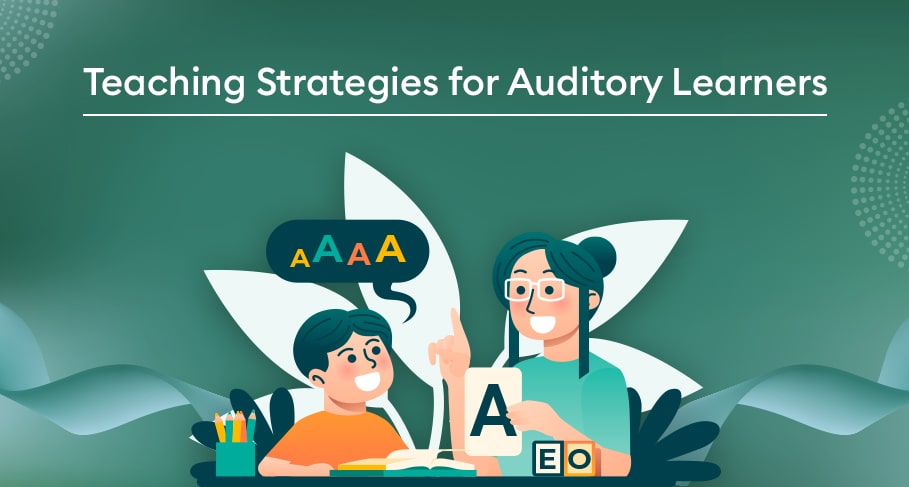
Auditory learners learn effectively through sound. They prefer read-aloud sessions over silent book reading and lectures instead of read-through assignments. An audio element can make their learning journey effective and enjoyable.

To thoroughly understand what auditory learning is, make sure you read this post, What is Auditory Learning (Audio Based Learning)?

Here are a few strategies to help educators make way for auditory learners in daily classroom activities.

Play Background music

Auditory learners work best when there’s background sound as opposed to silence. Music can help auditory learners concentrate better and learn efficiently. Educators can allow students to use headphones in the classroom. If the entire class is comfortable, try playing soothing music as background audio when they learn or do deep focus work.

Begin Lessons with Lectures or Discussions

Since spoken instruction works best for auditory learners, a lecture or group discussion would be the best way to start a lesson. Both mediums include verbal information and expression, making them ideal for auditory learners. Additionally, these will encourage students to think and comprehend their learning. Another critical point is to record the lectures. While many students prefer making notes, auditory learners benefit more from recorded lectures. Ensure that recorded lectures are shared with all the students and that they have open accessibility.

Since verbal instruction and repetition are ideal for auditory #learners, record lectures and have them available anytime so #students can always revisit them.

Learn about adapting to different learning styles here: https://t.co/Xw1ARennAj#auditorylearning #learningstyles pic.twitter.com/fnXqkfj1rN

— Noodle Factory (@noodlefactorysg) October 27, 2021

Use Text-to-Speech or Audio Books When Available

When you can’t start lessons with a discussion, consider using a text-to-speech tool for auditory learners. Listening to text is better than reading it when the students learn better from oral input. Auditory learners benefit from hearing more than reading assignments. Even when they have to read aloud the assignments or comprehend the topic, it will help them more in processing information than just plain reading. Audiobooks are also excellent add-ons that educators must try.

Use Closing Discussions

A casual conversation around the lesson and understanding the topic can help bring auditory elements to the classrooms. It also makes room for a better understanding of students’ learning needs. Also, it opens the stage for students to comprehend their learning. For instance, an auditory learner can explain the concepts discussed, and other students can engage. Through this activity, students can engage in a healthy debate, and educators would better understand students’ knowledge and gaps.

Asking students to summarise what they’ve learned is a unique listening experience because they will hear themselves speak and understand other students learning. This exercise lets them identify what they are missing and how to catch up.

Use Videos

Adding educational videos can enhance the learning experience for all students regardless of their learning styles. Videos are a great way to stimulate your learning content, and auditory learners get the sound element and visuals to help them learn effectively. Supplemental videos are a great way to practice flipped learning, teach concepts that are procedure based, like science experiments or bring interactivity to learning content like adding videos on classic English literature plays.

Read Assignment Instructions Aloud

This strategy can help auditory learners understand expectations for assignments clearly. It will work amazingly well for students with little or no preference for read/write learning. You can also ask students to share their choice of preferences for assignments. For instance, a student may want to write the project, while others may want to do a podcast or presentation on the given topic. This helps students express their knowledge and understanding in ways that suit them the best.

Integrate Podcasts and Audiobooks

Podcasts and audiobooks have gained popularity in recent years. They are great resources for auditory learners. Finding podcasts and audiobooks that cover the subject as required for students might be challenging. However, they work wonderfully to learn new things and for general information. For instance, podcasts on STEM education or English grammar may help students in various ways but not necessarily cover the concepts as per their grades. Include sharing age and grade-appropriate resources with students, and auditory learners will enjoy their learning experience.

Also Read: Popular Podcasts Education Leaders Must Check Out

While providing tailored instruction for auditory learners in a classroom with kids with varied learning styles may be challenging, integrating a few of the above strategies can help educators provide an audio element in the learning experience, making it effective for auditory learners.


TAGGED: 21st Century Learning, Activity based learning, Audio Based Learning, Auditory Learning, Podcasts
Share This Article
Facebook Twitter Whatsapp Whatsapp LinkedIn Reddit Telegram Email Copy Link
Priyanka Gupta
By Priyanka Gupta
Follow:
Priyanka is an experienced edtech blogger with a passion for improving education through technology. She writes thought-provoking and informative articles on the latest trends and developments in the edtech space. Through her engaging writing style and insightful analysis, readers gain a deeper understanding of how technology is transforming the way we learn and teach. From AI-powered learning platforms to gamification and conventional teaching strategies in the 21st century, Priyanka covers a wide range of topics that are relevant to educators, students, and anyone interested in the future of education.
Previous Article Pi Day Fun Problems to Solve With Your Family Pi Day: Fun Problems to Solve With Your Family
Next Article Discovery Education Partners With Norton to Launch New Digital Citizenship Resources Discovery Education Partners With Norton to Launch New Digital Citizenship Resources
AdvertisementWhy this Ad?

Latest EdTech News To Your Inbox

Stay Connected

AdvertisementWhy this Ad?

Latest EdTech News To Your Inbox

Stay Connected

AdvertisementWhy this Ad?

You Might Also Like

Dr Varun Vohra 1 career counsellor in india Guiding School Students
Insight

The Role of a Career Counsellor: Why Career Guidance and Career Counselling Matter More Than Ever in Indian Schools

Jun 2, 2026
Why Nonprofits and Schools Struggle with Fundraising Campaigns and How to Fix It
Insight

Why Nonprofits and Schools Struggle with Fundraising Campaigns and How to Fix It

May 8, 2026
Creative Ways to Use Calendars for Better Daily Productivity and Focus
Insight

Creative Ways to Use Calendars for Better Daily Productivity and Focus

May 7, 2026
Indias Childrens Activities Economy awaits Its Platform Moment
Insight

India’s Children’s Activities Economy Awaits Its Platform Moment

Apr 18, 2026
How Language Labs Improve Communication Skills and Boost Student Placement Success
Insight

How Language Labs Improve Communication Skills and Boost Student Placement Success

Apr 16, 2026
Education Has Nowhere to Hide in the Agentic Era
Insight

Education Has Nowhere to Hide in the Agentic Era

Apr 15, 2026
Sustainable AI and Making Tech Work For Students
Insight

Sustainable AI and Making Tech Work For Students

Apr 11, 2026
How Indian EdTech Platforms Are Filling Skill Gaps for Global Job Markets
Insight

How Indian EdTech Platforms Are Filling Skill Gaps for Global Job Markets

Mar 28, 2026
Show More
EdTechReviewEdTechReview

H433, 2nd Floor, Vikaspuri, New Delhi, India, 110018
Phone: 011 41321030

Follow US

Copyright © EdTechReview. All Rights Reserved.

  • Home
  • Advertise
  • Event Associations
  • Press Release
  • About
  • Services
  • Contribute
  • News
  • Trend & Insight
  • Data & Statistics
  • eLearning
  • Reviews
  • Research
  • EdTech Voices
  • Dictionary
  • Tags
  • Resources
  • Events
  • Courses
  • EdTech Product for Review
  • Sponsored/Paid Post Service
  • Our Clients
  • FAQ’S
  • Contact Us
  • Important Links
  • Sitemap
  • Terms of Use
  • Privacy Policy
newsletter
Join 100K+ subscribers!

Subscribe to our weekly newsletter that brings the latest EdTech news, trends, insights, reports, interviews, etc. for educators, school leaders, entrepreneurs, investors, & others.

loader
Zero spam, Unsubscribe at any time.
Go to mobile version
Welcome Back!

Sign in to your account

Lost your password?