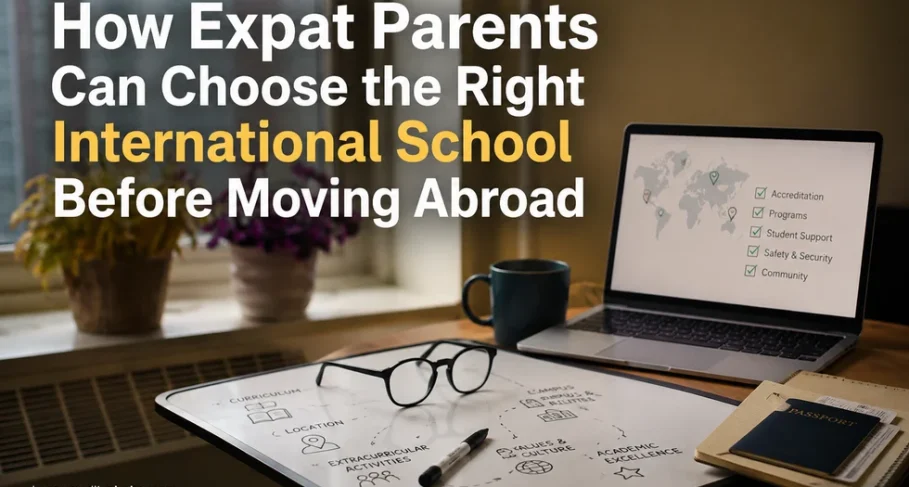
Relocation is often challenging for millions of expat families preparing for a major life transition. It’s those packing challenges, visa delays, and endless house hunting sessions. It’s moving season, and that means everyone is searching for a fresh start.
It’s not just professionals shifting jobs; it’s also young students who follow them on this global journey. A successful move requires more than packing bags; parents need to understand the key educational elements that make international study a legitimate, transformative experience.
Families should prepare early by paying attention to key educational factors. There are those registration deadlines, language barriers, and school community dynamics – that’s the stuff that expats focus on. In other words, early preparation. That’s how young students are smoothly integrated into a new culture, while early planning allows families to find the ideal environment to call home.
Would you believe that a single high-profile campus choice can totally transform a student’s fortunes? Struggling kids can really ramp up their performance with high-quality teachers. It all goes well beyond simple classroom dynamics. Education often comes down to curriculum styles – these carry weight. A new academic coordinator may introduce a completely different educational framework for the child. And that’s precisely how good students become great students. A new curriculum can prove transformative.
If you’re in the thick of it, you want to be able to anticipate which campuses will exceed expectations. It’s best to analyze all these structural offerings – curriculum style, accreditations, and local integration models. Schools with top-tier international frameworks routinely burst out of the blocks quickly. Expats who choose unfamiliar academic paths often struggle early in the term.
Information Gathering Goes Alongside Major Relocation Logistics
Many global families analyze school plus points. High-quality education ranks among a country’s top-tier priorities, and for good reason. Parents also want to know how experts view option. It’s a good idea to start checking regional guides. These give expat families insights into how educational communities thrive locally.
These resources reflect neighborhood safety, campus culture and extracurricular activities. For example, a diverse student body reveals a highly inclusive environment. But a mono-cultural demographic suggests a different social experience. Expat families keep an eye on metrics to identify which schools hold promise and which ones are a poor fit.
Fee structures are a common consideration in international placements. There are constant financial adjustments in the form of registration costs, building funds, and mandatory debentures. While they appear clear on paper, these multi-tiered costs routinely dictate the feasibility of private enrollment. For example, there may be hidden capital fees or shifts in how transportation billing works. Parents want to know the absolute final price to avoid financial confusion down the line.
Top international institutions now use comprehensive online breakdowns to assist with cost planning. This assists in financial transparency and household budgeting. Families have clear charts in place to decide what is included in tuition and what isn’t. This prevents immense frustration when unexpected secondary invoices are put under the microscope. Families that understand the breakdown of school fees often budget for maximum advantage.
Why Peer Feedback Is So Important
Independent commentary before moving is really important – never ignore it. Granted, the official school marketing looks flawless online, but real peer assessments offer valuable info to expat circles. Parents use this time to explore international platforms to find the best international schools worldwide to analyze candid reviews from fellow global families. Perhaps the safest advice that a new expat parent can take is this: focus on objective feedback.
You get to see real-world comments about teacher retention, school transparency, and student satisfaction. Relocation is a reality and social isolation sometimes occurs during the initial adjustment period. Campuses with strong welcome committees – several parent groups deep – routinely perform much better than those with paper thin support networks. That’s why active communities are so vital.
No matter how much you study, and how deep your knowledge base, child adaptation is always unpredictable. Every year, optimistic parents predict which schools will suit their children perfectly. More often than not, some initial plans fall flat. It’s not that some schools aren’t good enough to host foreign students; it’s often the case that a brand-new environment fundamentally alters child behavior.
Everyone Is Unique: Thriving & Immersion Go Together
Which child is more resilient, socially adaptable, and thrives under pressure? That’s the million-dollar question on every parent’s mind. It’s best to stay flexible with expectations – nobody knows what nobody knows. Stay up to date with the latest international developments. This is done courtesy of objective comparisons that cut through the hype. Things like curriculum alignment, community reviews, and transparency can mean the world of difference for the expat journey.