My journey in education began as a child—one who couldn’t quite fit into the conventional mould. Growing up in the 90s, advanced technology was the last thing one could think of. Back then, my learning challenges often went unaddressed, and I was often written off by teachers who found it too difficult to teach me. I apologize if I was a bit annoying, but that’s not the focus here. The point is that those early experiences shaped who I am today.
Fast-forward to adulthood and I became a teacher—not just any teacher, but one who empathizes deeply with students who struggle. Why? Because I was one of them. Many teachers excelled academically throughout their school years, but my path was different. With the support of incredible parents, a few fantastic teachers, and a relentless spirit, I made it through and graduated from university.
Now, I’m sharing this because of my extensive experience as a public school teacher. Over the years, having taught various grades in different schools, each with its unique challenges and triumphs. I’ve experienced classrooms where students strive for perfection and others where getting the lowest grade was seen as a badge of honour. There have been behaviour issues that would make for some wild stories—like the time a student threw a fire extinguisher at another student for no apparent reason. I’ve taught students with every learning disability under the sun, as well as those with myriad multilingual learners’ (MLL) needs. I’ve mentored future doctors, lawyers, and students whose main goal was simply to survive until summer break.
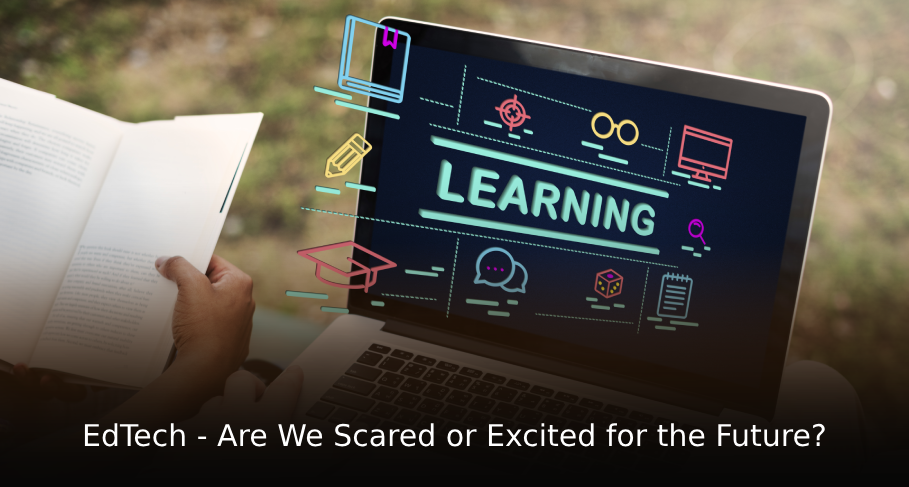
But let’s get to the heart of this blog: Educational Technology, or EdTech for short. This space explores my firm belief that EdTech can help all these students. If utilized properly—and we’ll discuss why it should be—it embodies the principles of diversity, equity, and inclusivity. We’ll tackle many hot topics in EdTech, and I won’t shy away from discussing the downfalls as well.
So, let’s explore how technology can transform education, making it more accessible, engaging, and effective for all students. Ready? Let’s go!
The Socio-Economic Divide in Technology Access
Hello Everyone, Education, am I right? Over my decade-long journey through Ontario’s schools, I’ve witnessed teaching strategies evolve in fascinating ways. Remember when Chromebook carts were the latest tech craze? I recall those early days when we’d scramble to share a cart, leading to a bit of hostility. Ah, the good old days of tech hoarding. And who could forget that one time a fellow teacher scolded me for letting a student borrow a laptop from her class? Picture a dog with a confused head tilt—yup, that was me. I don’t think we were destined for a coffee date after that.
Current State of Technology Access
Let’s dive into the world of technology access in education—the good, the bad, and the ugly. Not every classroom uses technology to the same extent, and this disparity is striking. Approximately 30% of classrooms have 1:1 technology access, where each student has their own device while others share devices (Tech Education Statistics, 2024). Globally, around 40% of schools are adopting AI tools to enhance learning, with significant variations across regions. For instance, in North America, 42% of U.S. schools have 1:1 access, but this figure drops to 25% in rural areas (NCES, 2023).
The gap in technology access is stark. 85% of students in high-income households have personal devices for educational use, compared to only 50% in low-income households (Pew Research Center, 2024). Students lacking reliable technology are 30% less likely to achieve proficiency in core subjects compared to their peers with full access (National Center for Education Statistics, 2024). A study by the Pew Research Center (2023) found that 40% of low-income students lack access to a personal device for schoolwork, significantly impacting their academic performance. In schools with limited technology, 25% of teachers report struggling to engage students effectively, and 60% of educators believe that lack of tech access hampers their ability to provide individualized instruction (Educator Technology Survey, 2024). Furthermore, students in schools with inadequate technology support score 15% lower on standardized tests than those in well-equipped schools (Journal of Educational Psychology, 2023).
Looking Forward
This gap underscores the critical need for equitable resource distribution to ensure that every student has the tools they need to succeed. If I were in government—thankfully, I’m not; I suspect my humour might not play as well with policymakers as it does with my middle schoolers—I would prioritise ensuring that every student has access to technology. Yes, that includes replacing the computers that our beloved little darlings (a.k.a. “ankle biters”) occasionally destroy by accident.
And on a slightly self-serving note—Dear Government, if you’re reading this—how about installing air conditioning in our elementary schools? I’m not sure sweating profusely for 10 hours is a sustainable diet plan, though it might be the only benefit I can see. Let’s not even start on the smells and the rather candid comments from our favourite students. Not that we have favourites, of course!
Why is EdTech so Scary?
As someone who has worked with technology from the start of my career, I have easily seen the strengths and weaknesses of educational technology. This section will discuss the scary parts of EdTech for teachers, educators, and communities. Simply put, many anecdotal stories of parents telling me that their child’s assistive technology (e.g., word prediction, text-to-speech—the whole package) will make their child lazy. Is there any merit in that? Sometimes, I find it hard to disagree and empathize with this opinion. However, the pros outweigh the cons here in massive amounts.
If your student or child has trouble spelling, it’s important to teach them the phonetics of spelling. But what is the purpose of writing?
As the famous author William Zinsser once said, “Writing is thinking on paper.” We write things down so they are cemented and that we can remember. We write things down as ideas that we deem important. We write to share ideas with others. We write to articulate ourselves at the highest level possible to achieve something. We write for innovation and entertainment and inform, persuade, record history, express emotions, and connect with others (Smith, 2022).
After pondering this topic for a long time, I believe that students who have spelling issues should not be penalized for their inability to spell. The end goal is the same: effective communication. As a society, we’re moving forward. Could this make them lazier and more prone to taking advantage? Of course, it can. However, these assistive technologies raise the floor, astronomically increasing the ceiling potential.
Students are currently being taught inquiry-based learning models, which is important because they encourage curiosity, critical thinking, and independent learning. John Dewey, a pioneer in education, stated, “Education is not preparation for life; education is life itself” (Dewey, 1916). This approach allows students to explore topics deeply and learn how to ask meaningful questions, which are essential skills for lifelong learning and innovation (National Research Council, 2000).
We can still embody the ideas of good work ethic, academic integrity, collaboration, and innovation by creating a foundation for explaining why we learn. Learning is crucial in a democratic society because it enables individuals to become informed, productive members of society. It fosters critical thinking, civic engagement, and the ability to make reasoned decisions (Dewey, 1916).
Our job as adults (yes, we’re the adults in the room) is to paint a picture of a future for our youth where anything is possible. And yes, with the support of AI, it seems anything is possible. Don’t worry; we will dive into AI more thoroughly in a later post.
Educators are scared of technology for several reasons. One, it is scary. The rapid integration of technology surpassed previous levels during COVID-19. Many schools rushed to transition to hybrid learning, leaving teachers confused and frustrated (Darling-Hammond et al., 2020). I spent many hours on phone calls with my senior (lovingly) colleagues explaining how to do simple functions to post work on popular learning management apps. Where is it going to go? How much are they going to adapt? Of course, there will be pushback from veteran teachers who have had good results with other teaching methods over the generations.
However, I’d like to remind you of a statement I made before—the potential for achievement as a society can only be imagined. As Albert Einstein famously said, “It has become appallingly obvious that our technology has exceeded our humanity.” While this can be taken as a caution, it also speaks to our boundless potential if we harness technology wisely.
This is a good time to state—no shocker—I have had AI help edit, conduct specified research, and organize my ideas in this blog. But as you read, you’ll see my experiences and views shine right through the assistance I have received. Say what you may, this blog is yet another case study of the powers of assistive technology.
As we move forward, let’s embrace the potential of EdTech while addressing its challenges head-on. Together, we can create a future where technology enhances learning for everyone.