
This website stores cookies on your computer. These cookies are used to improve your website experience and provide more personalized services to you, both on this website and through other media.
Accept
EdTechReviewEdTechReview
  • News
  • Trends
  • Insight
  • eLearning
  • Research
  • Dictionary
  • EdTech Voices
  • More
    • Data & Statistics
    • Reviews
    • AWS for Education
    • Events

    Resources

    • Infographics
    • Reports & Case Studies
    • Videos
    • Books
    • Webinar

    Needs

    • 1:1 Learning
    • 21st Century Education
    • 21st Century Leadership
    • 21st Century Learning
    • 21st Century Teaching
    • 3D Printing
    • More Tags

    For

    • Students
    • Teachers/Educators
    • Administrators
    • Entrepreneurs/Startups
    • Govt. Officials/Policymakers
    • Parents
Explore
Search
Contribute
  • Submit A Post
  • EdTech Trainers and Consultants
  • Your Campus EdTech
  • Your EdTech Product
  • Your Feedback
  • Your Love for Us
  • EdTech Product Reviews
ETR Resources
  • About
  • Mission/Vision
  • Team
  • Services
  • Testimonials
  • Authors
  • Sponsor
  • Partner
  • Advertise
  • Our Clients
  • Media Kit
  • Press Release
  • FAQ’S
Reading: How Do Online Courses Enhance Flexibility and Accessibility for Learners?
Aa
EdTechReviewEdTechReview
Aa
Search
  • News
  • Trends
  • Insight
  • eLearning
  • Reviews
  • Dictionary
  • EdTech Voices
  • Data & Statistics
  • Research
  • AWS for Education
  • Events
  • EdTech Voices
  • Tags
  • About
  • FAQ’S
  • Our Clients
  • Partner
Follow US
Home > Trend & Insight > Insight > How Do Online Courses Enhance Flexibility and Accessibility for Learners?
Insight

How Do Online Courses Enhance Flexibility and Accessibility for Learners?

Firoz Thairinil
Firoz Thairinil Published Mar 26, 2025
Share
6 Min Read
How Do Online Courses Enhance Flexibility and Accessibility for Learners
SHARE

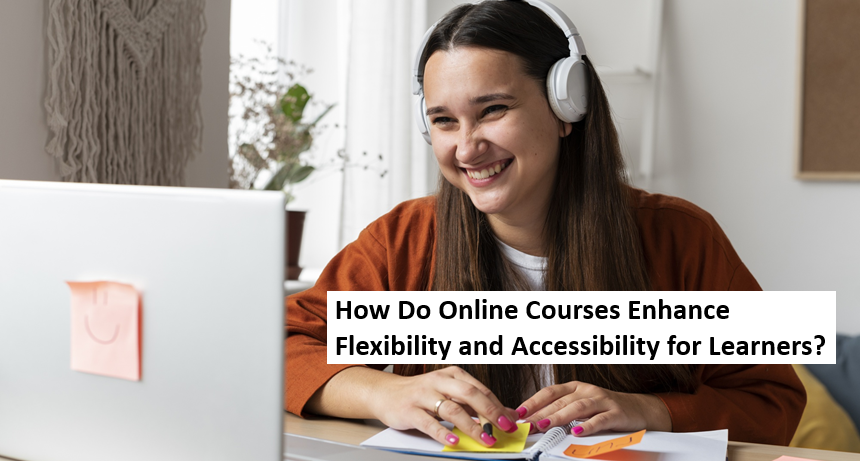
In recent times, the global shift to online education is more than just a way of convenient learning. It has truly transformed the way knowledge is accessed and delivered. Unlike traditional classrooms that often bind students to a strict timetable—with set lecture hours, mandatory attendance, and unyielding deadlines—online learning allows for a more adaptable approach. Learners today have the freedom to study at their own pace while balancing their professional, personal, and academic commitments. In effect, online learning has democratized access to high-quality education by bringing in learners from remote locations, diverse economic backgrounds, and varied learning requirements into the mainstream.

Contents
Flexibility: Learning on Demand, Without LimitsAccessibility: Expanding Opportunities for AllAffordability: Breaking the Financial BarriersA Future Shaped by E-learning
AdvertisementWhy this Ad?

Flexibility: Learning on Demand, Without Limits

The most important aspect of online education is the ability to set your own learning pace. In a typical classroom, the instructor sets the tempo of lessons, which may not suit everyone. Some students might need a little extra time to absorb complex concepts, while others prefer to move quickly through familiar material. Online courses accommodate both learning styles and allow learners to revisit lessons, pause when needed and progress according to their comfort level. This tailored approach is particularly beneficial for working professionals looking to upskill while managing full-time jobs and parents balancing household responsibilities. It not only enriches the learning journey but also boosts engagement and retention.

Beyond pacing, asynchronous learning removes the constraints of fixed class schedules. This eliminates geographical barriers and empowers learners from any part of the world to access top-tier programs without relocation. Learners hailing from remote areas and even emerging markets are now free to enroll in courses that once were out of their reach. By virtue of this systemic design, these virtual classrooms now also stand as a beacon of cultural diversity. With global and diverse perspectives converging, it makes a case for learners to have an engaging and enriching learning experience. Additionally, students from different time zones can join the same program without the inconvenience of attending live sessions at odd hours.

The integration of online learning in today’s modern, fast-paced lifestyle has been successful to a great extent. With mobile-first platforms enabling learning on-the-go and bite-sized learning modules paving the way for microlearning, the flexibility quotient has raised the bar for everyone. To further optimize the study schedules, AI-powered learning paths are enabling a deeper level of personalization for students.

Accessibility: Expanding Opportunities for All

The 2nd pillar, and a key reason behind the rising popularity of e-learning platforms, is the ease with which learners can access online courses. More often than not, a physical institution might not be the best option because of geographic, financial, or even physical limitations. But the advent of online education has not only eliminated these barriers but also opened doors for individuals who might otherwise struggle to pursue formal education.

The accessibility is also visible in the way online education has been able to bridge the digital divide, while simultaneously promoting inclusive learning. Not all learners have access to high-end laptops or desktops. Mobile-first online courses narrow this gap by optimizing materials for smartphones or tablets and using lightweight apps that can run smoothly on such low-end devices. Many platforms allow for offline access to the course material for students with inconsistent internet connections.

In terms of inclusivity, online courses are designed to accommodate diverse needs. AI-powered screen readers and voice assistants have been incorporated into learning systems to help visually impaired students navigate the courses. Likewise, transcripts and subtitles support for hearing-impaired students, and customizable interfaces for learners with ADHD, dyslexia or autism have eased the learning process for these individuals.

Affordability: Breaking the Financial Barriers

Affordable education is another aspect which ensures that flexibility and accessibility go hand in hand. When compared to the traditional system, operating costs of conventional universities are usually associated with high tuition fees, transportation costs, and materials expenses. On the other hand, the overhead costs for online courses are significantly lower. Many platforms facilitate subscription-based models that grant access to multiple courses for a fraction of the price of traditional programs. Some even offer free certifications, thereby opening new career pathways without requiring expensive degrees.

A Future Shaped by E-learning

The evolution of online education continues to reshape how students learn. Today, e-learning is not just about gaining skills that matter. It is increasingly becoming a direct bridge to employment. Many courses now incorporate live projects, case studies, and direct partnerships with companies to facilitate real-world experience. AI-driven career matching tools further enhance job prospects by connecting learners to opportunities that align with their interests and qualifications.

With advancements in technology, the horizon of online education is poised to expand. We can expect an influx of a significant number of learners to turn to online courses. This growing demand for flexible learning options signals a shift towards a wholly student-centered approach. Thus, the frontrunners in the edtech space will be those who invest in innovation while prioritizing inclusive learning experiences.

TAGGED: Accessibility, AI Education, Career Development, elearning, Lifelong Learning, Mobile Learning, Online Courses
Share This Article
Facebook Twitter Whatsapp Whatsapp LinkedIn Reddit Telegram Email Copy Link
By Firoz Thairinil
As CEO, Firoz is responsible for defining WEG’s strategic direction, driving innovation, and ensuring operational excellence across its institutions. He has been instrumental in facilitating global partnerships with premier institutes and steering initiatives to expand the group’s educational reach. His emphasis on technology has been pivotal in developing top- tier platforms that cater to the varied needs of 21st century learners globally.
Previous Article Education Technology for Social Good Bridging the Digital Divide and Empowering all Learners Education Technology for Social Good: Bridging the Digital Divide and Empowering all Learners
Next Article Programming for GenAI Role of Tech Education in Supplementing Indias Booming IT Industry Programming for GenAI: Role of Tech Education in Supplementing India’s Booming IT Industry
AdvertisementWhy this Ad?

Latest EdTech News To Your Inbox

Stay Connected

AdvertisementWhy this Ad?

Latest EdTech News To Your Inbox

Stay Connected

AdvertisementWhy this Ad?

You Might Also Like

Mindgroom interface to find a career counsellor near me by location
Trends

Career Counselling Near Me – An Interface Recently Launched by Mindgroom for Face-to-Face Career Guidance

Jun 10, 2026
Dr Varun Vohra 1 career counsellor in india Guiding School Students
Insight

The Role of a Career Counsellor: Why Career Guidance and Career Counselling Matter More Than Ever in Indian Schools

Jun 2, 2026
Why Nonprofits and Schools Struggle with Fundraising Campaigns and How to Fix It
Insight

Why Nonprofits and Schools Struggle with Fundraising Campaigns and How to Fix It

May 8, 2026
Creative Ways to Use Calendars for Better Daily Productivity and Focus
Insight

Creative Ways to Use Calendars for Better Daily Productivity and Focus

May 7, 2026
Indias Childrens Activities Economy awaits Its Platform Moment
Insight

India’s Children’s Activities Economy Awaits Its Platform Moment

Apr 18, 2026
10 Best Online Education Masters Programs to Advance Your Teaching Career
eLearning

10 Best Online Education Master’s Programs to Advance Your Teaching Career

Apr 16, 2026
How Language Labs Improve Communication Skills and Boost Student Placement Success
Insight

How Language Labs Improve Communication Skills and Boost Student Placement Success

Apr 16, 2026
Education Has Nowhere to Hide in the Agentic Era
Insight

Education Has Nowhere to Hide in the Agentic Era

Apr 15, 2026
Show More
EdTechReviewEdTechReview

H433, 2nd Floor, Vikaspuri, New Delhi, India, 110018
Phone: 011 41321030

Follow US

Copyright © EdTechReview. All Rights Reserved.

  • Home
  • Advertise
  • Event Associations
  • Press Release
  • About
  • Services
  • Contribute
  • News
  • Trend & Insight
  • Data & Statistics
  • eLearning
  • Reviews
  • Research
  • EdTech Voices
  • Dictionary
  • Tags
  • Resources
  • Events
  • Courses
  • EdTech Product for Review
  • Sponsored/Paid Post Service
  • Our Clients
  • FAQ’S
  • Contact Us
  • Important Links
  • Sitemap
  • Terms of Use
  • Privacy Policy
newsletter
Join 100K+ subscribers!

Subscribe to our weekly newsletter that brings the latest EdTech news, trends, insights, reports, interviews, etc. for educators, school leaders, entrepreneurs, investors, & others.

loader
Zero spam, Unsubscribe at any time.
Go to mobile version
Welcome Back!

Sign in to your account

Lost your password?